

Conclusion
Natural Woodland and Scandinavian Minimalism embody fundamentally different design philosophies that influence ambiance, material choices, and user experience. Natural Woodland emphasizes warmth, texture, and organic complexity, ideal for spaces aiming to evoke woodland tranquility and connection to nature. Scandinavian Minimalism prioritizes simplicity, functional elegance, and lightness, appealing to users seeking clean lines and airy environments. This contrast often creates a dilemma for those balancing cozy earthiness against refined minimalism.
Style A Deep Dive
Natural Woodland is a design style anchored in celebrating the organic beauty of forest environments through warm, natural materials like raw wood, stone, and woven textiles. Interiors typically incorporate earthy color palettes derived from moss greens, bark browns, and the muted hues of foliage. Furniture choices lean toward handcrafted or rustic designs featuring exposed grain and imperfect, natural finishes. Functionally, this style suits residential settings desiring tactile richness and immersion in nature’s textures. However, the aesthetics can sometimes feel heavy or cluttered if not carefully curated, requiring restraint in accessory layering and emphasis on spatial harmony.
Style B Deep Dive
Scandinavian Minimalism channels the ethos of ‘less is more’ by creating serene, luminous interiors through restrained color usage— predominately white, light gray, and soft pastels— and selective use of natural wood accents. Clean-lined furniture with smooth surfaces and minimal ornamentation defines this style. Scandi minimalism embraces open spaces and functionality, often integrating multi-purpose pieces and subtle textures like wool or linen to soften the austerity. It excels in urban apartments and compact dwellings but may feel too stark for those craving natural warmth or individuality without added layering.
Head-to-Head
| Dimension | Natural Woodland | Scandinavian Minimalism |
|---|---|---|
| Color Palette | Earthy tones (deep greens, browns, warm neutrals) | Light, neutral base (white, pale grays, soft pastels) |
| Materials | Raw wood, stone, woven textiles, natural fiber carpets | Light wood, smooth surfaces, wool, linen |
| Spatial Feel | Cozy, textured, layered, organic clutter | Open, airy, uncluttered, functional |
| Ideal Users | Lovers of nature-inspired, tactile interiors valuing warmth | Those who prefer clean lines and minimalistic environments |
How to Choose
Evaluate your lifestyle and spatial needs first. If your priority is to create a sanctuary that feels connected to nature with rich textures and natural material details, Natural Woodland is the fitting choice. Reserve layering of textiles and accessories to keep spaces balanced and cozy. Conversely, if you prefer calm, uncluttered surroundings that enhance daylight and emphasize functionality with a soft but restrained palette, Scandinavian Minimalism suits your needs. It works particularly well for smaller or urban interiors where visual lightness is critical. Consider hybrid approaches cautiously, choosing dominant attributes from one style to avoid an incoherent design.
Designing the Look
If Natural Woodland is the direction you're drawn to, Homestyler's 'Natural Woodland' gives you a ready-built library to start experimenting immediately — no sourcing, no scale guesswork, just design.
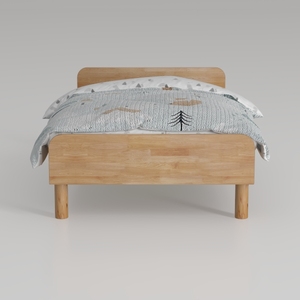
Minimalist Solid Oak Wood Kids Bed with Soft Bedding 3D Model

Minimalist Solid Wood Fluted Glass Wardrobe 3D Model

Minimalist Solid Pine Wood Bookshelf with Open Storage Shelves 3D Model

Minimalist Solid Oak Wood Platform Bed 3D Model
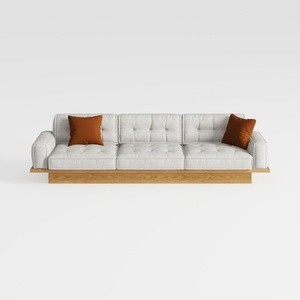
Modern Solid Wood Frame Tufted Fabric Three Seat Sofa 3D Model

Minimalist Solid Wood Fabric Armchair with Lumbar Pillow 3D Model
FAQ
Q1: How do Natural Woodland and Scandinavian Minimalism differ in lighting approaches?
Natural Woodland tends to use warm, ambient lighting to enhance textures and natural materials' warmth, often via pendant lamps and lampshades with earthy tones. Scandinavian Minimalism favors maximizing natural daylight complemented by simple, functional light fixtures with clean designs, frequently in matte white or metal finishes.
Q2: Can these styles be blended successfully in a single space?
Blending requires careful selection of complementary materials and colors. Combining Scandinavian Minimalism’s clean-lined furniture with Natural Woodland’s textured accessories and natural wood elements can work if balance is maintained to avoid visual confusion or clutter. The dominant style should guide choices.
Q3: What are typical spatial limitations of Natural Woodland compared to Scandinavian Minimalism?
Natural Woodland can feel dense or cramped if over-layered with textures and materials, making it less ideal for very small or dark spaces. Scandinavian Minimalism’s focus on openness and light makes it better suited for compact rooms, though it may sacrifice some warmth and tactile depth in the process.
Homestyler's roots trace back to Autodesk, the global leader in design and engineering software. That heritage lives on in every feature we build. Today, with a community of more than 18 million users worldwide, Homestyler continues to make professional-quality interior design accessible to everyone — from first-time decorators to seasoned architects.
Homestyler is a professional interior design software that helps users effortlessly create their dream home.
تصميم الآن مجانا
































