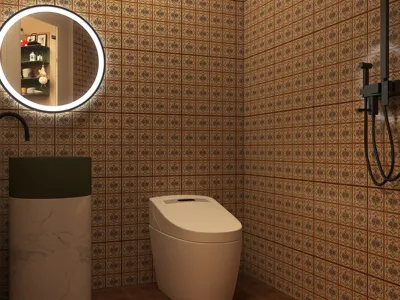


What’s the most common core issue in Matisse-Inspired Furniture style?
Over-decorating and imbalance often compromise the integrity of Matisse-inspired interiors.
Quick Takeaways
1. Excessive layering dilutes the style’s bold simplicity. 2. Ignoring scale disrupts room harmony. 3. Clashing motifs create visual chaos. 4. Overusing color saturates rather than complements. 5. Neglecting texture reduces tactile depth.
Introduction
When I first explored Matisse-Inspired Furniture, I quickly realized how easy it is to misconstrue this style. Its powerful colors and abstract forms can overwhelm a space or look disjointed if poorly executed. The vibrant, cut-out shapes demand a careful balance between boldness and restraint. Many attempts I reviewed suffered from over-decoration—turning what should be an artful statement into visual noise. This nuanced aesthetic resists casual mixing; it demands curated, thoughtful elements rather than haphazard combinations.
Why It Goes Wrong
The key failure lies in over-embellishment and misunderstanding the scale of Matisse’s signature cut-outs. Without respecting the intentional simplicity and rhythm, interiors become muddled. Over-reliance on colorful shapes without adequate negative space and the wrong furniture proportions frequently destroys cohesion. This aesthetic is not a shortcut through bold prints but a statement of artistic form and balance; confusing it with maximalism leads to clutter rather than clarity.
Mistake 1: Overlayering Decorative Elements
The Mistake: Piling on too many patterns, colors, and accessories in one space. Why It Happens: Enthusiasm for Matisse’s vivid palette tempts designers to fill every surface, mistakenly equating busyness with vibrancy. The Fix: Limit decorative layers to no more than three focal elements per room. Use bold cut-out shapes strategically as accents, not backgrounds. Introduce wide negative space to let colors and forms breathe.
Mistake 2: Ignoring Proportion and Scale
The Mistake: Furnishing rooms with pieces too large or small compared to the painted, cut-out inspired motifs. Why It Happens: Misjudging the visual weight and size relationship undermines spatial harmony. The Fix: Match furniture dimensions carefully with wall art or furniture motifs. For instance, if a statement chair features bold shapes around 60 cm in size, balance surrounding furniture within a 50–80 cm range to maintain coherence.
Mistake 3: Clashing Abstract Motifs
The Mistake: Combining multiple abstract patterns that compete instead of complementing. Why It Happens: Misunderstanding the minimalist intent behind Matisse’s cut-outs causes indiscriminate mixing. The Fix: Choose one dominant abstract motif per room, and support it with simple complementary accents. Avoid layering competing shapes; prioritize unity through repetition of a consistent theme.
Mistake 4: Overusing Saturated Colors
The Mistake: Drenching spaces in excessive saturated reds, blues, and yellows which overwhelm senses. Why It Happens: Attempting to mimic Matisse’s palette literally without moderation. The Fix: Incorporate bright colors as selective highlights against neutral or muted backgrounds. Use no more than four contrasting hues per room, balancing vivid with calm.
Mistake 5: Neglecting Texture Variation
The Mistake: Relying solely on flat, painted surfaces without mixing tactile materials. Why It Happens: Focusing too much on visual impact while ignoring how materials feel and age. The Fix: Balance painted furniture with textured fabrics, natural fibers, and mixed-material accents. Introduce rough linen cushions, woven rugs, or matte ceramics to support the bold graphic forms with inviting tactility.
Designing the Look
Homestyler’s ‘Matisse-Inspired Furniture’ offers a comprehensive set of ready-to-use 3D models specifically curated to embody this aesthetic, allowing designers to achieve authentic results with professional-grade textures and forms.

multi-seat sofa-Matisse-Inspired Furniture

tile-Matisse-Inspired Furniture

single sofa-Matisse-Inspired Furniture

wallpaper-Matisse-Inspired Furniture

lounge chair-Matisse-Inspired Furniture

curtains-Matisse-Inspired Furniture
FAQ
Q1: How do I properly balance Matisse-Inspired Furniture with other interior styles?
Balancing Matisse-Inspired Furniture with other styles requires careful restraint. Avoid mixing too many competing motifs or colors. Pair this aesthetic with minimalist or Scandinavian elements that emphasize simplicity and neutral colors. Use Matisse shapes as accent pieces rather than the dominant style to prevent overwhelming the room. Incorporate natural materials to soften bold abstract forms without diluting their impact.
Q2: What are the best color palettes for Matisse-Inspired Furniture designs?
The signature palette features vivid primary colors—red, blue, yellow—as well as strong black and white contrasts. However, rather than saturating every surface, the best approach is to balance these bright hues with muted neutrals like warm beiges, soft grays, or cool whites. Limited complementary color pops grounded by neutral backgrounds ensure vibrancy remains artistic rather than garish.
Q3: Can Matisse-Inspired Furniture work in small spaces?
It can, but with more caution. Scale and proportion become critical: choose smaller-scale furniture with bold forms to avoid overpowering the room. Utilize light, neutral wall finishes as a backdrop and limit accent pieces to a few key statement items. Avoid clutter by simplifying decorative layers. When done right, Matisse-Inspired Furniture adds dynamic energy and creativity even within compact interiors.
Homestyler's roots trace back to Autodesk, the global leader in design and engineering software. That heritage lives on in every feature we build. Today, with a community of more than 18 million users worldwide, Homestyler continues to make professional-quality interior design accessible to everyone — from first-time decorators to seasoned architects.
Leverage Homestyler's AI-powered features to quickly generate professional interior design schemes.
Design Now for FREE
































