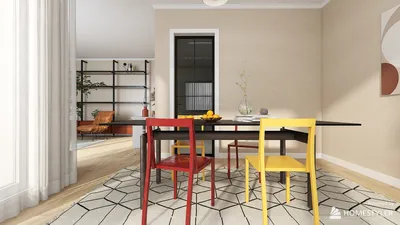


What is the most common core issue in Italian Minimalism?
The most common core issue in Italian Minimalism is losing the balance between simplicity and warmth, resulting in cold, lifeless interiors.
Quick Takeaways
1. Over-simplification can render spaces sterile. 2. Poor material selection breaks the minimalist flow. 3. Ignoring proportion disrupts the elegant balance. 4. Mixing styles dilutes Italian minimalism’s clarity. 5. Neglecting texture removes comfort from minimal spaces.
Introduction
Italian Minimalism is deceptively simple. I’ve seen many interiors stumble by mistaking minimalism for emptiness or cold austerity. The style demands an intimate understanding of subtle nuance — the interplay between line, light, and texture. When designers miss this, their spaces fail to embrace the warmth and refined elegance that characterize true Italian Minimalism. It’s easy to overdo or underdeliver, entangling the design in conflicting aesthetics or lifeless atmospheres that betray the style’s soul.
Why It Goes Wrong
Italian Minimalism often falters when the delicate balance between function and emotion is lost. Designers either dive too deeply into stark simplicity, stripping away all tactile warmth, or compensate by adding unrelated decorative elements that confuse the aesthetic. Misjudged scale and proportions further skew spatial harmony. Without a clear vision, the style can turn uninspired or chaotic, instead of delivering its signature restrained sophistication.
Mistake 1: Overusing Monochrome Without Texture
The Mistake: Spaces rendered in rigid monochromes with flat materials that feel clinical rather than inviting. Why It Happens: Designers often associate Italian Minimalism with limited color palettes but neglect integrating texture, which breathes life into simplicity. The Fix: Introduce natural materials—like warm wood finishes, matte ceramics, or subtle linen fabrics. Aim for a minimum of three textural contrasts in key surfaces to prevent visual monotony without compromising minimalism.
Mistake 2: Ignoring Proportional Balance
The Mistake: Furniture and architectural elements that clash in scale, making rooms feel cramped or disproportionately empty. Why It Happens: Minimalism’s spatial economy tempts overlooking spatial relationships, assuming less is always more regardless of context. The Fix: Use modular furniture scaled to room dimensions—floor-to-ceiling elements no taller than 80% of the ceiling height maintain openness. Employ the golden ratio (1:1.618) to arrange both décor and furnishings for harmonious proportions.
Mistake 3: Mixing Competing Styles
The Mistake: Combining minimalism with heavy industrial or ornate traditional styles, creating visual confusion. Why It Happens: Desire for personalization leads to layering unrelated styles, undermining the minimalism’s clarity. The Fix: Keep the palette and materiality consistent. If adding an accent, choose elements that echo minimalist principles—think sleek Italian leather chairs rather than vintage baroque pieces.
Mistake 4: Overlooking Lighting Nuances
The Mistake: Relying solely on overhead lighting, resulting in harsh or flat illumination. Why It Happens: Minimalist spaces require careful lighting to highlight form without clutter, yet many opt for simplicity in fixtures that sacrifices atmosphere. The Fix: Incorporate layered lighting—ambient, task, and accent—to sculpt the space. Use warm-colored LEDs within concealed fixtures or wall washers to cast soft, diffuse light enhancing the minimalist forms.
Mistake 5: Neglecting Functionality for Form
The Mistake: Prioritizing sleek looks over user comfort and storage needs, leading to impractical arrangements. Why It Happens: The drive for clean lines can discourage hidden storage or ergonomic designs, resulting in clutter and discomfort. The Fix: Integrate minimalist storage solutions such as recessed shelves and pull-out cabinetry. Choose furniture that supports daily use without compromising on clean silhouettes.
Designing the Look
Homestyler’s ‘Italian Minimalism’ offers a comprehensive set of ready-to-use 3D models specifically curated to embody this aesthetic, allowing designers to achieve authentic results with professional-grade textures and forms.

Minimalist Neutral Tone Abstract Area Rug 3D Model

Italian Minimalism-painting 8

Minimalist Neutral Fabric Textured Wall Art Print 3D Model

Minimalist Neutral Textured Abstract Wall Art Print 3D Model

Minimalist Fabric Upholstered Modern Accent Chair 3D Model
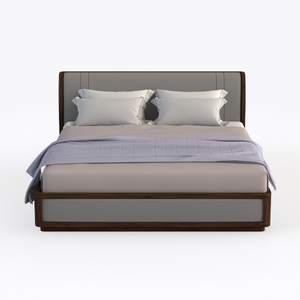
Modern Walnut Leather Upholstered King Size Bed 3D Model
FAQ
Q1: How can I add warmth to an Italian Minimalist interior without deviating from the style?
Focus on layering natural textures like wood, stone, and soft textiles. Warm neutral tones—such as beige, taupe, and cream—can offset stark whites or greys, maintaining minimalist purity while inviting comfort. Incorporate subtle lighting with a warm temperature spectrum to create an inviting ambiance.
Q2: What furniture materials best reflect Italian Minimalism’s philosophy?
Materials should be luxurious yet understated. Fine leather upholstery, lightly grained woods such as walnut or oak, and metal accents with matte or brushed finishes suit this style. Avoid glossy or highly ornate surfaces; preference is for tactile quality that ages gracefully.
Q3: Can Italian Minimalism be adapted for small urban apartments?
Absolutely. The style’s emphasis on clean lines and minimal clutter suits compact spaces perfectly. Utilize built-in storage solutions and multi-functional furniture to maximize usability. Focus on vertical space to enhance openness, and keep color schemes light to amplify natural light within limited square footage.
Homestyler's roots trace back to Autodesk, the global leader in design and engineering software. That heritage lives on in every feature we build. Today, with a community of more than 18 million users worldwide, Homestyler continues to make professional-quality interior design accessible to everyone — from first-time decorators to seasoned architects.
Homestyler supports multiple platforms, allowing you to work on your interior design anytime, anywhere.
Desain sekarang Gratis
































