


What is the most common core issue in Industrial Loft design?
Overcrowding the space with inconsistent industrial elements that disrupt the minimalist, raw aesthetic.
Quick Takeaways
1. Industrial Loft often fails due to excessive decorative elements that dilute its raw minimalism. 2. Incorrect scale and proportion ruin the intended spacious feel. 3. Mixing too many styles causes visual confusion. 4. Overuse of dark colors can make spaces feel oppressive. 5. Neglecting texture variety leads to flat, uninspiring interiors.
Introduction
Whenever I dive into Industrial Loft interiors, I notice a recurring pattern of missteps that transform what should be bold simplicity into cluttered chaos. This style demands a careful balance between raw materials and minimalist design. Yet, many designers fall into the trap of over-embellishing or mismatching elements, breaking the essential harmony. Let’s unwrap why these pitfalls happen and how to avoid them for interiors that genuinely celebrate industrial character without losing spatial clarity or authentic charm.
Why It Goes Wrong
The Industrial Loft style fails when its foundational values—rawness, openness, and material honesty—become overshadowed by excessive clutter or incompatible decor. The root issues include over-decoration that conflicts with minimalism, disproportionate furnishings compressing the layout, and stylistic confusion from mixing unrelated design vocabularies. Ignoring balance between texture, scale, and color leads to spaces that feel either sterile or chaotic rather than ruggedly refined.
Mistake 1: Overloading the Space
The Mistake: Placing too many industrial accessories, like salvaged pipes and mechanical parts, across surfaces and walls. Why It Happens: There's a misconception that more industrial elements mean better authenticity. The Fix: Limit decorative items to a few statement pieces per room, preserving open zones to enhance airiness.
Mistake 2: Ignoring Scale and Proportion
The Mistake: Using bulky furniture or multiple large items that crowd the open-plan layout. Why It Happens: Misjudging space dimensions and the impact of furniture size on flow. The Fix: Choose streamlined, appropriately sized furnishings that complement exposed beams and high ceilings without overpowering.
Mistake 3: Mixing Styles Indiscriminately
The Mistake: Incorporating heavy industrial with ultra-modern or rustic farmhouse without cohesion. Why It Happens: Desire to personalize the loft leads to combining too many looks. The Fix: Stick to the core industrial palette and raw materials; if blending, use neutral transitional pieces to unify.
Mistake 4: Overdarkening the Palette
The Mistake: Excessive use of black and deep grays making the space feel gloomy. Why It Happens: Associating dark hues with industrial toughness without balancing lighter tones. The Fix: Introduce warm wood, concrete textures, and metal finishes that reflect more light and add contrast.
Mistake 5: Uniform Textures Resulting in Flatness
The Mistake: Repeating the same metal or concrete finishes throughout without variation. Why It Happens: Simplifying material selection for convenience rather than design integrity. The Fix: Layer rough bricks, weathered metals, reclaimed wood, and soft textiles to create depth and tactile interest.
Designing the Look
Homestyler’s ‘Industrial Loft’ offers a comprehensive set of ready-to-use 3D models specifically curated to embody this aesthetic, allowing designers to achieve authentic results with professional-grade textures and forms.

Minimalist Fabric Metal Ottoman 3D Model

Vintage Printed Metal Bottle Cap Magnets 3D Model

Minimalist Solid Walnut Wood Platform Bed with Striped Bedding 3D Model


Vintage Rustic Solid Wood Decorative Single Door 3D Model
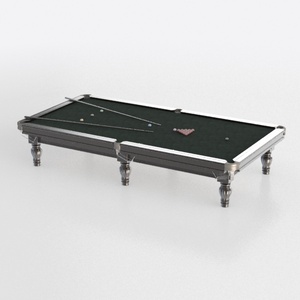
Classic Vintage Metal Wood Frame Pool Billiard Table 3D Model
FAQ
Q: How do I maintain the industrial aesthetic without making the space feel cold?
Balancing the industrial look requires mixing raw materials like exposed brick and metal with warmer elements such as soft textiles, reclaimed wood, and warm-toned lighting. Incorporating cozy rugs, cushions, and ambient lighting helps offset the inherent coldness of concrete and steel, making the environment inviting without sacrificing its rugged essence.
Q: Can Industrial Loft style work in small apartments?
Yes, but with careful attention to scale and clutter. Opt for minimal, multipurpose furniture pieces and avoid over-accessorizing. Maximizing light and keeping open sightlines will preserve a sense of spaciousness. Mirrored surfaces and lighter finishes on certain elements can visually expand the space while maintaining industrial textures.
Q: What color schemes best suit Industrial Loft interiors?
Traditional palettes include shades of gray, black, and white complemented by natural hues from wood and exposed brick. Introducing muted blues, deep greens, or rust tones can add personality without overwhelming the industrial core. Keeping color accents minimal and grounded in earthy or neutral tones maintains the style’s authenticity.
Homestyler's roots trace back to Autodesk, the global leader in design and engineering software. That heritage lives on in every feature we build. Today, with a community of more than 18 million users worldwide, Homestyler continues to make professional-quality interior design accessible to everyone — from first-time decorators to seasoned architects.
Leverage Homestyler's AI-powered features to quickly generate professional interior design schemes.
Design Now for FREE
































