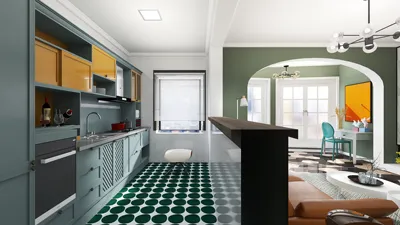


What is the core issue most designers face with Green Haven style?
The primary challenge in Green Haven style is maintaining balance without overwhelming the space with greenery or mismatched natural elements.
Quick Takeaways
1. Overuse of plants leads to visual clutter. 2. Disproportionate furniture sizes disrupt flow. 3. Mixing too many natural textures causes confusion. 4. Ignoring light quality dims the green aesthetic. 5. Lack of cohesive color palette reduces harmony.
Introduction
I’ve noticed that many homeowners and designers fall into traps with Green Haven interiors because the style’s emphasis on greenery and organic materials can easily tilt from serene to chaotic. It’s not merely about filling spaces with plants or natural textures; it’s about a mindful blend that respects form, scale, and color harmony. Missteps often stem from overenthusiasm or misunderstanding what actually creates a relaxing 'green haven.'
Why It Goes Wrong
The Green Haven style fails when decoration overwhelms function, proportions distort spatial balance, or when stylistic elements clash instead of complementing natural serenity. Over-decoration, improper scaling of furnishings, and misguided material choices divert from the restful, nature-inspired core. This confusion undermines the intended peaceful ambiance, resulting in spaces that feel cluttered, disjointed, or overly themed rather than naturally inviting.
Mistake 1: Overcrowding with Plants
The Mistake: Flooding interiors with too many plants, often without consideration for spacing or plant size. Why It Happens: Enthusiasm for the style motivates adding excessive greenery as a visual shorthand for 'green haven.' The Fix: Limit plants to strategic groupings no larger than one-third of the room’s floor area and vary plant sizes to create depth without chaos.
Mistake 2: Unbalanced Furniture Dimensions
The Mistake: Choosing oversized or undersized furniture, which clashes with natural elements and breaks spatial flow. Why It Happens: Misjudging scale because natural aesthetics might seem informal and flexible. The Fix: Prioritize balanced furniture scale, aiming for 60–70% room coverage, allowing ample breathing room to enhance the calming effect.
Mistake 3: Mixing Excessive Natural Textures
The Mistake: Combining too many natural materials (wood, rattan, stone, linen) without a coherent texture hierarchy. Why It Happens: Trying to showcase the full variety of natural textures without a guiding concept. The Fix: Limit to two or three dominant textures, use one as accent, and assign specific areas for texture variation to maintain cohesion.
Mistake 4: Neglecting Light Quality
The Mistake: Overlooking natural and artificial light’s role in enhancing greenery and textures, resulting in dull or harsh interiors. Why It Happens: Lighting often gets sidelined, treated as a technicality rather than a core aesthetic element. The Fix: Maximize natural light with sheer curtains and include soft, warm LED lighting layers to mimic sunlight’s gentleness and highlight plant life.
Mistake 5: Disjointed Color Palette
The Mistake: Introducing colors that compete with the green theme, such as bright or conflicting tones. Why It Happens: Desire for vibrancy or misinterpretation of 'natural' as 'multi-colorful.' The Fix: Use a unified palette anchored in various shades of green, complemented by earthy neutrals and subtle accents to preserve design integrity.
Designing the Look
Homestyler’s ‘Green Haven’ offers a comprehensive set of ready-to-use 3D models specifically curated to embody this aesthetic, allowing designers to achieve authentic results with professional-grade textures and forms.

Bohemian Rattan Round Ottoman Coffee Table 3D Model

Minimalist Concrete Irregular Edge Coffee Table 3D Model

Minimalist Solid Oak Folding Director Chair 3D Model

bench-Green Haven

Marble Classic Round Outdoor Garden Water Fountain 3D Model

Black Ceramic Vase with Kumquat Plant Decor 3D Model
FAQ
Q1: How can I maintain the Green Haven style without my space feeling cluttered?
Start by choosing a limited number of plants and furniture that matches the scale of the space. Incorporate open areas to balance greenery and natural textures. Use visual layers by placing plants at different heights and spacing to create depth rather than crowding.
Q2: What are the best materials to combine in Green Haven interiors?
Focus on two or three complementary natural textures. For example, smooth light wood furniture pairs well with linen Upholstery and stone accessories. Avoid mixing too many, which can confuse the eye. Stick with materials that bring warmth and maintain tactile harmony.
Q3: How important is lighting in a Green Haven room?
Lighting is crucial. Natural light enhances the colors and vitality of plants and textures. Complement this with adjustable warm-tone LEDs to mimic daylight. Proper lighting ensures the space feels alive and inviting without harsh contrasts or shadows that detract from the natural ambiance.
Homestyler's roots trace back to Autodesk, the global leader in design and engineering software. That heritage lives on in every feature we build. Today, with a community of more than 18 million users worldwide, Homestyler continues to make professional-quality interior design accessible to everyone — from first-time decorators to seasoned architects.
With Homestyler, you can design and visualize your living spaces online with stunning, realistic results.
Design Now for FREE
































