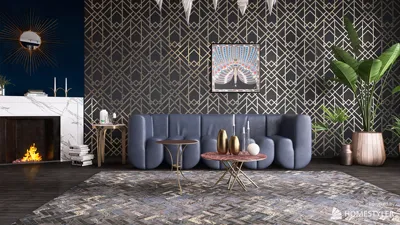


The challenge Bauhaus design poses lies in balancing its rigorous functionalism with artistic expression. This style rejects ornamentation, demanding every element to serve a practical purpose while maintaining visual harmony. Designers must reconcile strict geometry with human scale, ensuring spaces feel both efficient and welcoming. Bauhaus interiors often feature stark, clean lines paired with industrial materials like steel and glass, which can create an austere atmosphere if not carefully modulated. Achieving equilibrium requires a deep understanding of proportion, material contrast, and the interplay between positive and negative space. Further complexity arises from Bauhaus’s historical context: it is rooted in early 20th-century modernism yet remains relevant today, inviting reinterpretation without losing its integrity. Therefore, integrating Bauhaus principles involves a rigorous editing process—removing anything superfluous while selecting pieces that exemplify both form and function. Designers adept at this approach create environments where minimalism transcends austerity, transforming into an elegant architectural narrative that supports daily living without distraction. Each room must perform as a whole unit where furniture placement, material selection, and color use coalesce to forge unity. The real test is in the details: ensuring joints, finishes, and even textures are deliberately chosen to echo Bauhaus’s advocacy for craftsmanship and innovation. Subsequently, the challenge extends to lighting, which must accentuate structural clarity and volume without overwhelming the simplicity. Imbuing warmth while preserving restraint becomes achievable through controlled daylight penetration and carefully specified artificial sources. In essence, mastering Bauhaus design is about disciplined creativity—where the line between art and utility is not blurred but deliberately clarified to shape functional beauty.
Step 1: Layout Logic — Spatial Proportions and Furniture Arrangement
Begin by analyzing the spatial dimensions to respect Bauhaus’s commitment to proportion and efficiency. Avoid overcrowding; allow for generous circulation space to maintain openness. Position key furniture along the room’s dominant axes, emphasizing angular lines and symmetry without rigidity. Utilize modular components to introduce flexibility; for example, select sofas or tables that can adapt to different configurations. Prioritize multipurpose pieces that embody function, such as storage units doubling as seating. Scale furniture accurately against room size, favoring items that neither dominate nor disappear within the environment. This approach honors the Bauhaus tenet that design should respond to human scale and use. Integrate built-in elements to streamline the layout and reduce clutter, enhancing the clean, continuous surfaces favored by Bauhaus aesthetics. By mapping zones logically — such as distinct areas for socializing versus work — you reinforce order and clarity. Avoid ornamentation; instead, rely on structural elements like exposed beams or transparent partitions to delineate space subtly. Ultimately, furniture placement should create visual rhythm, guiding the eye through the room while serving practical routines effectively.
Step 2: Light and Shade — Tone Selection and Lighting Integration
Bauhaus interiors thrive on the interplay between natural and artificial light to sculpt form and define space. Use daylight maximally by incorporating large, unobstructed windows that frame views and flood interiors with soft illumination. Complement this with energy-efficient fixtures featuring clean, geometric silhouettes that echo furniture shapes. Select a restrained palette focusing on neutral base tones such as white, grey, and black combined with primary colors implemented sparingly in accents. This stops color from overwhelming while reinforcing Bauhaus’s modernist roots. Deploy ambient lighting to wash walls evenly, reducing harsh shadows and enhancing surfaces’ textural qualities. Task lighting can be introduced through adjustable fixtures targeting functional zones without disturbing the room’s visual balance. Consider using frosted glass or matte finishes on lampshades to diffuse light and maintain subtlety. Additionally, reflective materials like chrome or polished steel can amplify brightness while contributing a sculptural element. Avoid overly warm or cool color temperatures; aim for balanced light that maintains the integrity of material hues and architectural lines. Carefully orchestrated light layering ensures the room’s geometry is readable at all times, fulfilling both aesthetic and utilitarian goals.
Step 3: Accented Details — Small-Scale Models to Enhance Overall Quality
Enhancing a Bauhaus interior involves strategic inclusion of small objects that complement the design without cluttering it. Choose decorative elements that double as functional, such as designer clocks, minimalist vases, or industrial-inspired storage jars. Objects should mirror the primary materials of the space—steel, glass, leather—maintaining coherence. Focus on shapes driven by simple geometry like cylinders, rectangles, and spheres, avoiding excessive ornamentation. Incorporate craftsmanship by selecting hand-finished items exhibiting subtle imperfections that contradict machine precision, adding warmth. Position these pieces thoughtfully at sightlines or interaction points to provide moments of tactile interest and visual breaking points amidst the stark environment. Introduce textile components in restrained ways—for example, a monochrome rug with linear patterns or cushions in a bold primary color to punctuate seating areas. These accents must emphasize Bauhaus philosophy: maximizing expressive impact with minimal elements. Each piece acts as a deliberate counterbalance to the overall austerity, allowing personality to emerge while adhering to design discipline.
Designing the Look
For designers working in Homestyler, the Bauhaus model collection is a practical shortcut to authenticity. It removes the guesswork from sourcing — every piece is pre-matched in scale, material, and proportion to deliver a coherent Bauhaus result.

Modern Velvet Tufted Metal Frame Daybed Bench 3D Model

Minimalist Concrete Bust Tabletop Decor with Vintage Lamp and Eyeglasses 3D Model

Modern Black Metal Brass Accent Arch Display Cabinet 3D Model

Classic Ornate Plaster Ceiling Medallion Panel 3D Model


FAQ
Q1: How can I maintain Bauhaus’s minimalism without making my space feel cold or uninviting?
Integrate warmth through subtle texture variations, such as leather upholstery or natural wood elements in neutral tones. Balance the severe lines with soft textiles like monochromatic rugs or cushions, ensuring these accessories follow the same geometric discipline. Use lighting strategically to create ambiance that softens surfaces without undermining the style’s clarity.
Q2: What are practical ways to incorporate Bauhaus furniture in an existing modern home?
Start by selecting signature Bauhaus pieces like a Wassily chair or tubular steel tables, ensuring they contrast but also complement your current decor. Gradually replace overly ornate items with minimalist alternatives, maintaining cohesion through color consistency and spatial arrangement. Utilize built-in storage or shelving with clean lines to unify mixed styles.
Q3: How do I optimize lighting in smaller Bauhaus-inspired interiors?
Maximize natural light by using sheer window treatments and reflective surfaces. Opt for compact, multifunctional light fixtures featuring geometric designs, positioning them to eliminate shadows and enhance architectural clarity. Incorporate layered lighting—ambient, task, and accent—to adapt mood and function efficiently within the limited area.
Built on technology originally developed at Autodesk, Homestyler empowers anyone to design beautiful, realistic spaces in minutes. Join over 18 million users who have already discovered a smarter way to plan, visualize, and bring their dream homes to life — all from the comfort of a browser.
Design your ideal space with Homestyler, turn your creativity into reality, and craft a unique home style that is truly your own.
Projete agora para LIVRE
































