

Introduction
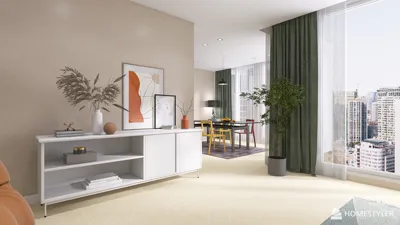
Bauhaus aesthetic is defined by a synthesis of simplicity and utility, reflecting a profound rejection of ornamental excess in favor of rational design. Its philosophy was born from the seminal German art school founded in 1919 by Walter Gropius, where the unity of art, craft, and technology was pursued rigorously. The principle dictates that form must follow function, embedding practicality directly into every element of design. This ideology manifests in interiors stripped to geometric essentials, where every detail serves a purpose, and visual clutter is systematically eliminated. Bauhaus does not seek to merely decorate a space; it creates an environment optimized for living and working—where elements coexist in perfect balance without sacrificing aesthetics. Its legacy endures through a continued emphasis on clean lines, open plans, and honest materials, making it a hallmark of modernist interiors that transcend time.
Core Elements
Color within the Bauhaus aesthetic adheres to strategic primary hues paired with neutral tones to maintain visual clarity and focus. Red, blue, and yellow punctuate black, white, and grey to produce compositions that feel both dynamic and grounded. This disciplined color palette avoids complexity, enabling spaces to communicate through contrast rather than decorative layering. The precise use of color establishes rhythm and hierarchy, directing attention seamlessly across different design components while reinforcing the minimalist ethos.
Materiality in Bauhaus design embraces industrial precision and authenticity. Steel, glass, and concrete appear alongside treated wood and leather, each chosen for their functional performance and intrinsic textures. Surfaces remain unadorned, allowing inherent characteristics — such as the grain of wood or the sleekness of metal — to reveal themselves unapologetically. This dedication to genuine materials underscores the philosophy of honest expression rather than disguise, aligning material choices closely with purpose.
Form in Bauhaus is characterized by uncomplicated, geometric shapes that eliminate decoration and emphasize efficiency. Rectangles, circles, and primary polygons become foundational motifs applied repetitively to create harmony and balance. Furniture and fixtures exhibit bold yet elegant silhouettes—thin tubular steel frames, cantilevered seats, and planar surfaces—stripming elements down to their essential structure. This sculptural minimalism fosters a sense of openness and functionality rarely compromised by superfluous design.
Designing the Look
Implementing the Bauhaus aesthetic in contemporary interiors requires a meticulous selection of design elements that interplay seamlessly. Homestyler’s ‘Bauhaus Aesthetic’ offers a comprehensive set of ready-to-use 3D models specifically curated to embody this aesthetic, allowing designers to achieve authentic results with professional-grade textures and forms. These models provide a pragmatic starting point, harnessing Bauhaus principles to create spaces marked by clarity, order, and purposefulness. Utilizing this resource accelerates the design process without compromising on the movement’s founding ideals. Designers can experiment easily within a framework that prioritizes functional geometry and material integrity, ensuring that each spatial decision resonates with Bauhaus' rationality. Whether conceptualizing a residential lounge or an office layout, the access to such detail-rich and style-specific models eliminates guesswork, delivering interiors where minimalism operates in tandem with elegance and efficiency.

Modern Leather Brass Metal Lounge Chair with Attached Side Table 3D Model
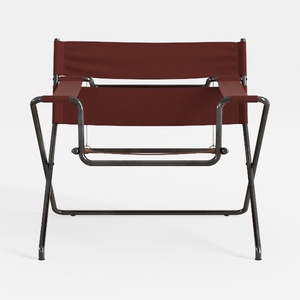
Modern Minimalist Metal Fabric Folding Armchair 3D Model

Modern Silver Metal Black Shelved Rolling Utility Cart 3D Model

Modern Minimalist Red Leather Metal Armchair 3D Model
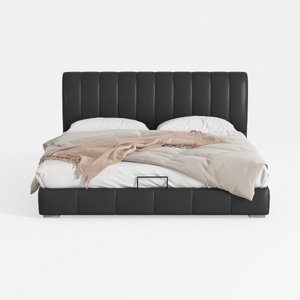
Modern Black Leather Upholstered Tufted King Size Bed 3D Model

Modern Walnut White Metal Mobile Storage Cabinet Rolling Sideboard 3D Model
FAQ
Q1: How does Bauhaus differ from other modernist design styles?
Bauhaus emphasizes the unity of art, craft, and technology, focusing on functionalism without ornamentation. Unlike other styles which may include decorative elements, Bauhaus strictly adheres to the principle of form following function, resulting in streamlined geometric shapes and honest material usage.
Q2: What materials are essential for creating a Bauhaus-inspired interior?
Typical materials include steel, glass, concrete, treated wood, and leather. These are used in their authentic state without added decoration, highlighting texture and structural honesty to support the design’s minimalist and functional nature.
Q3: Can Bauhaus principles be applied to small living spaces?
Absolutely. Bauhaus emphasizes efficient use of space through clean lines and multifunctional furniture. Its minimalism reduces visual clutter, making small rooms feel larger and more organized while retaining aesthetic appeal through thoughtful color and form selection.
What began as an Autodesk innovation has evolved into a design platform used by more than 18 million people around the globe. Homestyler combines powerful rendering, an intuitive editor, and a vast furniture library to help you turn inspiration into photorealistic designs — whether you're redesigning a single room or planning an entire home.
Homestyler supports multiple platforms, allowing you to work on your interior design anytime, anywhere.
Design Now for FREE
































