

Introduction
Art Deco emerged in the early 20th century as a definitive break from traditional design conventions, synthesizing modern technological optimism with rich craftsmanship and exquisite detailing. This style originated from the 1925 Exposition Internationale des Arts Décoratifs et Industriels Modernes, held in Paris, which championed progress and luxury in a rapidly changing world. Art Deco’s aesthetic is a deliberate blend of contemporary innovation and classical luxury, creating a visual language rooted in geometric abstraction, streamlined forms, and lavish ornamentation. The philosophy behind Art Deco embraces both opulence and functionality, responding to a cultural thirst for newness while paying homage to the artistry of handmade objects.
The style is defined by strong contrasts—between smooth and textured surfaces, matte and glossy finishes, rich colors juxtaposed with metallic highlights. It is not merely decorative; it expresses strength and confidence, reflecting the era’s fascination with progress, travel, and cinematic glamour. The dynamic tension within Art Deco lies in its organized complexity, balancing modern minimalism with an embellished, almost theatrical exuberance. It's this balance that makes Art Deco a timeless style, continuing to inspire contemporary interiors with its bold expressiveness and luxurious appeal.
Core Elements
1. Bold Geometric Patterns Art Deco is unmistakably recognized for its emphatic use of geometric shapes and strong symmetry. Triangles, chevrons, zigzags, sunbursts, and stepped forms dominate both architectural and interior details. These patterns create rhythm and visual impact, often appearing on walls, floors, and furnishings. The geometry in Art Deco is rigorous yet ornamental, expressing a sleek modernity fused with decorative delight. Unlike purely functional modernist design, Art Deco celebrates geometry as a motif and a symbol of order and progress. The sharp angles and linear silhouettes command attention while maintaining elegance through repetition and balance.
These geometric motifs are frequently integrated into metalwork such as brass or chrome railings and hardware, as well as in inlaid woods and textiles. The precision and clarity of these shapes underscore the style’s emphasis on sophistication through craftsmanship. Geometric ornamentation often evokes movement, aligning with the era’s passion for speed, aviation, and innovation. It also permits a wide expression of scale—from the fine detailing on a cabinet veneer to architectural friezes—making geometry the backbone of the Art Deco visual vocabulary.
2. Luxurious Materials A hallmark of Art Deco interiors is the lavish use of materials conveying wealth and glamour without excess. Exotic woods like ebony and rosewood, highly polished veneers, and rich lacquers define surfaces that gleam with a mirror-like finish. Metals such as brass, bronze, chrome, and stainless steel provide contrasting highlights, often rhodium-plated or gold-leafed for enhanced opulence. Marble and onyx are popular for tabletops, flooring, and architectural accents, selected for their natural veining and lustrous textures.
Glass and mirrors play a pivotal role as well, used both structurally and decoratively to amplify light and space. Etched or frosted glass panels with abstract or geometric designs contribute to the artistic layering of materials typical of Art Deco. Texture is carefully manipulated to evoke a tactile richness—plush velvets and silks adorn upholstery and draperies, while shagreen and lacquer provide luxurious finishes for furniture. This material palette balances durability and beauty, turning everyday objects into works of art. The cohesive interplay of these materials articulates the style’s intent to merge aesthetic brilliance with comfortable living.
3. Glamorous and Streamlined Forms Art Deco balances its geometric rigidity with sleek, curved lines and stylized shapes that suggest speed and dynamism. Furniture and architectural elements often feature tiered layers, stepped profiles, and aerodynamic silhouettes inspired by emerging technologies such as automobiles, airplanes, and ocean liners. Rounded edges soften angular compositions, adding a sense of fluidity and grace.
Ornamental motifs often recall natural elements—a stylized lotus, feathers, or sunshine—rendered in an abstract, symmetrical manner to fit the style’s disciplined aesthetic. This fusion of machine-inspired elegance with organic references gives Art Deco its dual personality: simultaneously industrial and luxurious. Fabrics and furnishings echo this through bold curves and symmetrical repetition. The forms work together to achieve a dramatic yet harmonious look that is unmistakably Art Deco, where every piece is conceived as an emblem of modern sophistication and timeless glamour.
Designing the Look
Homestyler’s ‘Art Deco’ offers a comprehensive set of ready-to-use 3D models specifically curated to embody this aesthetic, allowing designers to achieve authentic results with professional-grade textures and forms. Utilizing these models equips interior designers and architects with a rich toolkit to recreate Art Deco’s striking visual language digitally before actual construction or renovation. This advantage is significant since the style demands precise detailing and material fidelity—qualities that 3D visualization can effectively replicate and fine-tune.
With 74 meticulously crafted models included, the collection spans furniture, lighting, decorative objects, and surface finishes that capture the style’s essence from geometric patterns to luxurious materials and sculptural forms. The ability to mix and match within this cohesive library promotes creativity while maintaining stylistic integrity. Moreover, virtual staging with such models accelerates client approvals by providing realistic previews of the finished space under varying light and spatial conditions.
The incorporation of this model pack into the design workflow enhances precision in material selection and spatial arrangement. Designers can experiment with proportion, texture, and color schemes digitally, ensuring fidelity to Art Deco’s aesthetics. Consequently, this reduces costly iterations during the build phase and supports confident decision-making. Overall, Homestyler’s collection is an indispensable resource that bridges classic style with innovative digital tools, advancing the application of Art Deco in modern interiors.
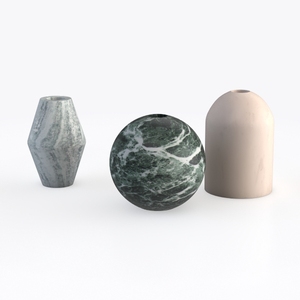
Marble Ceramic Modern Decorative Vases Set 3D Model

Vintage Sepia Palm Jungle Wall Art Print 3D Model

Minimalist Black Gold Striped Area Rug 3D Model

Art deco wallpaper 10

Modern Brass Metal Taper Candle Holder Decorative 3D Model

Luxury Black Gold Geometric Pattern Area Rug 3D Model
FAQ
Q: What colors define the Art Deco palette?
Art Deco typically features rich, saturated colors like deep blues, emerald greens, burgundy, and golds. These are often contrasted with black and white to create dramatic visual depth. Metallic tones such as brass, chrome, and gold leaf are essential to emphasize luxury and highlight geometric details.
Q: How does Art Deco differ from modernist design?
While modernism embraces minimalism and functionalism with sparse decoration, Art Deco incorporates lavish ornamentation and rich materials alongside modern forms. It is decorative yet structured, combining machine-age aesthetics with handcrafted artistry to evoke glamour and sophistication.
Q: What types of materials best replicate Art Deco’s luxurious feel today?
Materials that mirror the original Art Deco include highly polished woods like ebony, mirrored glass, lacquered surfaces, metal finishes in brass or chrome, and luxurious textiles such as velvet and silk. Incorporating marble or onyx for surfaces further enhances the elegant effect.
Homestyler's roots trace back to Autodesk, the global leader in design and engineering software. That heritage lives on in every feature we build. Today, with a community of more than 18 million users worldwide, Homestyler continues to make professional-quality interior design accessible to everyone — from first-time decorators to seasoned architects.
Homestyler has millions of users worldwide, making it one of the most popular online home design platforms.
立即免费设计
































