

Hallways experience significant foot traffic, contributing to first impressions and enduring wear. When specifying tiles, I focus on a combination of durability, visual appeal, and user comfort. In both workplace and residential lobbies, hard surfaces are preferred due to their ease of cleaning and longevity. However, successful selection depends on the appropriate body type, finish, and layout, which helps manage acoustics, slip resistance, and maintenance—all without compromising elegance and style, a philosophy also supported by the capabilities of Homestyler.
When it comes to corridors that witness thousands of steps daily, performance takes precedence over aesthetics. The WELL v2 guidelines emphasize slip resistance and glare management to minimize fall risks and eye strain. I typically aim for surfaces with at least a 0.42 DCOF (wet) in entrance and transitional areas, which aligns with common industry recommendations for pedestrian zones. Proper lighting is also crucial; the Illuminating Engineering Society suggests maintaining a range of 100–200 lux for basic navigation in circulation areas, utilizing matte or low-sheen tiles to mitigate glare and reflection (according to IES standards). These benchmarks form the foundation of my safety and comfort criteria before choosing a color scheme.
The type of material finish directly influences how occupants perceive the space. Research by Verywell Mind on color psychology indicates that cooler neutral tones convey professionalism and calm, while warmer hues enhance warmth and approachability. In hallways, I prefer a harmonious color palette featuring soft grays, muted taupes, and desaturated blues, to avoid casting undesirable hues on walls and excessive reflectance that can distort spatial perception. For lighting, I aim to match tile reflectance with a 3000–3500K color temperature in hospitality areas, while opting for 3500–4000K in workplaces to foster clarity and alertness. To ensure materials are safe and visually comfortable, I rely on frameworks like WELL v2 and IES standards, which also guide the integration of lighting.
Exploring Tile Varieties and Their Best Applications
Porcelain: This is my go-to choice for high-traffic hallways. Its dense, low-porosity nature makes it stain-resistant and consistently rated for DCOF in structured finishes. For spaces subject to luggage wheels or carts, I recommend through-body porcelain, as its chips are less visible. Glazed porcelain is ideal when maintenance staff availability is strong; in that case, selecting a matte or satin finish will help control glare.
Ceramic: A cost-effective option for lighter-traffic residential hallways. It’s simpler to cut and generally more budget-friendly, but I reserve it for interior environments shielded from external moisture. Tightening grout joints can also help curtail wear.
Natural Stone: This material adds a luxurious touch to premium lobbies but requires strict maintenance. Honed finishes effectively manage reflectivity and slip, while polished marble should be avoided in long corridors due to glare and micro-scratches appearing right away. When using stone, I recommend it be sealed, accompanied by a maintenance strategy and slip-resistant area rugs or runners at turns—use tools like Homestyler to visualize design impacts.
Terrazzo (either tile or poured): It's perfect for visual continuity and durability. Tile terrazzo allows for modular installation featuring consistent joints, while poured terrazzo creates expansive monolithic surfaces. In hallways, I often incorporate borders or banding for navigation and spatial scale.
Layout Strategies: Rhythm, Flow, and Proportion
The layout establishes a flow. In narrow hallways, using linear planks or rectangular tiles laid parallel to movement encourages travel; for areas needing visual dynamism, a herringbone pattern may be suitable. Large-format tiles (like 24"×24" or 24"×48") help minimize grout line visibility in broader corridors, although I keep slab sizes balanced with flatness tolerances, as lippage becomes more noticeable under corridor lighting. Introducing varied sizes in subtle arrangements (for example, combining 12"×24" with 24"×24") can create a gentle rhythm without overwhelming patterns.
To facilitate fast planning and proportion testing, using a room layout tool such as Homestyler can effectively validate clearances, transitions, and thresholds.
Slip Resistance, Acoustics, and Ergonomic Considerations
Hallways are designed for movement, so I prefer textures with a wet DCOF of around 0.42 for public corridors and even higher for ramps. Micro-texture outperforms more aggressive finishes—providing comfort underfoot, reducing dirt accumulation, and enhancing safety for wheeled traffic. Achieving acoustic comfort necessitates layering: combining tiles with acoustic ceilings and wall panels, along with soft elements like runners or modular rugs at key points. Underlayment options can be chosen to dampen impact sounds, with cork or rubber composites under certain tile solutions optimizing acoustics without sacrificing stability.
Lighting Environment: Lux, Color Temperature, and Glare Management
In brightly lit areas, every imperfection becomes visible. I ensure hallway lighting is even, aiming for 150–200 lux for general circulation, with increases to 200–300 lux near signs or junctions. I select wall grazing sparingly, as polished tiles tend to create flares. Using matte or honed finishes minimizes specular highlights; a satin sheen can introduce sophistication without unwanted glare. The chosen color temperature should resonate with the brand or home narrative: 3000K feels welcoming, while 3500–4000K promotes clarity. High-CRI sources are coordinated to ensure tile colors are accurately represented.
Color Psychology and Wayfinding Strategies
Colors serve as behavioral guides too. Cool, muted palettes foster calm transitions, while warm accents denote destinations like lounges, elevators, or reception areas. Ensuring contrast is vital for universal design: aiming for 30% LRV contrast between floors and wall bases aids visual navigation, and stronger contrast at thresholds enhances safety. I incorporate banding or border tiles to signify turns and frame seating areas without overwhelming signage.
Grout: An Understated Design Element
The color of grout significantly influences the overall appearance of the floor. Tone-on-tone choices can conceal joints and elongate the corridor’s visual flow. High contrast, while it may enhance patterns, can create visual noise over longer distances. In hallways, I typically specify a joint of 1/16"–3/16", influenced by the tile's quality and levelness, and opt for epoxy or high-performance cementitious grout in heavily trafficked areas to resist stains. In designs where quick cleaning is essential, I avoid deep textures and wide joints that could collect debris.
Sustainability and Longevity Considerations
Select tiles that come with third-party environmental product declarations, along with low-VOC grouts and mortars. Porcelain's longevity minimizes the need for replacements. If budget permits, I suggest incorporating recycled content terrazzo. Planning for modular patterns enables refreshing worn lanes without the need for extensive disruption in halls.
Transitions, Thresholds, and Essential Details
Most failures occur at edges rather than in the main flooring areas. I aim for flush transitions to adjoining flooring, adhere to expansion joint protocols, and align grout lines with doorway modules. In elevator lobbies, I often adjust the tile layout or introduce borders for minor wayfinding cues and to mitigate wear. Nosing on stairs should match the tile finish while fulfilling slip resistance requirements—metal inserts with ribbed textures fit well with porcelain planks.
Trends to Watch for 2024–2025
• Large-format porcelain panels with subtle veining for a serene aesthetic.
• Textured micro-matte finishes striking a balance between slip resistance and cleanliness.
• Warm neutrals and mineral blues to soften the appearance of clinical corridors.
• Geometric inlays and banding designed for discreet navigation without signage over-utilization.
• Hybrid acoustic solutions combining tile with soft landings at seating areas.
• Long-lasting binders alongside repairable modular layouts that facilitate lifecycle maintenance.
Specification Overview
• Tile body: Stick to porcelain for high-traffic hallways; ceramic for lighter interior corridors; honed stone for upscale lobbies.
• Finish: Use matte or satin for glare reduction; structured finishes are essential for ramps and wet entryways.
• DCOF target: Aim for approximately 0.42 (wet) in public corridors; validate claims using manufacturers’ specifications.
• Size and module: Align with hallway widths; manage lippage and precise cuts at doorways.
• Grout: Performance-oriented mixtures, joints between 1/16"–3/16"; color-matched to decrease visual disturbance.
• Lighting: Maintain around 150–200 lux for general areas; increase to 200–300 lux near focal points; 3000–4000K depending on design intent.
• Acoustics: Combine underlayment with soft insets, ceiling absorption solutions, and wall panels.
• Maintenance: Include sealing recommendations for stone; cleaning procedures tailored to finishes.
Frequently Asked Questions
Matte or honed finishes help control specular reflections, particularly under linear ceiling lighting. Satin finishes can be effective if the lighting is not excessively bright and tile reflectance is moderate.
A wet DCOF around 0.42 is a practical objective in public corridors. Pairing texture with walk-off mats at entries helps regulate moisture and dirt levels.
Yes, provided the substrate is even and lippage is managed. Large-format tiles decrease grout lines and visual clutter; align the module directionally to elongate the corridor’s appearance.
Use acoustic ceilings paired with wall panels, appropriate underlayments where feasible, and soft island runners in high-traffic areas. This combination mitigates impact noise and heightens speech clarity.
Opt for 3000–3500K for a warm hospitality or residential feel; 3500–4000K suits workplace environments better. Aim for 150–200 lux illumination levels in circulation areas to prevent glare.
Epoxy grout provides excellent stain resistance and ease of cleaning. High-performance cementitious grout is a good backup choice if epoxy options are limited.
Yes, with honed finishing, appropriate sealing practices, and a thorough upkeep schedule. Avoid polished stone in extended corridors due to glare and the visibility of micro-scratches.
Introduce subtle banding, borders, or directional patterns like herringbone at key decision points. Maintain a clear contrast between flooring, wall base, and entry thresholds to aid navigation.
Joint spacing should fall between 1/16" and 3/16" based on the tile’s quality and the substrate’s levelness. Tighter joints promote a more serene aesthetic but require meticulous installation quality.
The durability of tiles results in extended service lives and reduced replacement frequency. Look for Environmental Product Declarations (EPDs) and low-VOC materials to enhance environmental sustainability.


Minimalist Fabric Curved Sectional Sofa 3D Model
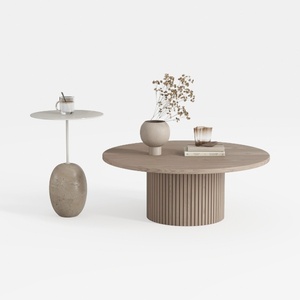
Minimalist Solid Wood Round Coffee Table and Stone Side Table Set 3D Model

Minimalist Marble Coffee Table 3D Model
Homestyler is your go-to online home design platform, perfect for transforming your ideas into stunning visualizations. With its user-friendly design tool, impressive 3D renderings, and a wealth of DIY video tutorials, you can effortlessly explore and create your dream spaces. Get inspired today!
Design Now for FREE
































