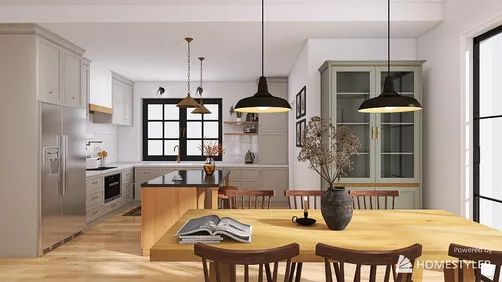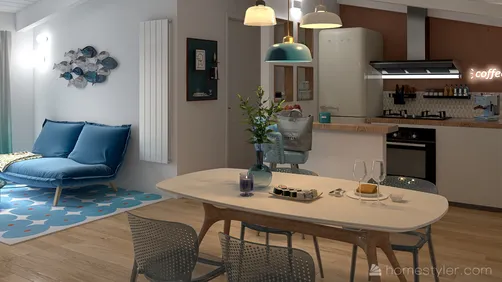



During one of my visits to a client's garage, I mistakenly assumed we'd be selecting paint colors, but instead discovered that a previous painter had covered every surface in a high-gloss white latex. The result was a glaringly bright space reminiscent of a car showroom, rendering my client nearly blinded for a good ten minutes! This embarrassing experience left a lasting impression on me: the significance of sheen, preparation, and color selections in compact or reflective areas is often undervalued. In smaller, rough, or multifunctional garages, seemingly small choices can yield substantial results. As I explored various room layout examples, the concept of how painted walls would interact with shelving and bicycles in that space became remarkably clear. With the help of Homestyler, I could visualize potential outcomes more effectively.
1. Select the appropriate sheen for practical durability
For garage walls, I consistently suggest using an eggshell to semi-gloss latex. Eggshell finishes effectively conceal imperfections and offer easier cleaning than flat options, while semi-gloss provides the best durability for removing oil marks and scuffs. However, it’s crucial to understand that high-sheen finishes also accentuate surface flaws, making prep work even more important. If your garage experiences heavy usage or is part of a rental, a semi-gloss finish may prove to be more advantageous in the long run, even if it requires more thorough surface preparation.
2. Don’t skip on primer and surface preparation — it’s a worthwhile investment
Primer is often the unsung hero of painting projects: a good stain-blocking primer can seal oil stains from vehicles or garden tools and prevent tannin bleed-through from knots or plywood. I sometimes forgo the primer for budget projects on pristine drywall, but when dealing with stained walls, patched surfaces, or raw concrete in a garage, utilizing a high-quality latex primer can decrease the number of topcoats needed and prevent premature peeling. In the end, minimizing repainting efforts down the line proves to be more cost-effective overall.
3. Select colors that manage light and heat effectively
Light-colored paints reflect light and create the illusion of a larger, brighter garage, which is especially beneficial if you're working within that space. Conversely, darker shades can obscure dirt but may absorb heat, leading to a more confined feeling; they also display dust in a more pronounced manner. I once recommended a warm mid-gray to a client who needed their garage to function as a workshop — it cleverly hid dirt while still reflecting a sufficient amount of light when combined with task lighting.
4. Opt for durable latex formulations and consider low-VOC options
Not all latex paints are created equal: attributes like "scrubbable" and "durable finish" are essential. Low-VOC latex paints are advantageous because they minimize fumes during painting and after, essential in garages or enclosed areas; the slight extra cost associated with low-VOC options is generally justified for improved indoor air quality. The key is ensuring that your expectations for durability are met — always consult the technical data sheet regarding scrub and abrasion resistance when making a selection.
5. Get inventive with accents and functional zoning
Paint can serve multiple purposes: incorporating a dark stripe on the lower walls or a glossy accent behind tool racks can conceal scuffs while also defining functional areas for storage or work. For clients aiming for a more organized garage, I have suggested altering the wall color midway up — it’s an economical and quick solution that significantly enhances visual appeal. However, be cautious with glossy accents, as they tend to reveal imperfections, so limit their use to sections where you're confident in the finish quality.
To help clients visualize the finished product before making decisions, I frequently create straightforward visual boards and realistic renderings using Homestyler. These 3D render examples provide insights into how different sheens and colors interact with shelving and flooring, ultimately preventing unnecessary paint returns and informed decision-making in my projects.
FAQ
Q: Is latex paint appropriate for garage walls? A: Yes. Interior latex paints are widely used due to their water-based nature, ease of cleaning, and strong adhesion on drywall and primed surfaces. Opt for a higher-sheen latex for increased durability, especially in high-traffic garages.
Q: What sheen is most suitable for a garage? A: Semi-gloss or satin typically offers the best compromise: it's durable and easy to clean without being as reflective as full gloss. Eggshell can be adequate for lighter usage but doesn’t hold up as well against scrubbing.
Q: Is primer necessary for garage drywall? A: Yes, if there are stains, patches, or raw gypsum board — primer ensures proper adhesion, conceals minor flaws, and can decrease the number of needed topcoats. Skipping primer is only advisable on already painted, clean surfaces.
Q: Are low-VOC latex paints worth the investment? A: Absolutely, especially in attached garages or areas with limited ventilation; they lessen off-gassing and enhance indoor air quality. The U.S. EPA states that reducing volatile organic compounds (VOCs) indoors contributes to minimizing irritation and long-term health risks.
Q: How many coats of latex paint will I need? A: Generally, two coats of quality latex applied over a primed surface will ensure complete coverage and durability. Heavily stained surfaces or transitions from dark to light colors may require an additional coat or tinted primer.
Q: Can exterior latex paint be used inside my garage? A: While it's possible, exterior paints are designed primarily for weather resilience and might not provide better indoor durability; they can also contain stronger solvents. It's best to use high-quality interior latex that is labeled for durability and scrub resistance unless otherwise advised by a professional.
Q: What surface preparation tools do I require? A: Basic prep includes a cleaning degreaser, fine sandpaper, patching compound, and quality brushes or rollers. Allocating time for cleaning and priming yields significantly better results than simply purchasing premium paint to apply on a dirty surface.
Q: How do I maintain painted garage walls? A: Quickly wipe away scuffs with a mild detergent and water, touch up any chips using leftover paint, and plan for a complete repaint every 7 to 15 years, depending on wear. For frequently used areas, consider washable finishes and a protective coating for the lower wall.
What began as an Autodesk innovation has evolved into a design platform used by more than 20+ million registered users (platform data, 2026) around the globe. Homestyler combines powerful rendering, an intuitive editor, and a vast furniture library to help you turn inspiration into photorealistic designs — whether you're redesigning a single room or planning an entire home.
Homestyler is your go-to online home design platform! With its easy-to-use design tool, stunning 3D renderings, and a wealth of inspiring design projects and video tutorials, you can effortlessly create and visualize your dream space. Start designing today!
今すぐ无料でデザイン






![[14]](https://hs-designs.homestyler.com/production/design/images/2026-09-12/aa817543-bb43-4f3a-9583-2b2473af620f/1789226165872/10757139.jpg?x-oss-process=image/resize,w_502,m_mfit/format,webp)