


Empty Room Design for Compact Urban Apartments
The 'Call for Empty Room Vol. 3' contest invites designers to create versatile, ready-to-use interior templates for unfurnished residential spaces—particularly targeting compact urban apartments where functionality, spatial efficiency, and aesthetic warmth must coexist. Unlike generic room types, this scenario emphasizes *blank-slate adaptability*: the design must serve as a foundational layout that accommodates diverse lifestyles (e.g., young professionals, remote workers, small families) while optimizing limited square footage through smart indoor space planning and modular furniture integration. Homestyler design tips emphasize starting from structural constraints—window placement, plumbing zones, natural light direction—and building human-centered flow around them.
Design Challenges & Common Pitfalls
Compact urban apartments face three recurring challenges: (1) conflicting functional zones (e.g., kitchen-dining-living overlap causing visual clutter), (2) insufficient storage without compromising openness, and (3) poor daylight distribution due to narrow footprints or single-exposure windows. Many entrants over-prioritize aesthetics—adding decorative elements before resolving circulation paths or ergonomic clearances—leading to AI-generated renders that look stylish but fail real-world usability checks. Successful submissions treat Homestyler’s AI tools not as decoration engines, but as spatial logic validators—using auto-zoning, sunlight simulation, and traffic-flow overlays to stress-test layouts before finalizing materials.
✅ Prioritize Zoning Clarity with Visual & Physical Boundaries
In compact apartments, ambiguous zones undermine both function and perception of space. Use layered cues—not just furniture placement—to define areas: varied ceiling heights (via virtual soffits), floor material transitions (e.g., wood to tile), and strategic lighting (pendants over dining, recessed strips in living). Avoid full-height walls; opt for half-walls, open shelving, or low-profile cabinetry that maintains sightlines while signaling purpose. This supports effective indoor space planning by reinforcing behavioral intent without sacrificing airiness.

Petra Franciskovic’s 'Natural Wood Minimalist Apartment' demonstrates zoning clarity through subtle yet decisive boundaries: a continuous wooden countertop extends from kitchen to breakfast bar, anchoring cooking and dining functions; floating oak shelves visually separate the living nook without blocking light; and aligned pendant lights reinforce the dining zone’s identity. She leveraged Homestyler AI design tools to simulate sun path across the day (noting 'daytime' in tags), adjusting cabinet heights and window treatments to maximize glare-free illumination—proving how AI can validate spatial logic, not just style.
Start Free Design✅ Maximize Vertical Storage Without Visual Weight
With floor area constrained, vertical real estate becomes critical—but tall cabinets often feel oppressive. Counteract this with strategic transparency (glass-front uppers), recessed niches, and monochromatic palettes (e.g., matching cabinet frames to wall color). Integrate storage into architecture: under-stair drawers, ceiling-mounted racks above islands, and base cabinets with pull-out trays. Always maintain a 'breathing zone'—at least 12 inches of unbroken wall surface above eye level—to preserve spatial calm and support holistic indoor space planning.
Petra Franciskovic’s 'Natural Wood Minimalist Apartment' uses vertical storage intelligently: upper cabinets are omitted entirely in favor of open walnut shelving above the sink and stove—housing essentials while keeping the eye moving upward along natural wood grain. Below, full-height base cabinets feature soft-close drawers with integrated dividers (visible in the 'cabinets' tag), and the refrigerator is panel-ready, disappearing into the wall. Her Homestyler AI workflow likely included the 'Material Match' tool to ensure consistent wood tones across shelves, cabinets, and flooring—reducing visual noise while amplifying storage capacity.
Visit Design Challenges✅ Harness Natural Light & Greenery for Spatial Expansion
Daylight is the most cost-effective spatial enhancer in tight units. Position reflective surfaces (glossy countertops, mirrored backsplashes, light-colored floors) opposite windows to bounce light deep into the plan. Layer lighting: ambient (ceiling), task (under-cabinet), and accent (wall sconces near greenery). Incorporate live plants—not just as decor, but as biophilic depth markers: tall fiddle-leaf figs near corners draw the eye outward, while hanging pothos soften hard edges. This aligns with Homestyler design tips for perceptual spaciousness, turning constraints into character.
Petra Franciskovic’s 'Natural Wood Minimalist Apartment' exemplifies light-and-greenery strategy: large windows ('windows' tag) are unobstructed by heavy curtains, allowing daylight to flood the white-oak floor and reflect off the matte-white subway tile backsplash. A lush potted monstera sits beside the kitchen window ('greenery' tag), its broad leaves framing the view and adding layered depth—while the adjacent floating shelf displays small succulents, reinforcing vertical rhythm. Using Homestyler’s 'Sunlight Simulator', she optimized window orientation and selected HDR environment 'felsenlabyrinth' (a bright, neutral outdoor preset) to authentically render luminance—showcasing how AI tools elevate environmental responsiveness in compact-space design.
Visit Design ChallengesFAQ
Q: Do I need prior experience with Homestyler to enter 'Call for Empty Room Vol. 3'?
Homestyler is free and browser-based—no installation or prior expertise required. The contest welcomes beginners: use the AI ‘Style Suggestion’ and ‘Auto Layout’ tools to generate strong starting points, then refine using drag-and-drop editing.
Q: Can I submit more than one empty room template?
Yes—you may submit multiple entries. Each selected design earns 500 coins, and all qualifying works are eligible for featuring in the Homestyler Materials Market.
Q: How are winning templates selected—and what happens after selection?
Selection combines community voting (Sept 10–Oct 5, 2025) and expert review. Once selected, your template appears in the Homestyler Materials Market with your nickname and avatar. As the creator, you retain majority revenue from sales—making indoor space planning both creatively and financially rewarding.
Q: Are there restrictions on room size or style for this contest?
No strict size limits—but successful entries prioritize realistic compact urban apartment dimensions (e.g., 40–80 sqm). Style is open, though top-performing designs integrate Homestyler design tips like daylight optimization, multi-functional zoning, and scalable material palettes.
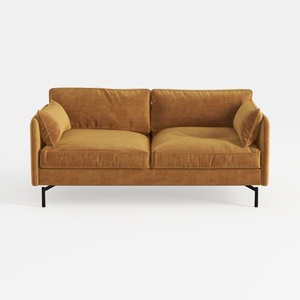
Modern Velvet Upholstered 2 Seater Sofa With Black Metal Legs 3D Model

Minimalist Boucle Fabric Tufted Sofa 3D Model
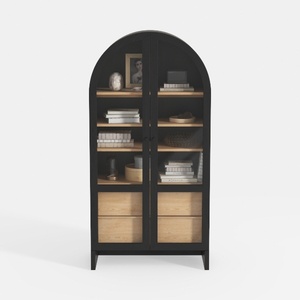
Minimalist Black Oak Arched Glass Display Cabinet 3D Model
Homestyler is an easy-to-use online home design platform offering powerful 3D rendering, inspiring design projects, and helpful DIY video tutorials. It’s perfect for bringing your interior design ideas to life quickly and creatively. Give it a try to transform your space!
Design Now for FREE



