Dimensional Living Space Design
The 'Dimensional Living Space' is a conceptual interior design approach that transcends conventional functionality to evoke spatial depth, perceptual layering, and emotional resonance. Inspired by the Homestyler 'Dimensional Space for Web' contest — where furniture acts as a 'launch button into dimensional life' — this scene emphasizes immersive spatial storytelling through transparency, light modulation, geometric abstraction, and multi-sensory materiality. It’s not about literal dimensions, but about designing *perceived dimensionality*: using contrast, scale shifts, reflective surfaces, strategic voids, and dynamic lighting to make compact spaces feel expansive, static rooms feel kinetic, and everyday environments feel otherworldly yet habitable.
Design Challenges & Common Pitfalls
Designers often struggle to balance 'dimensional' ambition with liveability — resulting in visually striking but impractical layouts; over-reliance on digital effects (e.g., excessive transparency or floating elements) that weaken structural coherence; poor spatial hierarchy causing visual clutter instead of layered depth; and insufficient attention to real-world constraints like natural light flow, circulation paths, and ergonomic scale. Without intentional indoor space planning, dimensional effects risk feeling gimmicky rather than grounded.
✅ Prioritize Spatial Flow & Layered Zoning
True dimensionality begins with intelligent spatial organization — not decoration. Use furniture placement, level changes (even subtle ones), partial-height partitions, and directional lighting to define zones *without walls*. This creates perceptual depth while maintaining openness and intuitive movement. Avoid rigid symmetry; instead, choreograph sightlines so each area reveals itself gradually — inviting exploration and reinforcing the 'dimensional journey' concept.

Cecilia Botha’s 'Modern Serenity' masterfully applies this principle: she uses a low-profile sofa, recessed ceiling cove lighting, and staggered wall-mounted shelves to create distinct lounge, contemplation, and viewing zones — all within one fluid volume. With Homestyler AI design tools, she simulated daylight progression (g_umhlanga_sunrise HDR) to validate how light layers reinforce spatial sequence — proving that dimensional living starts with rigorous indoor space planning, not just aesthetics.
Start Free Design Now✨ Leverage Light, Texture & Material Contrast
Dimensionality is perceived through variation — not uniformity. Combine matte and reflective surfaces (e.g., brushed metal against textured plaster), warm and cool light sources, soft upholstery with crisp architectural lines, and organic shapes juxtaposed with strict geometry. These contrasts generate visual tension and depth cues our brains interpret as three-dimensionality — even in flat renderings or small footprints.

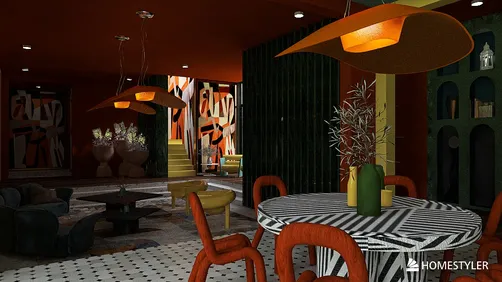
Natalia Farias’ 'Modern Memphis II' exemplifies bold material storytelling: high-gloss lacquered cabinetry reflects fragmented Memphis-patterned walls, while matte velvet seating absorbs light to anchor the composition. Using Homestyler’s real-time texture preview and HDR lighting controls (lilienstein preset), she stress-tested contrast ratios across day/night modes — ensuring dimensional richness remains legible at all times. This is advanced Homestyler design技巧 in action: using digital fidelity to inform tactile authenticity.
Begin Your Free Layout🌀 Integrate Modular & Adaptive Furniture Systems
Furniture must be an active participant — not passive filler. Choose pieces with transformable geometries (extendable tables, rotating modules, fold-away beds), transparent or semi-transparent frames (acrylic, glass, wire), and anthropometric flexibility. These elements support evolving spatial narratives: a single zone can shift from social hub to private retreat, reinforcing the contest’s vision of furniture as a 'launch button into dimensional life'.

Natalia Nevzorova’s 'Шоколадные оттенки(эск)' deploys a custom 3D relief panel as both art and spatial divider — its sculptural depth literally casting shifting shadows that redefine the room’s geometry throughout the day. She used Homestyler’s AI-powered object scaling and rotation tools to precisely position modular shelving units *within* the relief’s negative space, turning furniture into integral architectural texture. This demonstrates how Homestyler design技巧 enable seamless integration of adaptive systems into dimensional living space planning.
Launch Free Design TodayFAQ
Q: What does 'dimensional' mean in this interior design context — is it about VR or physical construction?
It refers to perceptual and experiential depth — achieved through spatial layering, light dynamics, material contrast, and intelligent indoor space planning — not virtual reality. All winning entries were created in Homestyler’s web-based 3D editor, emphasizing real-world applicability.
Q: Do I need advanced 3D modeling skills to participate in dimensional design challenges?
No. Homestyler AI design tools simplify complexity: auto-lighting presets (like moonlit_golf or rustig), one-click material swaps, and smart object alignment help beginners achieve dimensional effects without coding or CAD expertise.
Q: How important is room size when designing a dimensional space?
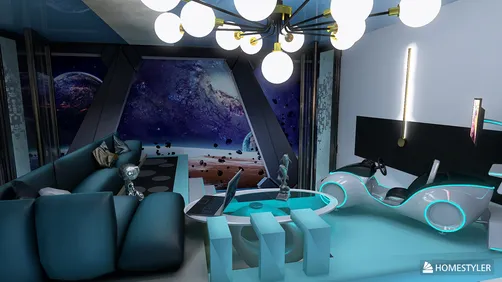
Size is secondary to intention. Vanessa Ribeiro’s Top 1 entry (just 10.9 m²) uses transparent surfaces, monochromatic gradients, and cosmic-view framing to create vastness — proving that dimensional living space design thrives on clever Homestyler design技巧, not square meters.
Q: Can dimensional design principles work in traditional homes — or only futuristic ones?
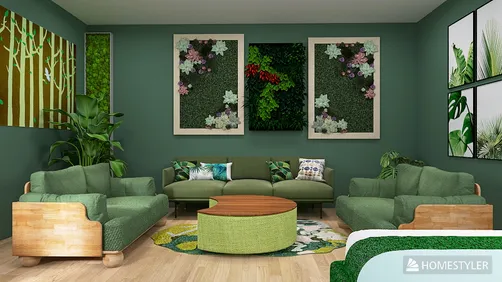
Absolutely in both. Karine Lucena’s 'Um Refúgio Floral' (Top 2) merges botanical warmth with dimensional layering — wooden pathways, soft-focus floral backdrops, and ambient light gradients create a dreamlike, multi-layered sanctuary rooted in comfort, not sci-fi. Dimensionality serves emotion — not aesthetics alone.

Minimalist Fabric Loveseat Sofa with Round Decorative Pillows 3D Model

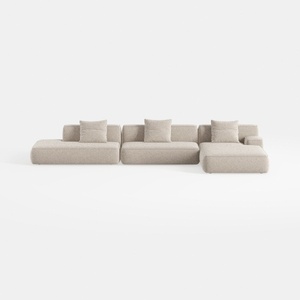
Minimalist Boucle Fabric L Shaped Sectional Sofa 3D Model
Homestyler is an easy-to-use online home design platform offering powerful 3D rendering, a vast collection of interior design projects, and helpful DIY video tutorials to inspire and guide you in creating your perfect space.
Design Now for FREE