Balcony Space Design
Balcony space design refers to the intentional planning and styling of outdoor transitional areas adjacent to residential interiors—ranging from compact urban balconies to expansive terrace extensions. As a hybrid indoor-outdoor zone, it serves multifunctional roles: a green sanctuary, a social lounge, a quiet reading nook, or even an open-air dining or wellness area. Successful balcony design balances spatial efficiency, weather resilience, aesthetic cohesion with the interior, and human-centered comfort—all while leveraging tools like Homestyler for precise 3D visualization and AR virtual placement.
Design Challenges & Common Pitfalls
Key challenges include limited square footage demanding smart indoor space planning; exposure to sun, rain, and wind requiring durable, climate-appropriate materials; lack of privacy in high-density housing; structural load restrictions limiting heavy furniture or plant installations; and poor visual continuity between interior and balcony that disrupts spatial flow. Many designers also underestimate lighting transitions, drainage needs, and ergonomic seating arrangements—leading to underutilized or uncomfortable spaces.
🌱 Prioritize Multi-Functional Zoning
Divide the balcony into intuitive functional zones—e.g., lounge, greenery, dining, or reflection—without physical barriers. Use modular, lightweight furniture, foldable elements, and vertical gardens to maximize flexibility. Homestyler’s real-time 3D rendering allows testing multiple zoning layouts instantly, helping users simulate traffic flow, sightlines, and scale before committing to purchases or installations.

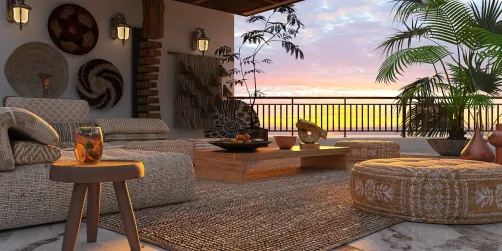
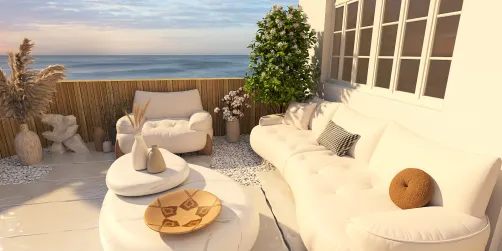
Nikoles Spaces’ 'Balcony retreat' exemplifies multi-functional zoning: a compact lounge area integrates a wooden coffee table, curated seating, and decorative accents—all arranged to support conversation, relaxation, and visual interest without overcrowding. Using Homestyler AI design tools, the designer simulated sun-path shadows and tested furniture proportions in context, ensuring optimal use of every centimeter—an essential practice in tight indoor space planning.
Start Free Design Now🌿 Integrate Nature with Purposeful Layering
Layer greenery vertically (wall planters, hanging pots) and horizontally (tiered floor planters, climbing vines) to add depth, softness, and biophilic benefits—while avoiding clutter. Select low-maintenance, climate-tolerant species and pair them with natural textures (rattan, teak, stone) to reinforce harmony. Homestyler’s AR virtual placement feature enables realistic preview of plant growth stages and seasonal color shifts—critical for long-term livability.

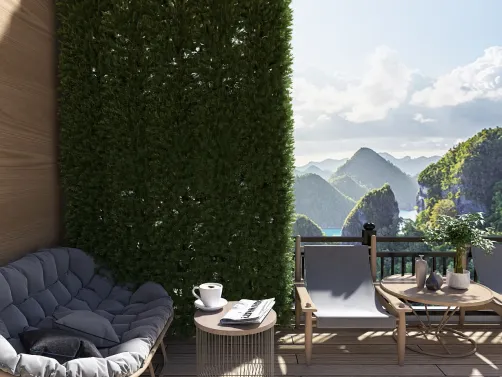
Sabrina C’s design leverages layered nature through draped textiles, cascading ivy, potted palms, and fairy-light-wrapped trellises—creating immersive texture and microclimate without blocking views. Her use of Homestyler’s real-time 3D rendering allowed precise calibration of plant density and light diffusion, demonstrating how thoughtful biophilic layering transforms a narrow balcony into a serene, resort-like extension—an advanced Homestyler design technique for small-space vitality.
Begin Your Free Design✨ Optimize Light, Privacy & Seamless Transitions
Use reflective surfaces, warm ambient lighting (string lights, solar lanterns), and translucent screens (laser-cut metal, bamboo blinds) to enhance perceived spaciousness and extend usability into evenings. Align flooring materials, color palettes, and threshold treatments (e.g., matching tiles or continuous decking) between interior and balcony to strengthen spatial continuity. Homestyler’s material-swapping and lighting simulation tools make testing these subtle yet impactful transitions fast and accurate.

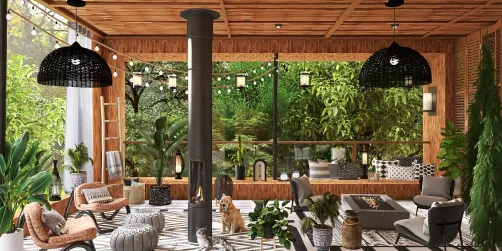
Jewley Cameron’s 'Creative Utilization of Balcony Space' employs a freestanding wooden gazebo as both privacy screen and architectural anchor—blending seamlessly with surrounding greenery and interior wood tones. Through Homestyler’s lighting simulation, she validated dusk ambiance and shadow patterns across seasons, proving how strategic light + privacy + material continuity elevates balcony design beyond decoration into holistic indoor space planning.
Launch Free Design TodayFAQ
Q: How can I maximize a tiny balcony (under 3m²) without sacrificing comfort or style?
Use wall-mounted fold-down tables, nesting stools, and ceiling-hung planters. Prioritize one dominant function (e.g., morning coffee nook) and apply Homestyler’s AR virtual placement to test clearances and sightlines before buying.
Q: What are the top Homestyler design techniques for balcony sun control and glare reduction?
Leverage Homestyler’s sun-path simulation (under Lighting Settings) to position retractable awnings, UV-filtering glass panels, or deciduous vine trellises. Pair with light-diffusing sheer curtains or perforated metal screens—all adjustable in real time.
Q: Can balcony designs be adapted for year-round use in temperate climates?
Absolutely. Combine insulated outdoor rugs, weatherproof heaters (visualized via Homestyler’s 3D object library), and evergreen plantings. Use Homestyler’s seasonal toggle to preview winter foliage loss and adjust planting plans accordingly.
Q: How does indoor space planning differ for balconies versus full outdoor patios?
Balconies demand stricter weight limits, railing safety compliance, and acoustic buffering from neighbors. Always verify structural capacity first—and use Homestyler’s model-count analytics to avoid overloading the scene with heavy assets during early-stage indoor space planning.
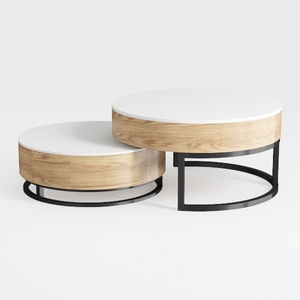
Modern Solid Wood Metal Round Nesting Coffee Table 3D Model


Minimalist Terracotta Concrete Nesting Side Tables 3D Model
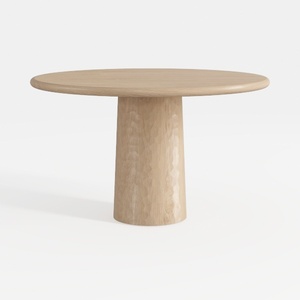
43 Inch Round Dining Table for 6,Modern Wood Round
Homestyler is an easy-to-use online platform offering powerful home design tools, stunning 3D renderings, inspiring design projects, and helpful DIY video tutorials—perfect for turning your interior design ideas into reality.
Progetta ora GRATIS