Duplication-Based Interior Space Design
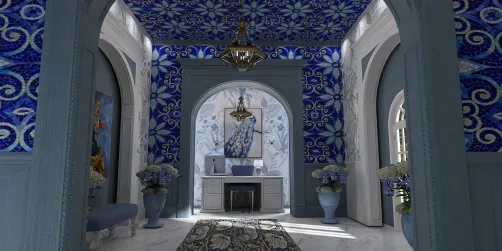
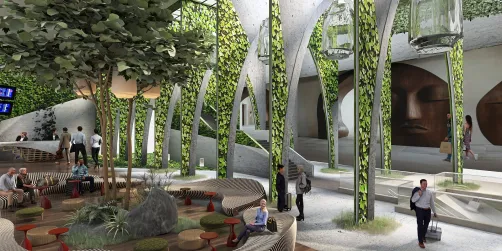
This design scenario centers on leveraging repetition—of forms, colors, materials, patterns, or spatial elements—to enhance perception of depth, rhythm, and harmony within interior environments. Inspired by the 'Art of Duplicate' contest theme, it transcends literal copying to embrace intentional duplication as a strategic tool for spatial extension (e.g., mirrored layouts, aligned furniture clusters, repeated lighting fixtures) and emotional resonance (e.g., recurring textures, tonal echoes, modular systems). It applies universally across living rooms, bedrooms, lobbies, and communal interiors—where visual continuity, balanced scale, and immersive coherence are paramount. Effective execution relies heavily on precise indoor space planning and intelligent use of Homestyler design techniques such as smart furniture arrangement, real-time 3D rendering, and virtual element duplication.
Design Challenges & Common Pitfalls
Key challenges include avoiding visual monotony when repeating elements, maintaining proportionality across duplicated components, and ensuring functional integrity (e.g., duplicated seating must not impede circulation). Common pitfalls involve over-duplication without variation—leading to sterility—or inconsistent scaling (e.g., mismatched pendant lights), which undermines spatial logic. Poor indoor space planning often results in duplicated features that clash with traffic flow or natural light paths, diminishing usability despite aesthetic appeal.
✅ Principle 1: Rhythmic Repetition with Intentional Variation
Repetition should evoke rhythm—not redundancy. Introduce subtle variation in scale, orientation, material finish, or spacing to create dynamic interest while preserving unity. For example, align three pendant lights above a dining table but vary their heights slightly or alternate matte/glossy finishes. This principle supports both aesthetic cohesion and human-centered spatial experience.

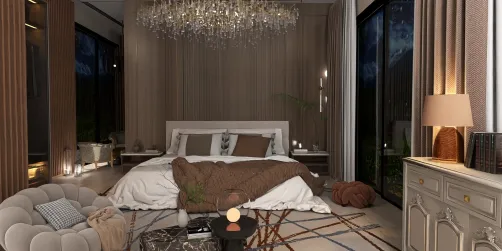
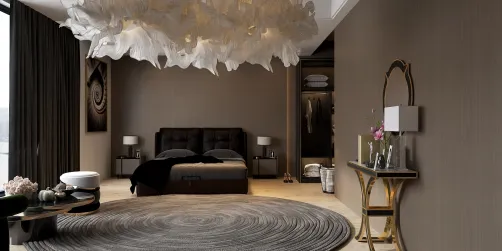
Teresa Martin’s 'Cedarstone Luxe Retreat' demonstrates rhythmic repetition through layered textile patterns—repeated geometric quilting on bedding, echoed subtly in woven throw pillows and rug borders—while varying scale and texture to avoid flatness. She leveraged Homestyler’s real-time 3D rendering to preview how light interacted with each repeated surface, refining contrast and depth before finalizing the layout—an essential step in thoughtful indoor space planning.
Start Free Design📐 Principle 2: Symmetrical Duplication for Spatial Anchoring
Strategic symmetry—achieved through mirrored furniture groupings, paired lighting, or duplicated architectural features (e.g., matching windows or columns)—creates strong visual anchors that define zones and reinforce balance. This is especially effective in formal or transitional spaces where clarity of function and hierarchy matters. Use Homestyler’s smart furniture arrangement to test symmetrical configurations instantly and adjust for ergonomic alignment.

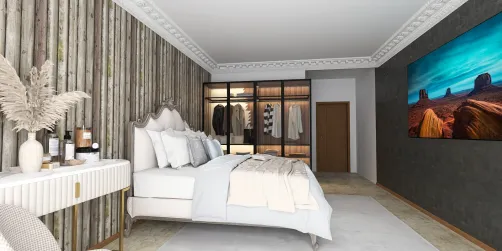
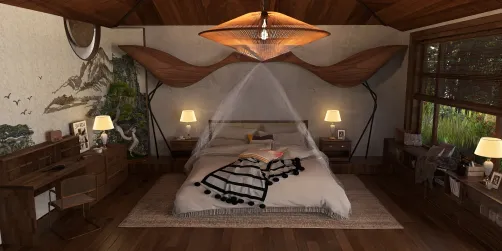
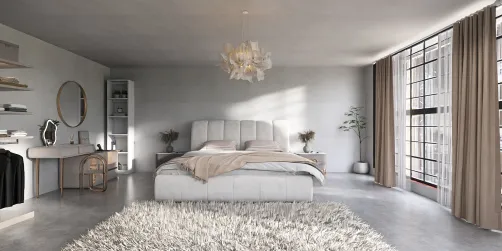
Оля Литвиненко’s unnamed bedroom design applies symmetrical duplication with twin bedside tables, matching table lamps, and mirrored wall sconces flanking the bed—creating a calm, centered focal point. Using Homestyler’s smart furniture arrangement, she iterated placement angles and clearance distances to ensure both aesthetics and accessibility, proving how Homestyler design techniques streamline precision in indoor space planning.
Begin Your Free Design🎨 Principle 3: Color & Material Echoing Across Zones
Duplicate key colors or material families (e.g., warm oak tones, terracotta accents, brushed brass) across non-adjacent areas to unify multi-functional or open-plan interiors. This ‘echoing’ technique strengthens spatial narrative without requiring physical adjacency—ideal for lofts, studio apartments, or biophilic designs integrating indoor gardens or water features.

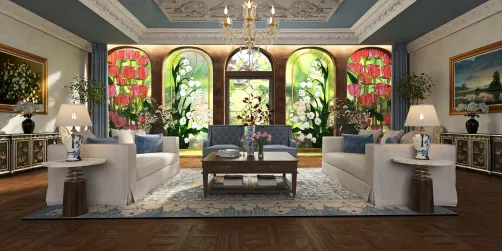
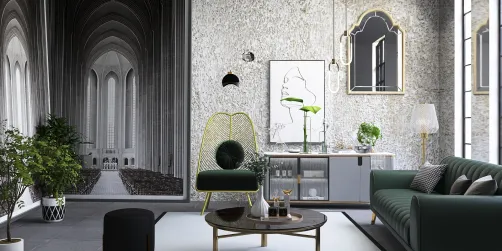
Mireia Roig’s 'Repeat after me' living room repeats deep emerald tones—from stained glass window panes to velvet sofa piping and ceramic vase glazes—while echoing natural wood grain across coffee table, shelving, and ceiling beams. She used Homestyler’s real-time 3D rendering to assess color consistency under different lighting conditions, ensuring the duplicated palette remained harmonious throughout the day—a core strength of advanced Homestyler design techniques.
Launch Free DesigningFAQ
Q: How does duplication improve small-space perception in indoor space planning?
Repeating vertical lines (e.g., tall mirrors, floor-to-ceiling shelving), consistent flooring materials, or aligned ceiling fixtures creates optical continuity that visually expands boundaries. Homestyler’s real-time 3D rendering helps test these effects before implementation.
Q: Can duplication work in eclectic or mixed-style interiors?
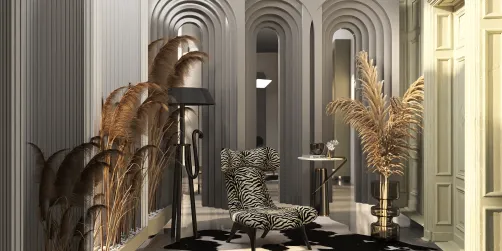
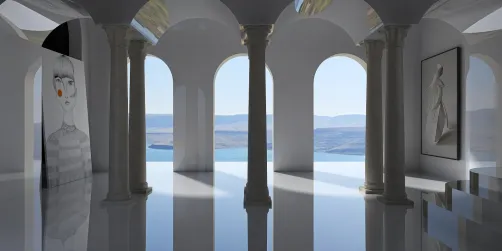
Absolutely—focus duplication on underlying principles (e.g., repeating a specific hue, texture family, or silhouette) rather than full stylistic mimicry. Top contest entries like 'A Modular Dream' prove this through repeated arch forms amid diverse art and furnishings.
Q: Which Homestyler design techniques best support duplication workflows?
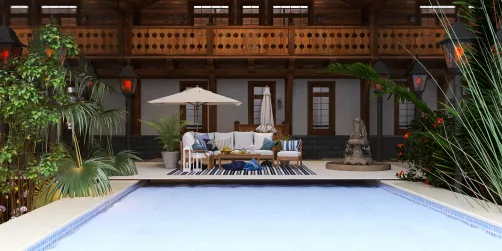
Smart furniture arrangement (for instant symmetrical replication), virtual water placement (as seen in 'Double Story'), and real-time 3D rendering (to validate lighting and material echo consistency) are most impactful. The 'duplicate' command in Homestyler v4 also enables one-click replication with customizable offset and rotation—ideal for rhythmic layouts.
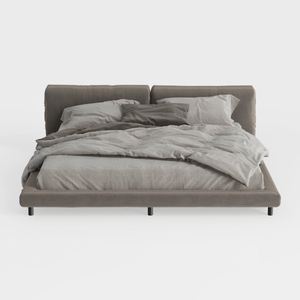
TREATLIFE HOME Modern Platform Queen Bed with Inte
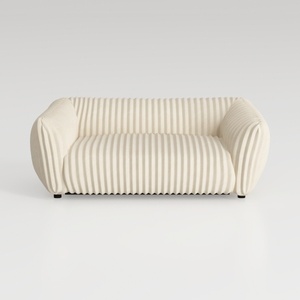
Minimalist Fluted Fabric Loveseat Sofa 3D Model

Modern Minimalist Upholstered Fabric King Bed 3D Model
Homestyler offers an easy-to-use online design tool packed with 3D renderings, inspiring interior projects, and helpful DIY video tutorials. It’s the ideal platform to bring your home design ideas to life quickly and creatively.
Design Now for FREE