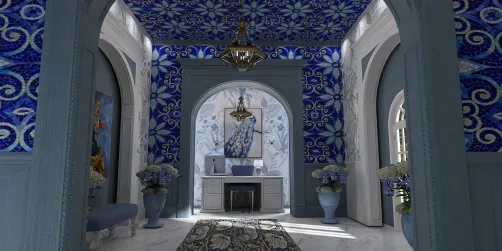
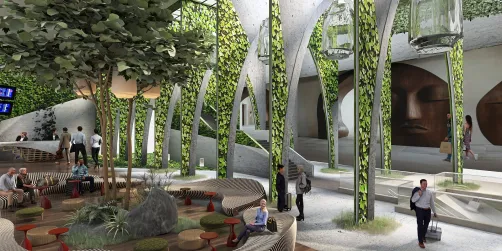
The Art of Repetition in Interior Design: A Deep Dive into Spatial Duplication
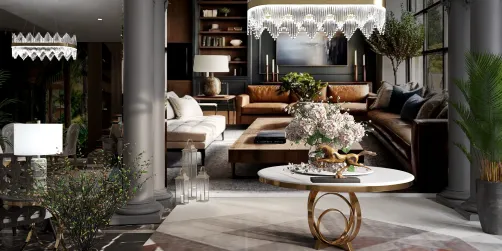
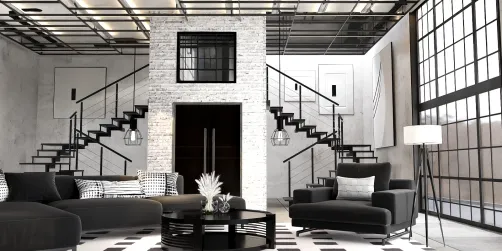
In interior design, 'duplication' transcends mere copying—it’s a deliberate compositional strategy that amplifies spatial perception, reinforces rhythm, and evokes emotional resonance through repetition. The 'Art of Duplicate for APP' contest showcases how top designers harness duplication not as redundancy, but as narrative device: repeating architectural elements (like arches or columns), mirroring furniture groupings, layering identical textures across zones, or deploying symmetrical lighting arrays to extend visual depth and unify disparate areas. This technique bridges minimalism and maximalism—offering clarity through pattern while inviting richness through variation in scale, material, or context. Whether manifesting as mirrored lounge seating in a double-height atrium (as seen in Home Design Lover’s 'Double Story'), rhythmic pendant clusters in Sui San Xie’s living room, or Elena Turricchia’s chessboard-inspired modular flooring and repeated geometric partitions, duplication becomes architecture’s silent choreographer—orchestrating flow, balance, and delight.

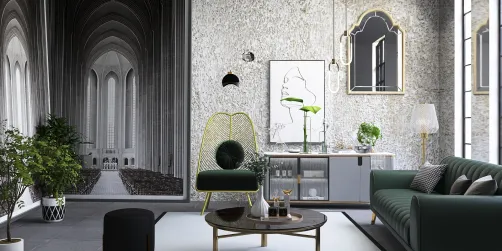
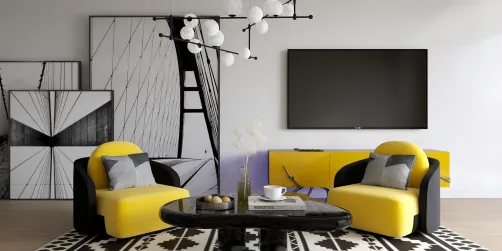
Featured work: Anna Tallian’s Enterior. This modern living room exemplifies intentional duplication through paired floor lamps, mirrored side tables flanking the sofa, and repeated linear motifs in shelving and window framing—all harmonized under soft daylight. In Homestyler, designers achieve this precision instantly using the Duplicate & Align tool: select any object, press Ctrl+D (or tap 'Duplicate' in mobile), then snap to grid or reference lines for pixel-perfect symmetry. Homestyler’s real-time 3D rendering updates instantly, letting users test duplication impact on light reflection, spatial flow, and visual weight—no guesswork, just confident iteration.
Start Free DesignDuplication as Rhythm: Patterned Repetition in Layout & Form
Rhythmic duplication creates visual cadence—guiding the eye, defining zones, and lending structure without rigidity. It appears in repeated ceiling coffers, staggered pendant heights, aligned baseboards across rooms, or modular wall panel systems. Unlike static symmetry, rhythmic duplication embraces subtle variation: alternating materials (wood/metal), incremental scaling (small → medium → large stools), or phased lighting sequences. This dynamism prevents monotony while preserving coherence—making spaces feel both curated and effortlessly livable.

Featured work: Elena Turricchia’s Egame4.internationalchesscompetition. This award-winning design transforms duplication into playful rhythm: identical chess-piece–inspired stools arranged in strict grids, mirrored dining sets flanking a central aisle, and repeating hexagonal floor tiles echoing ceiling geometry. Each repetition is calibrated—not identical, but harmonically scaled. In Homestyler, this was built using the Array Tool (under ‘Arrange’ > ‘Create Array’) to generate 5×5 stool grids with adjustable spacing and rotation—then fine-tuned with Smart Snap to align with structural beams. Homestyler’s AI-powered layout suggestions further accelerated duplication planning, ensuring every repeated element enhanced—not overwhelmed—the space’s functional flow.
Begin Free Design NowDuplication as Expansion: Mirroring & Layering for Spatial Illusion
Mirroring and layered duplication trick the eye into perceiving greater volume, continuity, and luxury. Think mirrored closet doors doubling hallway length, identical artwork triptychs stretching a narrow wall, or duplicated window treatments across adjacent rooms to blur boundaries. Layered duplication goes deeper—stacking translucent curtains + frosted glass + lattice screens, all sharing the same motif—to build dimensional depth while maintaining light permeability. This technique is especially powerful in compact homes or transitional zones (e.g., entry-to-living), where perceived square footage directly impacts user experience.

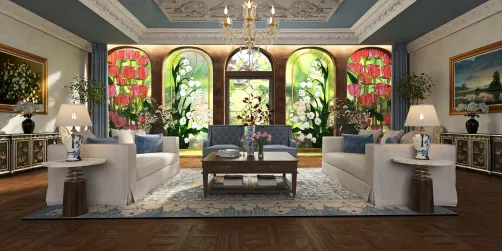
Featured work: Z 10’s Formal Regal. This opulent living room uses duplication as spatial expansion: twin gilded mirrors flank the fireplace, reflecting identical chandeliers and mirrored console tables—effectively doubling the room’s perceived width and height. Ornate moldings repeat identically across ceiling medallions, door frames, and baseboards, creating seamless vertical continuity. In Homestyler, designers replicated these high-fidelity details using the Copy Style function: apply a custom gold finish to one molding, right-click > ‘Copy Style’, then paste onto 12+ other elements in one click. Homestyler’s photorealistic rendering engine accurately simulates mirror reflections and light bounce—letting users validate duplication’s illusionary impact before finalizing.
Launch Free DesignDuplication as Identity: Thematic Consistency Across Elements
Thematic duplication anchors a space’s personality—repeating a signature color, material, shape, or iconography across diverse objects to forge unmistakable identity. A coastal theme might echo rope-wrapped table legs, nautical rope lighting cords, and woven seagrass rug borders. A tech-forward space could unify via repeated hexagonal perforations—in acoustic panels, cabinet fronts, and ceiling baffles. Crucially, thematic duplication avoids literal sameness; instead, it abstracts the motif—transforming a ‘leaf’ shape from a ceramic tile pattern into a brass drawer pull silhouette—ensuring cohesion without cliché.

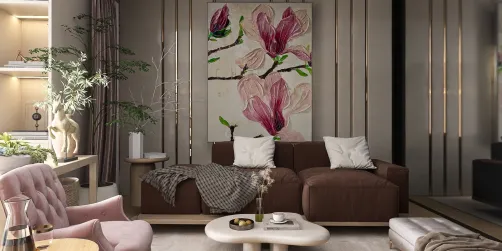
Featured work: Shalima Mohammed Thomas’s A Dreamy Pink Retreat. Here, thematic duplication defines the space’s joyful identity: recurring soft-pink velvet upholstery (sofa, armchair, ottoman), matching blush-toned bookshelf spines, and circular motifs echoed in pendant lights, mirror frames, and rug borders. Even the book titles on display are curated for consistent pastel spines—proving duplication extends to curation. In Homestyler, this was achieved using Material Sync: assign ‘Blush Velvet’ to the sofa, then use ‘Apply to All’ under Materials to propagate it across 8+ fabric items—while preserving unique textures elsewhere. Homestyler’s color palette analyzer even suggested complementary accent hues (dusty rose + warm taupe) to reinforce thematic harmony across all duplicated elements.
Start Free Design TodayFAQ
Q: What does 'duplication' mean in interior design beyond copying furniture?
A: In professional practice, duplication is a strategic compositional principle—used to create rhythm (repeated lighting heights), expand perception (mirrored surfaces), unify themes (matching material palettes), or establish hierarchy (identical focal pieces). It’s about intentionality, not replication.
Q: Can I duplicate complex scenes (e.g., full room setups) in Homestyler?
A: Yes. Use ‘Select All’ (Ctrl+A) in a room, then ‘Duplicate’ to clone the entire scene—including furniture, materials, lighting, and camera angles—into a new room for rapid iteration or A/B testing.
Q: Does Homestyler support duplication across different projects or devices?
A: Absolutely. Your duplicated designs sync automatically via Homestyler Cloud. Duplicate a sofa in your desktop project, and it appears instantly in your iOS/Android app—ready to place in another room with preserved dimensions and materials.
Q: How does duplication improve collaboration with clients or contractors?
A: Homestyler’s duplication ensures consistency: share a ‘duplicate-ready’ template with exact specs, then let stakeholders replicate approved elements (e.g., kitchen cabinets, bathroom fixtures) across floors—eliminating measurement errors and speeding up approvals.

Minimalist Pink Fabric L Shaped Sectional Sofa 3D Model
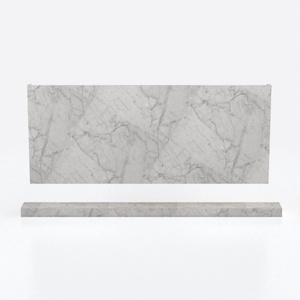
Minimalist White Marble Console Table 3D Model
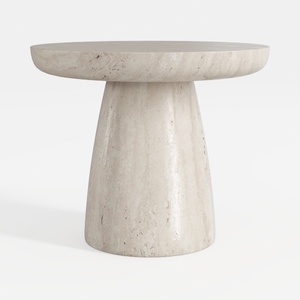
Minimalist Travertine Round Side Table 3D Model
Homestyler offers an easy-to-use online home design platform with powerful 3D rendering, extensive design projects, and helpful DIY video tutorials. It’s perfect for bringing your interior decoration ideas to life quickly and creatively.
Projete agora para LIVRE