Outdoor Living Space Design
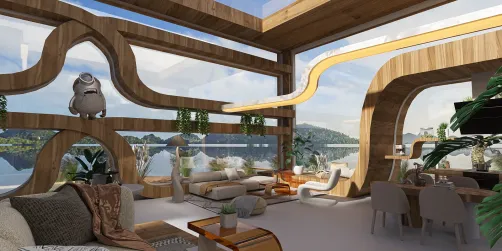
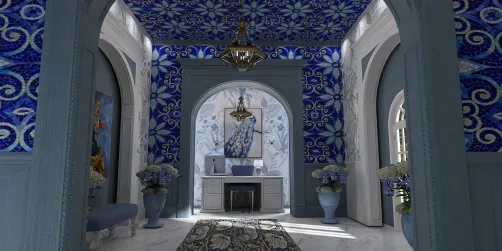
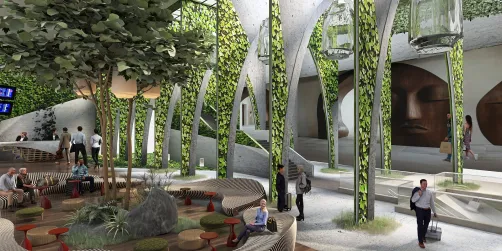
The 'Outdoor Living Space Design' scenario encompasses patios, courtyards, garden lounges, and indoor-outdoor transitional zones — all unified by the intentional use of duplication to extend spatial perception and reinforce design rhythm. Inspired by the contest theme 'The Art of Duplicate', top entries like Sara Drakito’s 'Train Station' (a modern indoor garden with repeated modular seating) and Home Design Lover’s 'Double Story' (featuring symmetrical stone sculptures and mirrored water elements) demonstrate how duplication — whether through mirrored layouts, rhythmic furniture groupings, or replicated natural elements — transforms functional outdoor areas into cohesive, immersive experiences. This scene prioritizes harmony between architecture, landscape, and human activity, leveraging Homestyler’s smart furniture arrangement and virtual water placement tools for precise, scalable planning.
Design Challenges & Common Pitfalls
Outdoor living spaces face unique constraints: inconsistent sunlight exposure across zones, microclimate variability (wind, humidity), material durability under weather stress, and the difficulty of maintaining visual continuity between interior and exterior realms. A frequent misstep is overloading repetition without variation — e.g., identical planters or chairs placed linearly — which reads as monotonous rather than harmonious. Another challenge is scale misalignment: small-scale duplicated elements (like tiny lanterns) get lost in large gardens, while oversized repeats overwhelm intimate patios. Effective indoor space planning must anticipate these factors early — especially when using AI-assisted tools like Homestyler that simulate real-time 3D rendering under dynamic lighting and spatial conditions.
🔁 Repetition with Purpose
Strategic duplication should serve function or narrative — not just aesthetics. Repeat key elements (e.g., matching lounge sets, identical potted trees, or aligned floor tiles) only where they reinforce circulation flow, define zones, or echo architectural motifs (like arched openings or column spacing). Avoid blind copying; instead, vary one attribute per repeat — height, color saturation, or orientation — to create subtle rhythm. This principle ensures visual cohesion while preserving organic vitality.

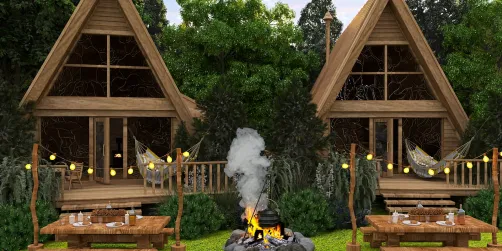
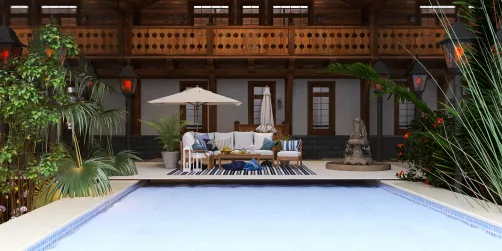
Daniela Schanglies’ unnamed courtyard design applies purposeful repetition by duplicating rustic wooden dining sets in mirrored L-shaped arrangements around a central pool — each set oriented toward shared focal points (string lights, water surface). Using Homestyler’s real-time 3D rendering, she tested sightlines and shadow patterns at different times of day, ensuring repeated elements enhanced sociability rather than rigidity. Her approach exemplifies how Homestyler design tips support intentional duplication in outdoor space planning.
Start Free Design🌿 Layered Natural Duplication
Integrate duplication through layered biophilic elements: repeat species in staggered heights (e.g., three tiers of ferns), mirror foliage textures across axes, or duplicate container types with varied plant selections. This creates depth and seasonal resilience while avoiding botanical monotony. Use Homestyler’s plant library and virtual placement to preview growth cycles and seasonal color shifts — critical for long-term outdoor space planning.

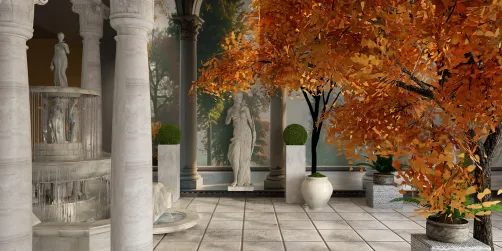
Sylvia Preis’s classic garden uses layered natural duplication: pairs of identical ornamental maple trees flank a symmetrical fountain, while repeating clusters of boxwood hedges echo the fountain’s circular form. She leveraged Homestyler’s real-time 3D rendering to adjust tree density and fountain scale iteratively — confirming that duplication strengthened axial balance without sacrificing spatial intimacy. This reflects advanced Homestyler design techniques for naturalistic outdoor space planning.
Begin Your Garden Plan📐 Seamless Indoor-Outdoor Continuity
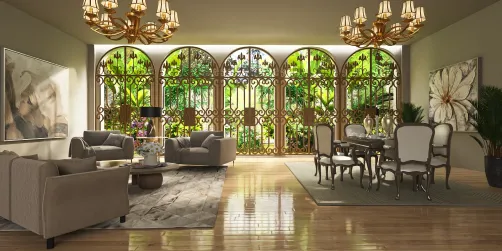
Achieve continuity by duplicating materials, colors, or proportions across thresholds — e.g., extending indoor flooring into patio surfaces, mirroring ceiling beam spacing on pergola rafters, or aligning indoor pendant light heights with outdoor lantern poles. These subtle echoes unify experience and expand perceived square footage. Homestyler’s cross-zone measurement tools and material-matching features make this synchronization precise and efficient.

Ana Victoria Moreno’s poolside lounge achieves seamless continuity by duplicating the indoor living room’s neutral-toned fabric palette and low-profile sectional geometry in her outdoor furniture layout — all precisely scaled and positioned using Homestyler’s smart furniture arrangement. The repeated rhythm of vertical planter columns also mirrors interior wall sconce spacing. Her work demonstrates how Homestyler supports holistic indoor space planning that extends fluidly into exterior domains.
Launch Your Outdoor SpaceFAQ
Q: How does duplication improve small outdoor spaces?
Repetition creates optical expansion — identical floor tiles, mirrored planters, or aligned seating rows trick the eye into perceiving greater depth and width. Homestyler’s real-time 3D rendering helps visualize this effect before implementation.
Q: Can I duplicate elements across different rooms using Homestyler?
Yes. Homestyler’s ‘Duplicate Room’ and ‘Copy-Paste Model’ tools allow consistent application of furniture, lighting, or finishes across zones — ideal for maintaining design language from living room to patio.
Q: What’s the biggest mistake when applying duplication in outdoor design?
Ignoring context: duplicating without adjusting for sun path, wind direction, or drainage can render repeated elements impractical. Always use Homestyler’s environmental simulation (light/shadow, rain preview) to validate placements.
Q: How do top designers use duplication to solve indoor space planning challenges?
They use duplication to establish hierarchy and flow — e.g., repeating a signature light fixture along a hallway to guide movement, or mirroring storage units around a central island to balance kitchen workflow. This aligns with Homestyler design tips for functional, intuitive layouts.

Minimalist Solid Oak Wooden Armchair with Cushion and Decorative Pillow 3D Model


Solid Natural Oak Wood Pet Dog House 3D Model
Homestyler offers a user-friendly online design tool with stunning 3D renderings, inspiring interior projects, and easy-to-follow video tutorials—making it simple and fun to create your dream home design from start to finish.
Design Now for FREE