


Mondrian Style Decoded: Geometry, Balance, and Restraint in Spatial Design
The Mondrian Style—named after Dutch painter Piet Mondrian—is not merely an aesthetic trend but a philosophical approach to spatial composition. Rooted in De Stijl (The Style) movement of the early 20th century, it strips design down to its essential elements: vertical and horizontal lines, right angles, primary colors (red, blue, yellow), and non-colors (black, white, and gray). Unlike decorative or ornamental styles, Mondrian design prioritizes clarity, order, and structural integrity. It treats interior space as a dynamic canvas where proportion, rhythm, and negative space become active participants—not passive backdrops. In Homestyler’s 2026 'Design in the Mondrian Style for Web' challenge, over 73 global designers reimagined this visual language for livable, navigable, and emotionally resonant interiors—proving that abstraction need not be cold, and minimalism need not be empty.

This work by author 02alena08, titled Молодежная квартира в стиле Мондриана, exemplifies how Mondrian principles translate into warm, functional living spaces. Bold color blocks define zones without walls—yellow accents frame the sofa area, while a crisp black line separates kitchen from lounge. The layout uses strict orthogonal grids, yet feels inviting due to balanced negative space and soft daylight simulation (HDR: peoples_square_night). In Homestyler 3D, users can achieve this instantly using the Mondrian Furniture Model Collection (available in the Homestyler Model Library), snapping modular units to grid-aligned floors and applying primary-color material presets with one click.
Start Free DesignPrecision Through Proportion & Grid 📐
At its core, Mondrian style rejects arbitrary scale—it embraces mathematical harmony. Every wall division, furniture placement, and ceiling plane is governed by proportional logic: often based on golden ratios, modular units, or symmetrical subdivisions. This isn’t about rigidity; it’s about intentionality. In spatial terms, the grid becomes both armature and grammar—guiding circulation, defining function, and establishing visual hierarchy. Homestyler’s floorplan grid system (configurable to 10cm, 25cm, or custom increments) allows designers to lock walls, partitions, and built-ins to exact alignments—ensuring every line reads as deliberate, not incidental.

Vanessa Ribeiro’s Sala de Estar Mondrian demonstrates how proportional discipline creates calm sophistication. The living room is divided into three equal vertical bands—blue (left), white (center), red (right)—each anchoring a functional zone: seating, circulation path, and display niche. Furniture is scaled to fit precisely within these bands: the sofa aligns flush with the blue band’s edge; the coffee table sits centered only within the white band. Homestyler’s ‘Snap to Grid’ + ‘Auto-Align Walls’ tools make replicating such rigor effortless—even for beginners—turning abstract theory into intuitive, drag-and-drop precision.
Begin Your Mondrian SpaceColor as Structural Element 🎨
In Mondrian design, color does not decorate—it defines. Primary hues are never diluted or blended; they appear in pure, flat, unmodulated fields. Their placement is strategic: red commands attention (often near entry or focal points), blue grounds and recedes (ideal for large surfaces like walls or ceilings), and yellow energizes (perfect for small accents or interactive zones). Crucially, non-colors—especially white and black—act as structural spacers and visual breathers. Homestyler’s Material Editor enables one-click application of Pantone-accurate RAL 3020 (Red), RAL 5015 (Blue), and RAL 1021 (Yellow), with instant preview under real-time HDR lighting—so designers see how color behaves spatially, not just chromatically.

Beth M’s award-winning Mondrian Style ✨ uses color as architectural punctuation. A vivid red wall anchors the TV zone, while a floating yellow shelf unit visually 'lifts' the bookcase area—its height matching the red wall’s vertical rhythm. White walls elsewhere aren’t neutral; they’re active voids that let the colored planes resonate. In Homestyler, users apply these bold statements in seconds using the ‘Color Zone’ tool: draw a rectangle on any surface → select RAL 3020 → render instantly. No color-matching guesswork—just calibrated, contest-ready fidelity.
Free Design With Bold ColorsLine as Spatial Language 📏
Mondrian’s lines are never decorative—they are generative. Vertical lines suggest stability and boundary; horizontal lines imply continuity and flow. Together, they form a syntax: intersecting lines create nodes of decision (doorways, thresholds); parallel lines establish corridors of movement; isolated lines act as visual anchors (a single black stripe on a white wall). These lines may manifest as actual walls, floor inlays, ceiling beams, or even implied boundaries created by furniture alignment. Homestyler’s ‘Line Tool’ (under Advanced Drawing) lets designers draw vector-perfect orthogonals directly onto floorplans—and automatically convert them into walls, railings, or 2D/3D markers—with adjustable thickness, color, and layer depth.

Graca Doutel’s The Mondrian Project: A Study in Color and Line turns line into narrative. A continuous black line traces the perimeter of the living area, then breaks cleanly to frame the fireplace—transforming a structural element into a compositional motif. Another thin red line runs along the baseboard of the yellow accent wall, echoing its top edge and creating rhythmic repetition. In Homestyler, such subtlety is achievable via the ‘Custom Trim’ feature: assign line profiles (1px, 3px, 8px) to wall edges, floor transitions, or ceiling perimeters—all rendered photorealistically in 4K output.
Create On a Perfect GridFAQ
Q: Do I need prior experience with abstract art to participate in the Mondrian Style challenge?
Not at all. The challenge welcomes all skill levels. Homestyler provides intuitive tools—including the dedicated Mondrian Furniture Model Collection, pre-calibrated color palettes, and grid-snap functionality—that translate artistic principles into actionable design steps.
Q: Can I use non-primary colors in my Mondrian-style design?
Yes—but with intention. While classic Mondrian relies strictly on red/blue/yellow/black/white/gray, the Homestyler challenge encourages thoughtful reinterpretation. If you introduce a secondary hue (e.g., muted green), ensure it serves a structural role—like defining a circulation path or contrasting a primary field—not merely decorative embellishment.
Q: How does Homestyler support accurate Mondrian proportions during rendering?
Homestyler’s real-time rendering engine honors your grid settings, material assignments, and lighting conditions (HDR environments like g_peoples_square or g_quiet_manor) without distortion. The ‘Measure Tool’ overlays exact dimensions on renders, and the ‘Proportion Analyzer’ (in Contest Mode) highlights deviations from ideal 1:2, 2:3, or 3:4 ratios—helping you refine balance before submission.
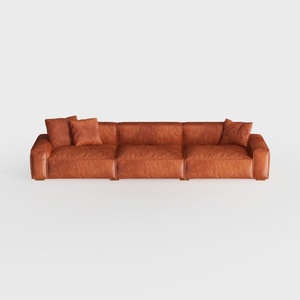
Contemporary Vintage Leather Extra Large Sofa 3D Model


Velvet Tufted Modular Sectional Sofa 3D Model

Red Leather 4 Seat Home Theater Recliner Chairs 3D Model
Homestyler offers an easy-to-use online design tool paired with stunning 3D renderings, a vast collection of interior decoration projects, and helpful DIY video tutorials—making it simple and fun to create your dream home design.
Design Now for FREE




