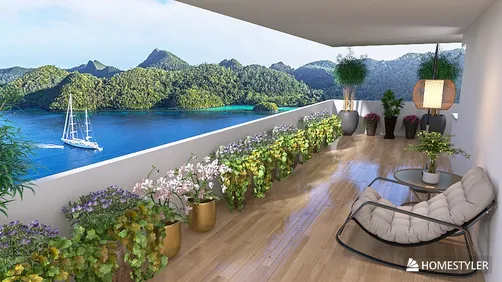
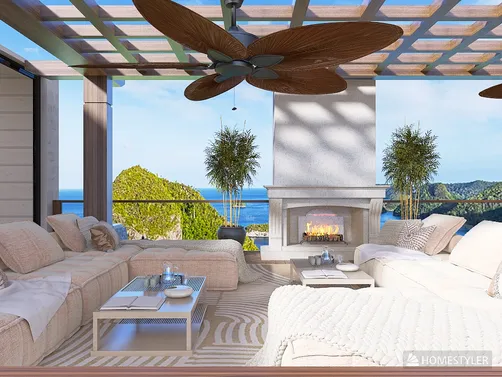
Ground-Level Outdoor Terrace Design
A ground-level outdoor terrace is a large, roofless platform situated at grade level—distinct from elevated balconies or rooftop decks. It serves as a vital transitional space between interior living areas and the natural environment, supporting diverse functions such as alfresco dining, mindful relaxation, social gatherings, gardening, and even wellness activities (e.g., yoga or spa zones). Unlike constrained vertical extensions, terraces offer generous spatial freedom, enabling holistic indoor-outdoor flow, flexible zoning, and strong contextual integration with landscape, climate, and personal lifestyle. Successful terrace design balances practicality—weather resilience, material durability, accessibility—with expressive elements: texture, lighting, greenery, and curated views—all enhanced through intelligent indoor space planning and Homestyler design tools for real-time 3D visualization and iteration.
Design Challenges & Common Pitfalls
Terrace design faces unique challenges rooted in its hybrid nature: exposure to sun, wind, rain, and temperature fluctuations demands robust material selection and microclimate management; irregular site topography or proximity to boundaries may limit layout flexibility and privacy; functional overlap (e.g., dining + lounging + planting) often leads to spatial conflict without clear zoning; and poor integration with adjacent interiors—misaligned thresholds, mismatched flooring, or disconnected sightlines—weakens the seamless indoor-outdoor connection. Many designers also underestimate lighting strategy beyond daytime aesthetics, neglecting layered ambient, task, and accent lighting essential for evening usability and mood. These issues underscore why thoughtful indoor space planning and precise Homestyler design techniques are critical—not just for aesthetics, but for livability.
✅ Prioritize Zoning & Functional Flow
A successful terrace avoids being a monolithic 'open slab' by thoughtfully dividing space into complementary activity zones—such as lounge, dining, greenery, and wellness—each with distinct flooring, furniture groupings, and soft boundaries (e.g., planters, low walls, or pergola sections). Clear circulation paths must connect zones while preserving openness, and transitions to interior spaces should be intuitive (e.g., aligned floor levels, matching material palettes, and visual continuity through glass doors or open archways). This zoning logic mirrors best practices in indoor space planning, ensuring every square foot serves purpose without compromising fluidity.

Designer Irina Romanova 💫 uses Homestyler’s drag-and-drop terrain and modular furniture library to define a relaxed lounge zone anchored by a curved lounge chair and integrated flower planters—visually separating it from adjacent areas while maintaining open sightlines. Her use of consistent warm-toned paving and coordinated outdoor textiles reflects intentional indoor space planning principles applied outdoors: hierarchy, adjacency control, and sensory harmony. With Homestyler design tricks like real-time sunlight simulation (HDR: o_city_park), she fine-tuned orientation for optimal afternoon shade—proving how AI-powered tools elevate functional zoning beyond guesswork.
Design Your Lounge Now🌿 Integrate Nature Authentically
Greenery should go beyond decorative potted plants—it must support ecology, comfort, and identity. Layer vegetation vertically (ground cover → shrubs → trees), select native or drought-tolerant species suited to local sun/wind exposure, and embed planting into hardscape (e.g., planter benches, raised beds, green walls). Use foliage for privacy, shade, wind buffering, and seasonal interest. Natural materials—reclaimed wood, stone, rattan, clay—reinforce biophilic connection and age gracefully. This approach transforms the terrace from a furnished surface into a living extension of the landscape—an outcome only possible when indoor space planning expands to embrace ecological intelligence.

Karine Lucena’s 'Terrace in Rio de Janeiro' demonstrates authentic nature integration: lush, layered tropical planting wraps around a sleek infinity pool, softening hardscape edges and filtering coastal light. Using Homestyler’s plant asset library and dynamic HDR environment (g_sea_sky), she simulated seasonal growth and dappled shadow patterns—ensuring greenery enhances comfort year-round, not just appearance. Her design merges landscape architecture with indoor space planning logic: each plant grouping serves a functional role (privacy screen, windbreak, fragrance zone), showing how Homestyler design techniques empower data-informed biophilic decisions.
Start Tropical Pool Design✨ Layer Lighting for Day-to-Night Versatility
Terrace lighting must perform dual roles: supporting tasks (e.g., cooking, reading) and crafting atmosphere (e.g., warmth, drama, intimacy). Avoid single-source overhead fixtures. Instead, combine ambient (string lights, wall sconces), task (under-cabinet, table lamps), and accent (uplighting trees, step lighting) layers. Use dimmable, weather-rated LED sources and smart controls where possible. Crucially, lighting design begins at the planning stage—outlets, conduit routing, and fixture placement must be embedded during initial indoor space planning to avoid retrofitting compromises. Homestyler’s real-time lighting preview enables instant evaluation of tone, spread, and shadow under varying times of day—turning lighting from afterthought into foundational design strategy.

Tora Luke’s 'The Terrace & More' employs Homestyler’s interactive lighting presets (HDR: g_sea_sky) to visualize golden-hour glow across teak lounge seating and reflective water features—confirming that ambient string lights and recessed path LEDs create safe, inviting transitions from dusk to night. She strategically placed low-voltage fixtures within built-in planters and under cantilevered edges, proving how Homestyler design techniques streamline coordination between architectural, landscape, and electrical planning. This seamless integration exemplifies advanced indoor space planning extended seamlessly outdoors—where light becomes both utility and emotional connector.
Begin Ocean View SetupFAQ
Q: What’s the key difference between a terrace and a balcony in design terms?
Br
A: A terrace is a ground-level, roofless platform offering expansive, flexible space for multi-zone programming (dining, lounging, gardening), direct soil access, and full landscape integration. A balcony is a cantilevered, elevated structure with inherent size, load, and access constraints—limiting material choices, planting depth, and functional scope. Design strategy for terraces prioritizes horizontal flow and ecological synergy; balconies focus on vertical efficiency and structural compliance.
Q: Can I use Homestyler AI to simulate weather impact—like sun exposure or rain runoff—on my terrace layout?
Br
A: Yes. Homestyler’s real-time 3D rendering includes dynamic sunlight simulation (via HDR environment presets like qwantani, g_sea_sky, peoples_square_night) to preview shadow patterns across seasons and times of day. While dedicated hydrological modeling isn’t included, combining accurate terrain elevation, sloped paving assets, and drainage icon overlays within your indoor space planning workflow helps visualize water flow and inform material grading decisions.
Q: How many functional zones should a well-planned terrace include—and does Homestyler support zone-based design?
Br
A: Most award-winning terraces (e.g., Elena Gryg’s ‘Sunny terrace’ with spa/meditation/dining zones) use 2–4 clearly defined yet fluid zones. Homestyler supports this through customizable area labeling, color-coded floor layers, and independent furniture grouping—enabling you to assign, test, and refine each zone’s scale, furniture density, and traffic flow independently before finalizing your indoor space planning deliverables.
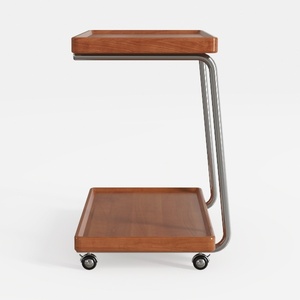

Modern Solid Wood Metal Rolling C Shaped Side Table 3D Model
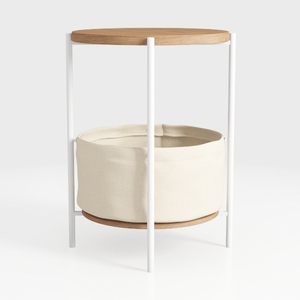
Minimalist Metal Oak Fabric Round Storage Side Table 3D Model

Minimalist Solid Wood Cylindrical Storage Bin 3D Model
Homestyler offers an easy-to-use online design tool with stunning 3D renderings, inspiring interior projects, and helpful DIY video tutorials—perfect for anyone looking to create beautiful home designs effortlessly.
Projete agora para LIVRE