


Bauhaus-Inspired Living Room Design
The Bauhaus-inspired living room is a quintessential modern interior space that prioritizes functional clarity, geometric precision, and material honesty. Rooted in the early 20th-century Bauhaus school philosophy—'form follows function'—this scene transcends mere aesthetics to become a system of order, movement, and human-centered spatial logic. It typically features open, uncluttered layouts; monochromatic or restrained palettes (black, white, gray, with strategic primary accents); clean-lined furniture (often tubular steel, cantilevered forms, or flat-paneled wood); and integrated architectural elements like floor-to-ceiling windows, exposed structural details, and purpose-built built-ins. As a core residential zone, the living room serves as both social hub and expressive canvas—making it the ideal testing ground for Bauhaus principles in contemporary indoor space planning.
Design Challenges & Common Pitfalls
Designing a Bauhaus-inspired living room presents several nuanced challenges. First, achieving *visual discipline without sterility*: strict adherence to geometry and minimalism can unintentionally create cold, unwelcoming spaces if warmth, texture, and human scale are overlooked. Second, balancing *functional openness with acoustic and visual privacy*: open-plan layouts common in Bauhaus design often lack natural zoning, leading to noise bleed and visual chaos in multi-use environments. Third, sourcing *authentic yet accessible materials and furnishings*: true Bauhaus pieces (e.g., Marcel Breuer’s Wassily chairs or Mies van der Rohe’s Barcelona daybeds) are costly and rare; designers must reinterpret their essence using affordable, widely available alternatives—without compromising structural integrity or proportion. These issues underscore why thoughtful indoor space planning and intelligent use of Homestyler design tools are essential for success.
✅ Clarity of Form & Structural Logic
Every element must serve a clear purpose and express its structure honestly—no decorative appliqués, no concealed supports. Walls, floors, and ceilings should read as distinct planes; furniture should reveal its construction (e.g., visible steel frames, exposed joinery). Layouts follow axial symmetry or rational grid systems, reinforcing spatial legibility. This principle rejects ornamentation in favor of intelligent organization—turning the living room into a legible diagram of human activity.

Morgan Cotter’s 'AI Bauhaus' uses Homestyler AI design tools to generate a rigorously planar composition: aligned ceiling beams echo the sofa’s horizontal lines; the floating console and recessed wall niche form a unified structural rhythm; even the pendant light’s circular form echoes the rug’s geometry—demonstrating how digital spatial modeling enables precise alignment and proportional harmony essential to Bauhaus indoor space planning.
Start Free Design📐 Proportion, Geometry & Modular Order
Space is organized through mathematical relationships—not intuition. The golden ratio, 1:2:3 modular grids, and consistent module-based furniture sizing (e.g., all seating units sharing a 60 cm depth) ensure visual cohesion. Walls divide space via vertical/horizontal bands rather than arbitrary partitions; windows are sized and placed to frame views as ‘living paintings’. This systematic approach transforms subjective layout decisions into objective, repeatable spatial logic—critical for scalable, adaptable living room designs.

Olga H’s '⬜️⬛️' leverages Homestyler’s modular furniture library and real-time dimension snapping to enforce strict geometric discipline: the sofa, rug, and coffee table share identical width modules; the floor lamp’s stem aligns precisely with the window mullion; and negative space between elements is calculated—not estimated—showcasing how Homestyler design tools empower precise proportion control for authentic Bauhaus execution.
Begin Your Design Now🎨 Material Honesty & Functional Expression
Materials must be used truthfully—concrete remains raw and textured, steel retains its industrial sheen, wood shows grain and joinery. Surfaces are left unadorned; finishes emphasize inherent qualities (e.g., brushed metal, oiled oak, matte plaster). Color is applied functionally: warm tones define seating zones; cool grays recede walls; bold primaries highlight controls or circulation paths. This principle ensures every tactile and chromatic choice reinforces usability—not just appearance—making the living room deeply responsive to daily life.

Monique Maas’s 'Bauhaus Living Room' applies Homestyler’s material library and lighting simulation to express material honesty: the concrete floor is rendered with subtle aggregate texture; the steel-framed glass partition reflects ambient light without glare; and the walnut TV unit showcases natural grain continuity across panels—all achieved by selecting and adjusting native Homestyler materials, proving how digital tools support authentic material storytelling in indoor space planning.
Free Design AwaitsFAQ
Q: How does the Bauhaus Space challenge redefine 'functionality' beyond basic utility?
Functionality in this context means spatial intelligence—how circulation flows, how light modulates mood, how surfaces invite touch or recede from view. It’s about designing for human behavior (e.g., placing seating at optimal conversational distance), not just accommodating objects.
Q: Can I apply Bauhaus principles in a small or irregularly shaped living room?
Absolutely. In fact, Bauhaus excels in constrained spaces: modular furniture, mirrored surfaces, and monochromatic schemes visually expand volume. Homestyler design tools let you test multiple configurations instantly—ideal for optimizing tight footprints through rigorous indoor space planning.
Q: Do I need professional 3D modeling skills to participate in the Bauhaus Space challenge?
No. Homestyler’s intuitive drag-and-drop interface, AI-powered layout suggestions, and pre-validated Bauhaus model collections (e.g., Model Library #658) lower the barrier—allowing designers of all levels to explore structural logic, proportion, and material honesty with confidence.


Vintage Carved Solid Wood Leather Tufted 3 Seater Sofa 3D Model
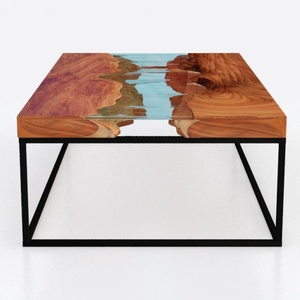
Modern Solid Wood Epoxy Resin Square Coffee Table 3D Model
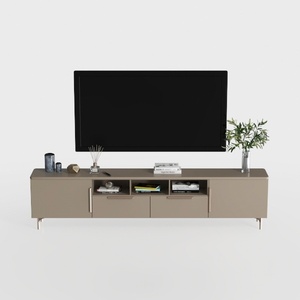
Modern Minimalist Solid Wood TV Stand Cabinet with Storage 3D Model
Homestyler is an easy-to-use online home design platform that lets you create stunning 3D renderings, explore a vast collection of design projects, and learn through helpful DIY video tutorials. It’s perfect for bringing your home decoration ideas to life effortlessly.
Design Now for FREE





