


Room Duplication Design
Room duplication is a powerful interior design technique that enables designers to replicate identical spatial structures—such as floor plans or individual rooms—and then explore divergent stylistic interpretations within them. This approach supports rapid iteration, comparative visualization, and functional experimentation (e.g., testing material palettes, furniture layouts, or lighting schemes across identical footprints). In the 'The Art of Duplicate for Web' contest, top entrants leveraged Homestyler’s new 'Copy Room' and 'Copy Floor Plan' features to generate side-by-side variations—from luxury hotel suites with panoramic pool views to culturally inspired living rooms—demonstrating how duplication serves not as repetition, but as a strategic tool for creative contrast and spatial storytelling.
Design Challenges
Common challenges in room duplication design include maintaining structural fidelity while achieving meaningful aesthetic differentiation, avoiding visual monotony when comparing copies, and ensuring consistent scale and proportion across duplicated spaces. Designers often struggle with overloading one variant with excessive elements while under-developing another—or misaligning lighting, texture continuity, or material realism across copies. Additionally, users unfamiliar with Homestyler’s duplication workflow may unintentionally duplicate assets instead of rooms, leading to cluttered renders or inaccurate spatial relationships.
✅ Prioritize Functional Zoning & Flow
Even when duplicating identical room footprints, each variant must serve a distinct functional purpose or user experience. Define clear activity zones (e.g., relaxation vs. socializing vs. work) and ensure circulation paths remain intuitive and unobstructed. Use furniture grouping, rug boundaries, and ceiling treatments—not just color—to reinforce zone identity without compromising spatial harmony.

Karolina lis applies functional zoning masterfully in her 'Logana beige' bathroom design: though the footprint remains fixed, she dedicates one duplicated zone exclusively to bathing (freestanding tub + marble surround), another to grooming (double vanity + mirrored lighting), and a third to wellness (shower niche + towel warming rail). Using Homestyler’s AI design tools, she rapidly iterated layout options while preserving plumbing constraints—showcasing how duplication supports rigorous indoor space planning without sacrificing elegance.
Design Your Luxury Bath🎨 Embrace Contrast Through Material & Color Strategy
Avoid superficial differences—instead, build intentional contrast using coordinated yet opposing material families (e.g., warm wood vs. cool stone, matte plaster vs. high-gloss lacquer) and complementary color systems (analogous in one copy, triadic in another). Let light interaction guide your palette: choose finishes that respond differently to identical HDR lighting settings in Homestyler to heighten perceptual distinction between duplicates.

Cecilia Botha’s 'The Harmony of Modernity' exemplifies strategic contrast: in one duplicated hallway variant, she uses light oak flooring and ivory linen wall panels for warmth; in the other, she swaps to blackened steel cladding and deep indigo velvet seating—yet maintains identical proportions, lighting angles, and doorway placements. Her use of Homestyler’s real-time 3D rendering allowed instant comparison of how material reflectivity and color temperature transform spatial perception—key to advanced Homestyler design techniques.
Create Stylish Hallway Now💡 Optimize Visual Hierarchy with Layered Detailing
Differentiate duplicated rooms by varying the depth and density of detail—not just quantity. Apply hierarchy through layering: architectural (molding, ceiling beams), surface (tile patterns, wood grain direction), and object-level (sculptural lighting, curated accessories). Ensure at least one focal point per variant is uniquely emphasized (e.g., arched shelving in one, floor-to-ceiling mirror in another) to anchor attention and avoid visual fatigue during side-by-side review.

Vendetta V’s 'The art of duplicate' dining room demonstrates layered detailing: in Variant A, she highlights vertical rhythm via linear pendant lights and tall planters; in Variant B, she shifts focus horizontally with a sculptural monolithic table base and asymmetric runner rug. Using Homestyler’s copy-room function, she preserved exact wall dimensions and window placement—then refined hierarchy exclusively through object-scale decisions. This method elevates interior space planning from layout drafting to narrative composition.
Start Elegant Dining DesignFAQ
Q: What does 'The Art of Duplicate for Web' challenge actually require?
It invites designers to use Homestyler’s newly launched 'Copy Room' or 'Copy Floor Plan' feature to generate two or more structurally identical spaces—and then showcase intentional design differences across them, such as contrasting styles, material combinations, furniture arrangements, or lighting moods.
Q: Do I need to design multiple rooms to participate?
No—you can duplicate a single room (e.g., a bedroom or bathroom) and present two distinct interior design directions for it. Alternatively, you may duplicate an entire floor plan to compare apartment units, hotel suites, or cultural-themed living spaces—all while maintaining identical architecture.
Q: How does room duplication support better interior space planning?
Duplication accelerates decision-making by enabling direct visual comparison. It helps identify optimal furniture scaling, test traffic flow under varied layouts, validate material-light interactions, and refine ergonomics—all within a consistent spatial framework. This is especially valuable for client presentations and AI-assisted design iteration.
Q: Are there limits on how many times I can duplicate a room in Homestyler?
Yes—the contest specifies a tool limit of [4], meaning each submission may include up to four duplicated variants (including the original). This encourages focused, high-impact contrasts rather than excessive replication.
Q: Can I use Homestyler AI design tools alongside manual editing in this challenge?
Absolutely. Top winners like Amy ✨ and Sofia Grimaldi combined AI-generated suggestions (e.g., auto-layout furniture packs) with manual refinements—including custom HDR lighting, bespoke material mapping, and precise object rotation—to achieve photorealistic, concept-driven duplication outcomes.
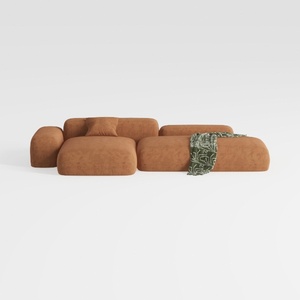
Minimalist Brown Fabric Modular Sectional Sofa 3D Model
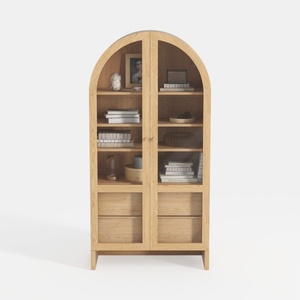
Minimalist Solid Wood Arched Display Cabinet 3D Model


Rustic Solid Wood Geometric Octagonal Coffee Table 3D Model
Homestyler offers an easy-to-use online design tool with stunning 3D renderings, inspiring interior projects, and helpful DIY video tutorials. It’s perfect for anyone looking to create and visualize their dream home quickly and creatively.
지금 무료로 디자인하세요





