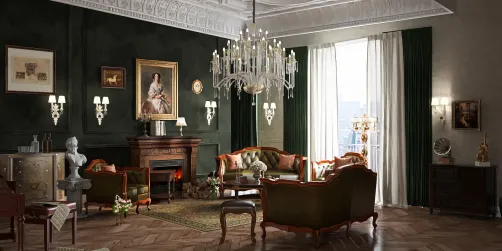
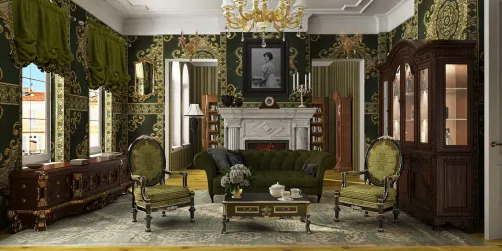
Baroque Living Room Design
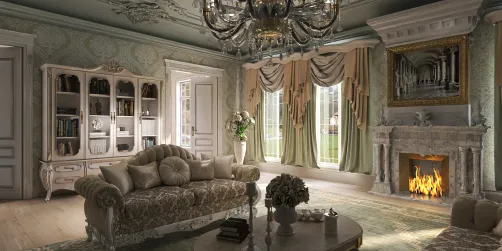
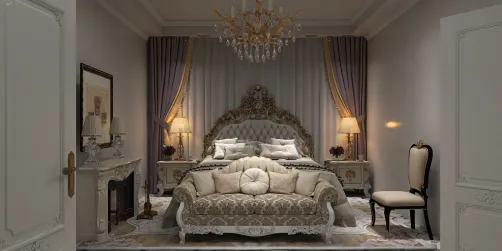
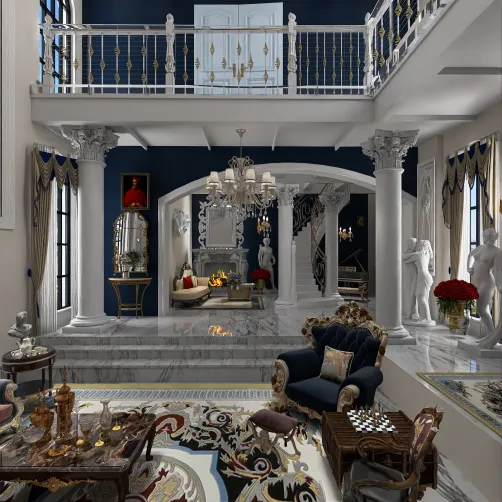
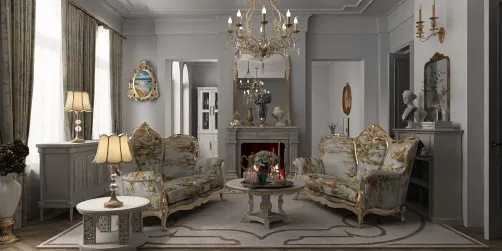
The Baroque living room is a grand, dramatic, and opulent interior space rooted in 17th–18th century European aesthetics. It emphasizes visual intensity through rich color palettes (deep reds, golds, emerald greens), ornate architectural elements (carved moldings, gilded mirrors, coffered ceilings), luxurious materials (velvet, marble, brocade), and dynamic compositions that evoke movement and emotion. In contemporary interior design, the Baroque living room transcends historical replication — it’s reinterpreted as a statement of confident personal style, blending classical grandeur with modern comfort and functionality. This scene serves as the central social and aesthetic heart of the home, demanding careful indoor space planning to balance theatricality with livability — especially when leveraging Homestyler design techniques for real-time 3D visualization and spatial validation.
Design Challenges & Common Pitfalls
Designing a Baroque living room presents unique challenges: over-decoration leading to visual clutter; poor scale coordination (e.g., oversized chandeliers overwhelming small rooms); mismatched period authenticity (e.g., mixing Rococo flourishes with Baroque massiveness); difficulty integrating modern amenities (smart TVs, HVAC vents) without breaking stylistic continuity; and underestimating lighting strategy — Baroque relies on layered, directional light to accentuate texture and depth, not flat ambient illumination. These issues often stem from insufficient indoor space planning and lack of iterative testing via AI-powered tools like Homestyler.
Rule #1: Prioritize Dramatic Focal Points 🎯
Every Baroque living room must anchor attention with one or two commanding focal points — typically a fireplace mantel with sculptural relief, an oversized gilded mirror above a console, or a monumental chandelier suspended at precise height and alignment. Avoid distributing visual weight evenly; instead, use asymmetrical balance and strong vertical/horizontal lines to guide the eye. This principle ensures hierarchy and prevents decorative chaos — essential for effective indoor space planning.

Suzette Kauffeld’s 'Baroque apartment in Budapest' masterfully applies this rule by centering the composition on a tall, arched window flanked by heavy damask drapes and crowned with a gilded cartouche — transforming natural light into a divine spotlight. Using Homestyler design techniques, she precisely scaled the chandelier’s drop height and adjusted wall paneling depth in real time to ensure proportional harmony between ceiling height and furniture mass — demonstrating how AI visualization supports intentional focal-point engineering.
Design Your Dream RoomRule #2: Layer Textures & Materials Strategically 🧵
Baroque richness emerges not from uniform luxury, but from deliberate contrast: smooth marble against carved wood, plush velvet beside polished brass, matte plaster next to high-gloss lacquer. Introduce at least three tactile layers (surface, upholstery, accent) while maintaining tonal cohesion — e.g., warm gold accents unifying crimson velvet, walnut cabinetry, and ivory plasterwork. This layering deepens spatial perception and fulfills the Baroque ideal of sensory abundance without monotony.

Kimberly Barber’s unnamed design leverages Homestyler’s material-swapping feature to test dozens of fabric-metal-wood combinations before settling on a turquoise velvet sofa against dark stained oak side tables and a hammered brass coffee table — achieving chromatic unity and textural drama simultaneously. Her use of Homestyler design techniques enabled instant preview of how light reflected off each surface, validating that the layered material strategy enhanced depth rather than causing glare or visual fatigue — a key outcome of thoughtful indoor space planning.
Start Your Free DesignRule #3: Curate Ornamentation With Purpose ✨
Ornament is not decoration for its own sake in Baroque design — every scroll, acanthus leaf, or putto serves compositional function: directing gaze, framing openings, softening transitions, or echoing rhythm elsewhere in the room. Limit ornament to structural junctions (cornices, door surrounds, baseboards) and key furniture silhouettes (cabriole legs, shell-carved armrests). Over-ornamenting flat walls or secondary surfaces dilutes impact and contradicts Baroque’s disciplined theatricality.

Kimberly Lockaby’s 'Baroque Living Room' exemplifies purposeful ornamentation: her wall features only a single, large-scale rocaille-framed mirror above a carved console — no additional wainscoting or frieze. The sofa’s cabriole legs echo the curvature of the mirror frame, and the chandelier’s scrolling arms mirror the leg silhouette. By using Homestyler’s annotation and measurement tools, she verified exact symmetry and repetition intervals — proving how AI-assisted indoor space planning transforms ornament from embellishment into architectural language.
Begin Elegant DesignFAQ
Q: How can I avoid making my Baroque living room feel outdated or overly formal?
Use contemporary proportions and clean-lined Baroque reinterpretations — such as simplified acanthus motifs, matte gold finishes instead of high-polish brass, and open-plan integration. Homestyler design techniques let you A/B test modern vs. traditional variants instantly.
Q: Is Baroque suitable for small living rooms?
Absolutely — focus on vertical emphasis (tall mirrors, floor-to-ceiling drapery), strategic gilding (only on key frames or moldings), and reflective surfaces to amplify space. Indoor space planning in Homestyler helps simulate perceived volume before committing.
Q: What’s the biggest mistake beginners make with Baroque interiors?
Adding too many competing focal points — e.g., an ornate fireplace, a massive chandelier, *and* a gilded full-wall mural. Baroque thrives on controlled drama, not visual noise. Use Homestyler’s heat-map lighting preview to identify where attention naturally lands — then edit ruthlessly.


Homestyler is an easy-to-use online home design platform offering powerful 3D rendering, a vast collection of interior design projects, and helpful DIY video tutorials. It’s perfect for turning your home ideas into stunning, realistic designs effortlessly.
Дизайн сейчас бесплатно