Doll-Themed Play and Display Space Design
The 'Doll-Themed Play and Display Space' is a hybrid interior environment that bridges childhood nostalgia and adult emotional wellness. It transcends traditional children’s bedrooms or toy storage—it’s a curated, emotionally resonant zone where dolls function as both decorative art objects and mindful companions. Designed for homes, studios, or therapeutic settings, this space prioritizes visual harmony, tactile comfort, and intentional spatial storytelling. It integrates soft play functionality (e.g., cozy nooks, low-height furniture) with display-oriented features (e.g., themed shelving, lighting accents, narrative vignettes), all supported by smart indoor space planning and Homestyler design tools for real-time 3D visualization, AR placement, and dynamic layout iteration.
Design Challenges and Common Pitfalls
Designers often struggle with balancing whimsy and sophistication—leaning too playful risks appearing juvenile for adult users, while over-minimalist approaches dilute the doll’s emotional presence. Other frequent issues include poor scale integration (dolls vs. furniture), cluttered visual hierarchy due to excessive props, inadequate lighting for both display and ambient mood, and inefficient use of vertical space for layered storytelling. Additionally, many overlook accessibility and safety considerations (e.g., anchoring units, rounded edges) when designing for multi-generational or therapeutic use—key aspects of thoughtful indoor space planning.
✅ Prioritize Emotional Zoning & Narrative Flow
Divide the space into intuitive emotional zones: a ‘calm corner’ (soft textiles, muted tones, quiet lighting) for reflection; a ‘play nexus’ (low platforms, modular seating, interactive surfaces); and a ‘display gallery’ (tiered shelves, spotlighting, thematic groupings). Use furniture arrangement and circulation paths—not just decor—to guide emotional transitions. This principle supports holistic indoor space planning by aligning physical layout with psychological intent.

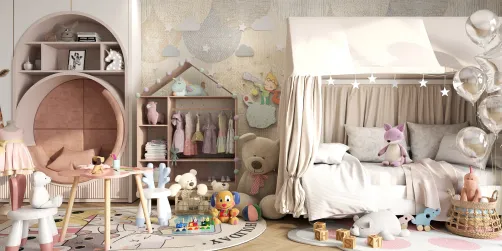
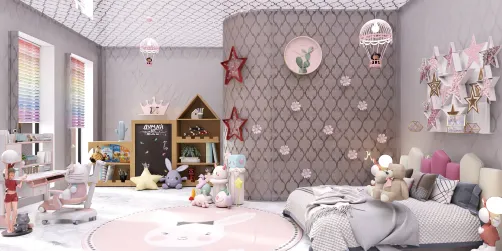
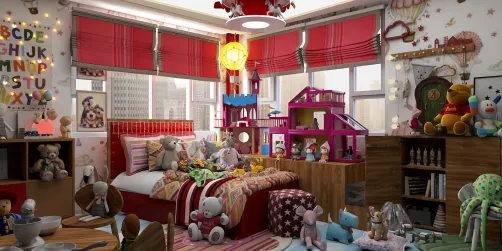
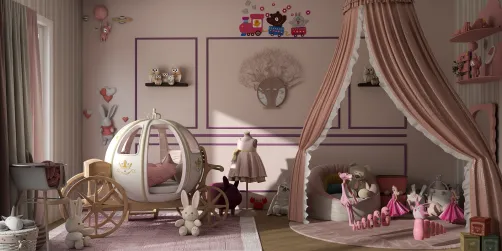
Arwen Arianus🎨🎸🏰’s 'The Living Doll House' masterfully applies emotional zoning: the central dollhouse acts as a calm anchor, flanked by playful alcoves and framed display niches. Using Homestyler design tools, she iterated spatial relationships in real time—adjusting shelf heights, testing light angles, and validating walkable clearances—ensuring each zone feels distinct yet harmoniously connected. This exemplifies how Homestyler AI design tools elevate narrative-driven indoor space planning.
Start Free Designing🎨 Curate Color, Texture & Scale with Intention
Avoid generic pastel palettes or monochrome minimalism. Instead, select a cohesive color story (e.g., warm terracotta + sage + cream) that supports both energy and calm. Layer textures deliberately—plush rugs, woven baskets, matte ceramics, sheer drapes—to enrich sensory experience. Crucially, maintain proportional harmony: doll height should inform shelf depth, seating seat height, and lighting fixture drop length. This ensures visual rhythm and avoids visual dissonance—a cornerstone of professional Homestyler design techniques.

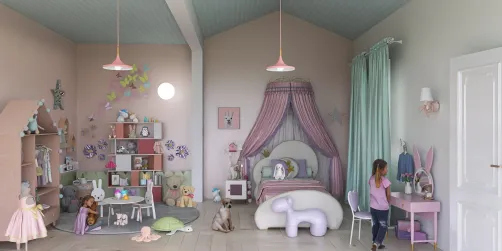
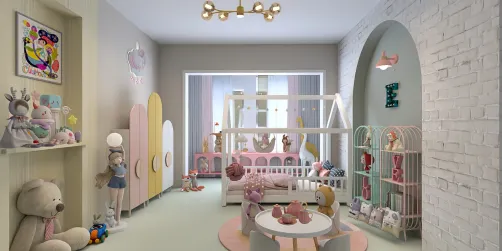
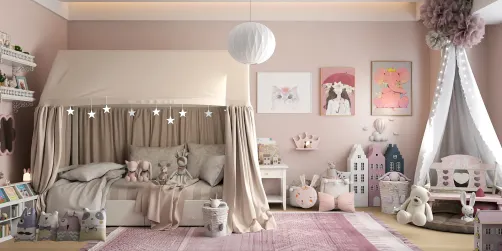
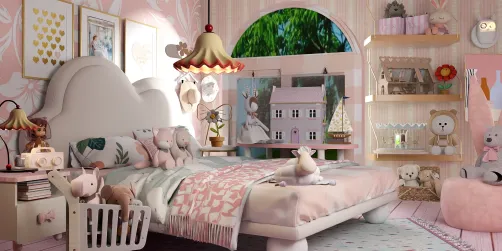
m p’s 'Lala room' demonstrates intentional curation: a warm peach base palette unifies diverse textures—nubby rug, smooth lacquered table, linen-upholstered stool—while doll scale dictates the compact footprint of built-in seating and shallow wall shelves. Leveraging Homestyler’s smart furniture arrangement feature, they validated material pairings and scaled mockups before finalizing, proving how precise Homestyler design techniques resolve texture-and-scale challenges in doll-themed indoor space planning.
Begin Your Cozy Playroom💡 Embed Smart Functionality & Adaptive Display
Go beyond static decoration: integrate adaptable elements like rotating display stands, magnetic wall panels, LED-lit shadow boxes, or convertible furniture (e.g., ottomans with hidden doll storage). Use lighting not just for visibility—but for drama (spotlights on focal dolls), ambiance (warm dimmables), and interaction (motion-sensor path lights). These features make the space evolve with user needs and moods—turning interior design into responsive environmental psychology.

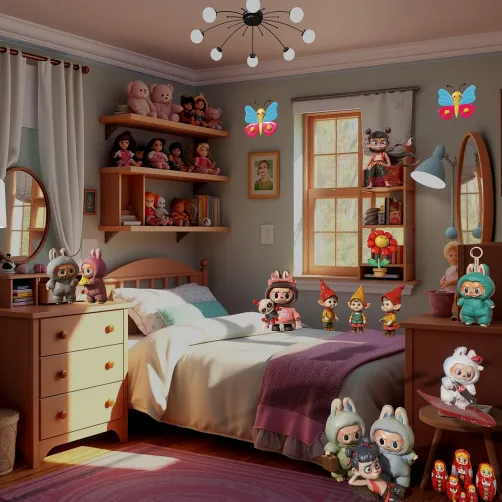
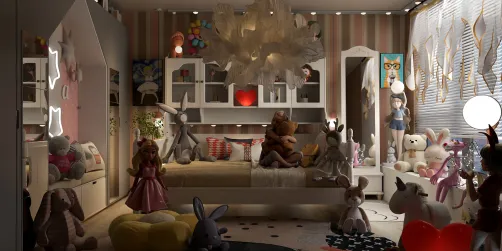
Shalima mohammed thomas’s 'Whispers of Childhood' embeds adaptability through tiered floating shelves with integrated LED strips and a pivoting doll podium at bedside—ideal for daily ritual or seasonal rotation. Using Homestyler’s 3D rendering, she simulated lighting behavior across times of day and tested shelf load capacity virtually. Her work showcases how Homestyler AI design tools empower designers to prototype functional intelligence within emotionally nuanced indoor space planning.
Create Adaptive Doll SpacesFAQ
Q: Can doll-themed spaces be designed for adults—not just kids?
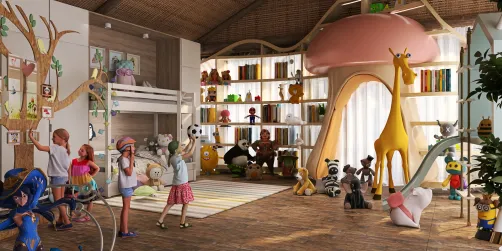
Yes—this contest explicitly frames dolls as 'emotional regulators in a space for grown-ups.' Top entries like Amanda Hysa’s 'Doll Room' (Top 1) and S Kaye’s tent-style bedroom (Top 3) use mature materials (linen, oak, ceramic), restrained palettes, and intentional negative space to create serene, collectible-focused environments ideal for mindfulness, creative studios, or intergenerational homes.
Q: How does Homestyler help overcome doll-scale challenges in interior layouts?
Homestyler’s precise measurement tools, real-time 3D scaling, and AR virtual furniture placement let designers test doll-to-furniture ratios instantly—e.g., verifying a 30cm doll fits comfortably on a 60cm-wide window seat or that a shelf depth won’t obscure facial details. This is essential for accurate indoor space planning where proportion defines emotional impact.
Q: Are there recommended doll model categories from the Homestyler library for professional designs?
Absolutely. The contest highlights officially supported themes including 'Marine Adventure', 'Garden Paradise', 'Polar Regions', 'Nestling Russia', 'Lulu Boo', and 'Ne Zha'—each offering culturally rich, stylistically varied assets optimized for lighting, texture, and pose variety. Using these ensures consistency and expands narrative possibilities in Homestyler design techniques.
Q: What’s the most common mistake when designing doll display walls?
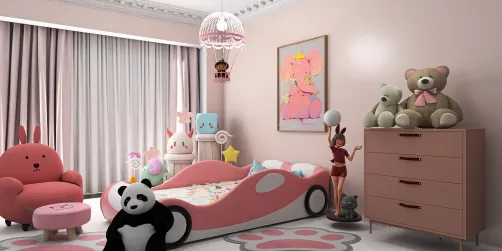
Overcrowding. Top-performing designs (e.g., Sevenseas 96’s Top 4 entry) use the 'rule of three': group dolls in trios with varying heights and orientations, leave breathing space between clusters, and anchor with one strong focal piece per wall section. Homestyler’s render preview helps visualize density before committing—making it a critical step in professional indoor space planning.

Homestyler is an easy-to-use online platform offering powerful home design tools, stunning 3D renderings, and countless interior decoration projects. With helpful DIY video tutorials, it’s perfect for bringing your home design ideas to life with confidence and creativity.
Дизайн сейчас бесплатно