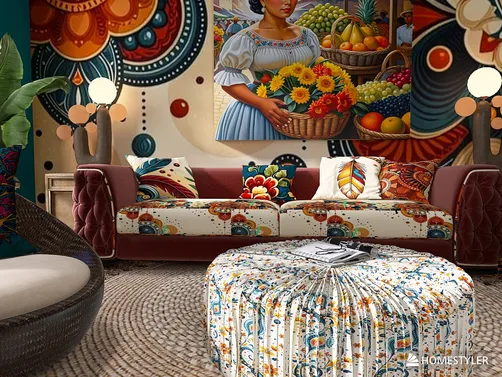
Latin American Living Room Design
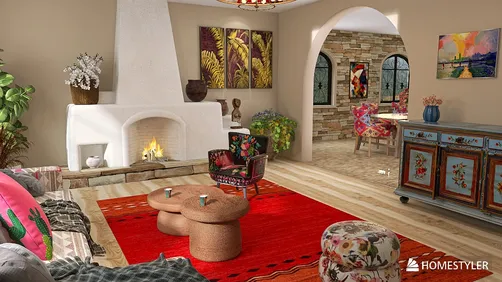
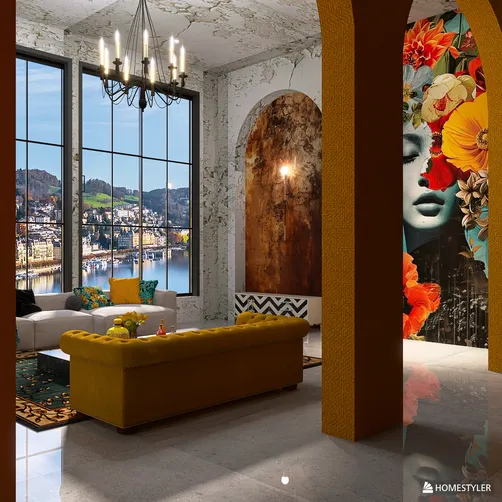
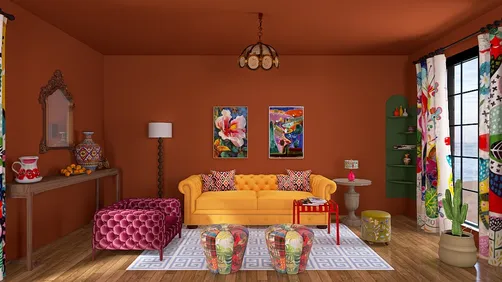
The Latin American living room is a vibrant, culturally rich interior space that merges tropical exuberance with artisanal authenticity. It transcends mere decoration—it’s an immersive lifestyle expression rooted in passionate color palettes (think terracotta, cobalt, sunflower yellow), natural materials (woven rattan, raw wood, hand-painted tiles), and layered textures (embroidered textiles, rustic stonework, botanical motifs). Unlike minimalist or industrial styles, this scene prioritizes warmth, storytelling, and sensory abundance—where every wall mural, ceramic vase, or sun-drenched window serves as a narrative thread of heritage, celebration, and connection to nature. As seen across top-winning entries—including Amy ✨’s 'Postcard from Mexico' resort home and Mica Donker’s cozy 'Latin Flare'—the living room functions as both social heart and cultural canvas, optimized for joyous gathering and daily vibrancy.
Design Challenges & Common Pitfalls
Designing an authentic Latin American living room often faces three recurring challenges: (1) Color overload—layering bold hues without visual chaos; (2) Cultural appropriation vs. appreciation—using motifs like Talavera patterns or Day of the Dead iconography respectfully, not decoratively; and (3) Scale mismatch—integrating oversized artisanal furniture (e.g., carved wooden armoires or chunky textile sofas) into modest urban spaces while preserving flow and indoor space planning. Many entrants also struggle with balancing bohemian eclecticism and cohesive rhythm—a challenge amplified when using AI-powered tools like Homestyler, where algorithmic suggestions may default to generic 'tropical' tropes rather than regionally grounded craftsmanship cues.
✅ Prioritize Warm, Earth-Driven Color Harmony
Latin American design avoids cold neutrals in favor of warm, sun-infused palettes anchored in earth tones—burnt sienna, olive green, ochre, and deep coral—balanced with crisp white or cream walls to prevent saturation fatigue. Accent colors should be introduced through curated textiles and ceramics—not wall-to-wall saturation. Use Homestyler’s real-time 3D rendering to test lighting interactions: warm daylight HDRs (e.g., 'g_umhlanga_sunrise') reveal how terracotta floors glow at noon, while dusk settings ('g_morning') highlight the depth of hand-glazed tiles.

Mica Donker’s 'Latin Flare' exemplifies warm color harmony: she anchors the composition with a rust-hued sofa and caramel-toned wooden coffee table, then lifts energy via turquoise throw pillows and a coral rug—all against a soft white plaster wall. Using Homestyler AI design tools, she leveraged the 'sunlight: 1' setting and 'hdr: 04ab41e5-dc3f-4c22-80d1-401c7286af15' to preview how natural light amplifies material warmth—enabling precise indoor space planning without over-rendering saturated surfaces.
Start Free Design🌿 Integrate Handcrafted Textures & Natural Materials Authentically
Texture is the soul of Latin American interiors—not as surface treatment, but as tactile storytelling. Prioritize organic, imperfect materials: rough-hewn mesquite wood, palm-fiber rugs, clay-fired floor tiles, and embroidered cotton throws. Avoid synthetic imitations; instead, use Homestyler’s material library filters (e.g., search 'handmade tile', 'woven jute', 'rustic wood') to source high-fidelity assets. Layer textures vertically (textile + wall + floor) and horizontally (e.g., nubby sofa fabric juxtaposed with smooth ceramic lamps) to create dimensional richness that supports both comfort and cultural resonance.

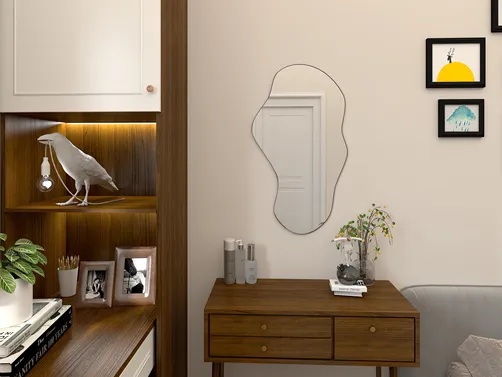
Afrah Alwy’s minimalist-yet-vibrant entry '.' uses texture strategically: a thick, undyed wool rug grounds the space beneath a smooth white plaster wall adorned with framed folk-art prints. Her Homestyler AI workflow included applying the 'g_ljz_day' HDR to assess shadow depth on woven textures—and selecting only models tagged 'vintage' and 'handmade' to ensure material authenticity. This approach demonstrates how thoughtful indoor space planning can honor craft integrity without overcrowding visual weight.
Begin Rustic Interiors🎨 Curate Cultural Motifs with Narrative Intention
Cultural motifs—geometric Zapotec weaves, Aztec-inspired borders, or Mexican folkloric murals—must serve meaning, not ornamentation. Choose *one* focal motif per zone (e.g., a Talavera-tiled fireplace surround, not full-wall tiling) and pair it with neutral backdrops to avoid visual noise. Use Homestyler’s annotation layer or comment tool to document motif origins (e.g., 'Oaxacan wool rug, Teotitlán del Valle')—a practice that elevates design literacy and supports ethical sourcing awareness within interior space planning.

Laurence Mignon’s 'Défi déco mexicaine' centers its narrative around a hand-painted Talavera tile fireplace—a single, intentional cultural anchor—flanked by neutral linen sofas and raw-wood shelves. She used Homestyler’s AI design tools to isolate the fireplace render (ID: 87480408167606), adjusting tile gloss and grout contrast until the pattern felt artisanal, not graphic. Her process underscores how cultural respect begins with restraint and research—key tenets of professional indoor space planning.
Create Vintage WarmthFAQ
Q: Do I need professional design experience to participate in the Latin American Home Decor Challenge?
Not at all. Homestyler’s intuitive drag-and-drop interface and AI-powered suggestions make it ideal for beginners. Top winners like Tora Luke and Lis Bador are self-taught designers who used Homestyler design tips—like 'material consistency tagging' and 'HDR sunlight matching'—to achieve award-winning realism.
Q: Can I mix Latin American elements with other styles (e.g., Scandinavian or Japandi)?
Absolutely—fusion is celebrated! The key is maintaining core Latin American principles: warmth, texture, and handmade authenticity. For example, pair a sleek oak dining table (Scandinavian) with hand-thrown ceramic dinnerware and a bold textile runner (Mexican)—all rendered accurately using Homestyler’s real-time 3D preview to balance scale and tone.
Q: How does Homestyler support authentic Latin American material selection?
Homestyler’s model library includes over 200+ culturally vetted assets tagged 'Latin American', 'Mexican tile', 'Andean textile', and 'Caribbean wood'. Filter by 'designStyler' codes (e.g., '10071' = Mexican Folk, '10053' = Tropical Modern) to streamline indoor space planning—and always cross-reference with real-world sources for pattern origin and artisan credits.
Q: What’s the most common mistake new designers make in this challenge?
Overloading color and pattern without hierarchy. Winners like Amy ✨ succeed by establishing one dominant hue (e.g., burnt orange), one dominant texture (e.g., woven cane), and one cultural motif (e.g., mural behind sofa)—then letting negative space and natural light do the rest. Homestyler’s 'render detail' panel helps audit visual weight before final submission.

Rustic Solid Oak Two Drawer Coffee Table with Open Shelf 3D Model

Modern Curved Orange Fabric Sectional Sofa 3D Model

Modern Minimalist Orange Fabric Large Sofa 3D Model
Homestyler is a user-friendly online platform offering powerful 3D design tools, a vast collection of interior projects, and helpful DIY video tutorials—perfect for bringing your home design ideas to life with ease and creativity.
Progetta ora GRATIS