


Complementary Color Living Space Design
The 'Complementary Color Living Space Design' theme centers on applying the dynamic yellow-purple color pairing to living areas—ranging from compact urban apartments to open-plan lounges. This scene emphasizes emotional resonance and spatial rhythm through intentional chromatic contrast: warm, energizing yellow evokes optimism and sociability, while deep, calming purple adds sophistication, depth, and visual anchoring. Unlike generic living room design, this approach treats color not as decoration but as a structural element—shaping perception of scale, guiding movement, and reinforcing identity. It demands thoughtful indoor space planning to balance vibrancy with harmony, especially in multi-functional zones where mood transitions (e.g., from daytime liveliness to evening relaxation) must feel intuitive and cohesive.
Design Challenges & Common Pitfalls
Achieving equilibrium between yellow and purple is deceptively complex. Common issues include visual fatigue from oversaturation (e.g., high-chroma walls without neutral buffers), spatial disorientation caused by uneven color weight distribution (e.g., dominant purple flooring with sparse yellow accents failing to create rhythm), and poor adaptability to natural light conditions—yellow can appear harsh under midday sun, while purple may mute in low-light corners. Additionally, many designers overlook how material textures (glossy vs. matte finishes) and lighting temperature (cool white vs. warm LED) dramatically shift perceived hue intensity—leading to unintended clashes or tonal flatness. Successful complementary color living space design requires rigorous indoor space planning and iterative Homestyler design techniques to simulate real-world luminance and spatial relationships before finalization.
🎨 Prioritize Chromatic Hierarchy & Neutral Grounding
Establish one color as dominant (e.g., soft violet walls), the other as accent (e.g., mustard-yellow throw pillows, side table, or art frame), and anchor both with ample neutrals—warm greys, oat whites, or light oak tones—in flooring, ceilings, and large furniture. This prevents visual competition and creates breathing room for the complementary relationship to breathe. Avoid equal-area splits (50/50 yellow/purple), which often read as jarring rather than balanced.

Mireia Barmat’s 'FAIRY TALE.' masterfully applies chromatic hierarchy in a compact 44.2 m² bedroom-living hybrid. She anchors the space with warm ivory walls and light oak flooring (neutral grounding), uses soft violet for the upholstered bedhead and velvet armchair (dominant tone), and introduces vibrant yellow exclusively through small-scale, high-impact elements: a geometric cushion, ceramic vase, and framed abstract print (accent strategy). Her use of Homestyler AI design tools enabled precise light simulation—ensuring the yellow accents glow warmly at dawn (g_peoples_square_dawn HDR) without washing out, demonstrating advanced indoor space planning for emotional continuity across time-of-day shifts.
Start Free Design Here💡 Leverage Light & Texture to Modulate Hue Intensity
Yellow reflects significantly more light than purple; therefore, matte yellow surfaces (e.g., wool rug, linen sofa) absorb glare and soften warmth, while glossy purple (e.g., lacquered cabinet, metallic lamp base) enhances depth and richness. Strategically layer textures—nubby bouclé, smooth silk, rough-hewn wood—to add tactile dimension that offsets potential chromatic tension. Always test material–color pairings under simulated daylight *and* artificial light within Homestyler to avoid unexpected shifts in saturation or undertone.

Nelli Wolf’s 'Фиолетово желтая феерия' (Violet-Yellow Fantasy) exemplifies texture-driven modulation in a 25.8 m² bright living area. She selects a deep matte plum for the curved sectional sofa—absorbing brightness and adding gravity—while introducing sunny yellow via a nubby wool floor rug and hand-thrown ceramic table lamps (matte texture diffusing intensity). The large window ensures g_ljz_day lighting, and her Homestyler design technique precisely calibrated the HDR render to preserve yellow’s cheerfulness without glare, proving how texture-aware indoor space planning elevates complementary color harmony beyond flat pigment application.
Create Your Cozy Space📐 Apply Asymmetrical Balance & Focal Anchoring
Instead of mirroring yellow and purple elements, deploy asymmetrical balance: cluster three yellow accessories on a violet-toned bookshelf, then counterbalance with a single large violet artwork above a yellow-accented console. Use architectural features (a bay window, fireplace niche, or ceiling beam) as focal anchors—wrap them in the dominant hue to ground the composition. This creates visual rhythm and directional flow, essential for small-to-medium living spaces where every square meter must serve both aesthetic and functional purpose.

Cecilia Botha’s 'Yellow & purple' living room (99.2 m² apartment) achieves dynamic asymmetry using a large arched window as its central anchor—framed in soft violet plaster. To the left, she places a mustard-yellow velvet sofa with asymmetric scatter cushions; to the right, a violet-upholstered armchair pairs with a yellow-marbled coffee table. Her Homestyler AI design workflow allowed real-time adjustment of furniture placement against natural light paths, ensuring the yellow elements activated the space without overwhelming it—showcasing expert indoor space planning that merges complementary color theory with human-centered spatial flow.
Design Your Dream RoomFAQ
Q: Do I need professional design experience to join the Complementary Color Design challenge?
Not at all. Homestyler’s intuitive interface and AI-powered rendering tools make it accessible for beginners. Many top entries—including Top 5 winner Mireia Barmat’s 'FAIRY TALE.'—were created using foundational Homestyler design techniques like drag-and-drop furniture placement, one-click material swaps, and real-time sunlight simulation.
Q: How does the yellow-purple pairing work in small living spaces?
In compact layouts, use purple as the dominant wall or built-in cabinetry color (adds depth and makes ceilings feel higher), and reserve yellow for movable, textured accents—pillows, rugs, or lighting—that can be easily adjusted. This approach supports flexible indoor space planning without permanent commitment.
Q: Can I submit multiple designs to the contest?
Yes—you may submit up to 4 designs per account (aligned with the toolLimits:[4] parameter). Each entry should reflect a distinct interpretation of complementary color living space design, encouraging experimentation with layout, lighting scenarios (e.g., g_ljz_day vs. ljz_night), and stylistic labels (e.g., Modern, Bohemian, Minimalist).
Q: What makes a winning complementary color design stand out?
Winning submissions like Annie Audette’s Top 1 'YELLOW-VIOLET PROJET583' succeed by transforming color theory into spatial emotion—not just placing yellow next to purple, but using their interplay to define zones, guide circulation, and evoke specific moods. Strong indoor space planning, intentional texture layering, and mastery of Homestyler design techniques (e.g., HDR environment control, precise area measurement) are consistent hallmarks.
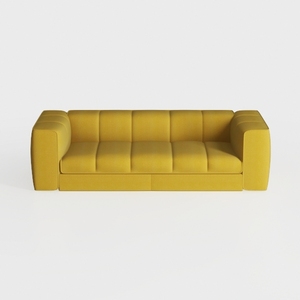
Minimalist Mustard Fabric Tufted Sofa 3D Model

Modern Two Tone Fabric Leather Sectional Sofa With Decorative Throw Pillows 3D Model


Modern Mustard Velvet Tufted 2 Seat Sectional Sofa 3D Model
Homestyler offers an easy-to-use online design tool with stunning 3D renderings and a vast collection of interior design projects. Whether you’re a beginner or a pro, its DIY video tutorials help you create and visualize your dream home effortlessly.
Design Now for FREE





