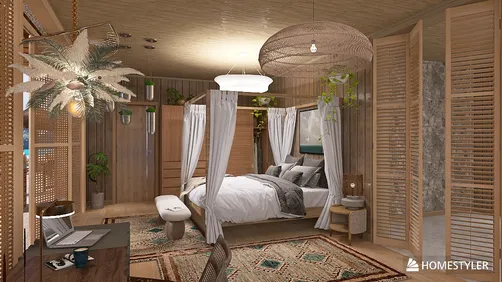
Sustainable Living Space Design
The 'Sustainable Living Space' is a holistic interior space planning concept that transcends aesthetic greenery to embody a philosophy of coexistence with nature. It integrates eco-conscious material selection, passive energy strategies (e.g., daylight optimization and natural ventilation), biophilic design elements, and circular lifecycle thinking — all while maintaining high visual appeal and functional comfort. This scene applies across diverse typologies — from compact urban lofts to expansive rural homes — and emphasizes harmony between human habitation, environmental responsibility, and timeless spatial beauty.
Design Challenges & Common Pitfalls
Key challenges include balancing sustainability goals with budget constraints, avoiding 'greenwashing' through superficial eco-aesthetics without real performance impact, integrating renewable materials without compromising durability or indoor air quality, and achieving optimal natural light distribution in irregular layouts. A frequent oversight is neglecting lifecycle analysis — selecting low-embodied-energy materials that are difficult to maintain, recycle, or deconstruct — undermining long-term sustainability. Additionally, designers often underestimate how interior space planning decisions (e.g., wall placement, window orientation, ceiling height) directly affect thermal comfort, acoustics, and energy load — making early-stage Homestyler design techniques critical for simulation-driven iteration.
🌱 Prioritize Natural Light & Passive Solar Gain
Maximize daylight penetration through strategic window sizing, placement (south-facing in the Northern Hemisphere), and reflective interior surfaces. Use light shelves, clerestories, and open-plan zoning to distribute light deep into the plan. Avoid excessive glazing without shading, which causes overheating. In Homestyler, leverage the 'sunlight' render parameter and HDR environment controls (e.g., 'g_sunny_vondelpark', 'g_red_hill_curve') to simulate seasonal sun paths and refine glazing strategies before construction.

Cecilia Botha’s 'Sustainable Serene Spaces' demonstrates this principle masterfully: large, thoughtfully oriented windows flood the minimalist bathroom with soft, diffused daylight, eliminating the need for artificial lighting during daytime hours. She uses warm-toned natural stone and wood not only for texture but also for their thermal mass properties, stabilizing indoor temperatures. Using Homestyler’s real-time 3D rendering and sunlight simulation, she validated glare-free illumination and ensured every functional zone — from vanity to soaking tub — received balanced, health-promoting natural light — a core element of effective interior space planning.
Design Your Spa Now🌿 Specify Renewable, Reclaimed & Low-Impact Materials
Select materials with verified environmental credentials: FSC-certified timber, reclaimed brick or stone, rapidly renewable resources (bamboo, cork), recycled-content tiles/glass/steel, and non-toxic, low-VOC finishes. Prioritize locally sourced materials to reduce transport emissions. Always assess embodied carbon, durability, repairability, and end-of-life recyclability — not just upfront cost or appearance.

Irina Romanova’s 'Bedroom in the house. Doni village' exemplifies this principle by using reclaimed wood for flooring and built-in cabinetry, paired with natural fiber textiles and low-VOC paint. The design avoids synthetic composites entirely. Through Homestyler’s material library and AI-assisted specification tools, she efficiently compared textures, sustainability certifications, and real-time visual impact — ensuring material choices supported both biophilic warmth and rigorous eco-performance — a hallmark of advanced Homestyler design techniques.
Start Cozy Bedroom Plan🌳 Integrate Biophilic Elements & Indoor-Outdoor Continuity
Bring nature indoors intentionally: incorporate living walls, potted native species, water features, and natural ventilation pathways. Frame views to gardens or courtyards. Use organic shapes, natural textures (stone, wood grain), and earthy color palettes. Design transitional zones — like sliding glass doors, covered patios, or interior courtyards — to dissolve boundaries between inside and outside, reinforcing psychological connection to ecology.

T Yener’s award-winning 'A Sustainable Living Experience' centers on a vibrant interior courtyard with a mature tree — a literal and symbolic heart of the home. Floor-to-ceiling retractable glass walls erase the threshold, allowing seamless flow and shared microclimate. The courtyard functions as a natural light well and passive cooling chimney. Using Homestyler’s AR virtual furniture placement and real-time 3D walkthrough, Yener tested sightlines, shadow patterns, and spatial flow — proving how intelligent interior space planning can transform architecture into a living ecological system.
Create Courtyard OasisFAQ
Q: What does 'sustainability' truly mean in residential interior space planning — beyond just using bamboo flooring?
A: True sustainability encompasses the full lifecycle: low embodied energy in materials, energy-efficient spatial configuration (e.g., compact form, optimal orientation), passive climate control (daylight, natural ventilation, thermal mass), healthy indoor air quality (non-toxic finishes), adaptability for future use, and end-of-life recyclability or biodegradability. It’s about designing systems — not just selecting products.
Q: How can Homestyler design techniques help me validate sustainability claims before building?
A: Homestyler’s real-time 3D rendering, dynamic sunlight simulation (via HDR environments and adjustable sun angles), material performance previews, and AR virtual furniture placement allow you to test daylight distribution, glare, thermal comfort zones, spatial flow efficiency, and biophilic integration — all in minutes. This prevents costly post-construction corrections and ensures your interior space planning delivers measurable ecological and experiential benefits.
Q: Can sustainable living space design work for small apartments or tight budgets?
A: Absolutely. Sustainability thrives on smart interior space planning — not square footage. Compact layouts reduce heating/cooling loads; strategic window placement maximizes free daylight; reclaimed or second-hand materials lower cost and carbon; modular, multi-functional furniture enhances utility. The top contest entries include a 70 sqm Italian loft and a compact barn conversion — proving elegance and eco-integrity are scalable.
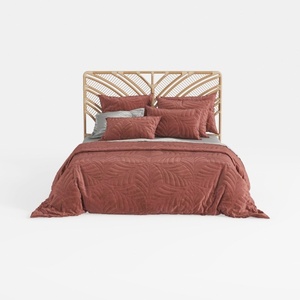

Rattan Boho Bed with Velvet Bedding 3D Model

Minimalist Solid Oak Glass Door Wardrobe 3D Model

Natural Solid Wood Organic Shape Side Table 3D Model
Homestyler is an easy-to-use online home design platform offering powerful 3D rendering tools, a vast collection of interior design projects, and helpful DIY video tutorials—perfect for bringing your home renovation ideas to life with confidence and creativity.
Design Now for FREE