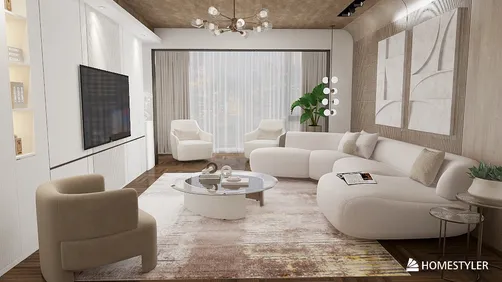
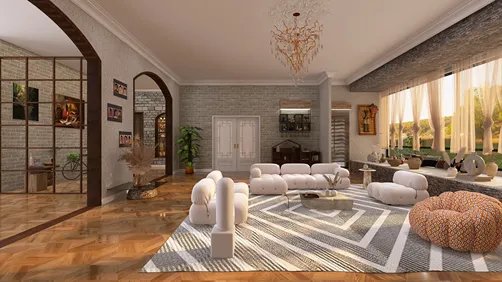
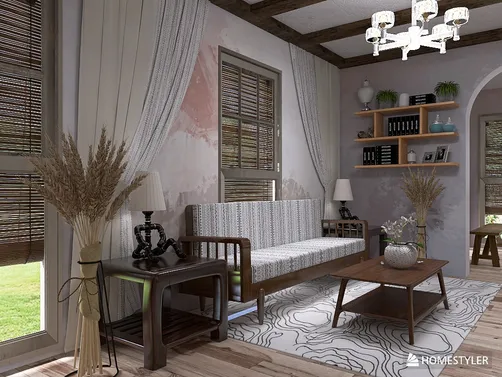
Aboriginal-Style Dining Space Design
The Aboriginal-style dining space is a culturally resonant, nature-infused environment that bridges ancestral storytelling and contemporary living. Drawing inspiration from Indigenous traditions worldwide—from Australian Aboriginal dot painting and earth pigment palettes to North American woven textures and South American organic motifs—this scene emphasizes authenticity over ornamentation. It’s not about literal replication, but about honoring indigenous values: respect for land, cyclical harmony, symbolic narrative, and material honesty. In practice, this translates to warm, grounded color schemes (ochre, terracotta, charcoal, sage), handcrafted or reclaimed wood furniture, tactile wall treatments (clay plaster, woven panels), and art that functions as both decoration and cultural archive. Crucially, the dining space serves as a communal heart—designed for gathering, storytelling, and shared meals—making spatial flow, acoustic comfort, and human scale central to its indoor space planning.
Design Challenges & Common Pitfalls
Designing an Aboriginal-inspired dining space presents nuanced challenges beyond aesthetic selection. First, cultural appropriation remains a critical risk: borrowing motifs without context, credit, or collaboration risks reducing sacred symbols to decorative clichés. Second, balancing rustic authenticity with modern functionality—such as integrating concealed lighting, accessible storage, or acoustical dampening—requires thoughtful indoor space planning and material layering. Third, many designers default to monolithic 'tribal' tropes (e.g., generic animal prints or stereotyped patterns), overlooking the vast diversity across Indigenous nations—from Inuit stone carvings to Maori kowhaiwhai scrolls to San rock-art linearity. Finally, achieving visual warmth without visual clutter is difficult; too many textures or layered patterns can overwhelm intimacy, contradicting the dining space’s core purpose: fostering connection and calm presence.
✅ Prioritize Material Authenticity & Tactility
Choose raw, unvarnished, or naturally finished materials that speak of origin and craft: solid timber tables with visible grain and live edges; hand-thrown ceramic dinnerware; cord-wrapped bar stools; rammed-earth or clay-rendered accent walls. Avoid synthetic imitations—e.g., ‘wood-look’ laminate or printed fabric mimicking weaving. Instead, source real artisan-made pieces or use Homestyler’s texture-mapping tools to preview how natural materials behave under different lighting conditions. This principle grounds the design in truth—not trend—and supports ethical indoor space planning by favoring durability, repairability, and local sourcing where possible.

Irina Romanova 💫’s 'Kitchen Dacha' demonstrates this principle masterfully: her dining area features a substantial, visibly knotted wooden table paired with simple linen-upholstered chairs—no veneers, no gloss. Using Homestyler Design Tips, she simulated natural daylight (via the 'sunny_vondelpark' HDR setting) to highlight wood grain depth and textile texture, proving how AI visualization helps validate material honesty before procurement. Her layout also reflects intelligent indoor space planning—clear circulation paths around the table, balanced pendant heights for both function and focal warmth—showcasing how authenticity serves usability.
Start Free Design🎨 Integrate Symbolic Narrative—Not Just Decoration
Every artwork, pattern, or sculptural element should carry intentional meaning—not merely fill negative space. Research region-specific motifs (e.g., Anishinaabe floral beadwork for resilience; Aboriginal concentric circles for meeting places; Mapuche geometric weaves for cosmic balance) and collaborate with Indigenous artists when possible. If commissioning original art isn’t feasible, license ethically sourced digital assets or use Homestyler’s AI prompt tools to generate custom wall murals *with descriptive prompts referencing cultural context* (e.g., 'Aboriginal-style sun motif in ochre and charcoal, circular composition, dot-infill technique, respectful abstraction'). This transforms décor into dialogue—and aligns with responsible indoor space planning that centers story over surface.

ROBERTA GIULIETTI’s 'Aborigeno... toscano' merges Tuscan rusticity with Aboriginal sensibility—not through cliché, but via symbolic layering: wall panels echo dot-painting rhythm using natural clay pigments; pendant lights reinterpret ceremonial fire forms. She used Homestyler’s layer-editing tools to test multiple symbolic arrangements before finalizing one that guides the eye toward the dining zone while preserving visual breathing room—proof that narrative integration enhances, rather than crowds, the space. Her approach exemplifies how Homestyler Design Tips support culturally intelligent indoor space planning.
Begin Free Design🌿 Anchor in Earth Tones & Biophilic Flow
Aboriginal aesthetics are intrinsically biophilic—rooted in landscape, season, and elemental forces. Build your palette from nature’s own spectrum: deep forest greens, sun-baked reds, river-silt greys, and sky-washed creams. Avoid stark contrasts; instead, use tonal gradation and organic transitions. Introduce living elements thoughtfully—native grasses in handmade ceramic vessels, dried seed pods in open shelving, or a single statement tree (e.g., olive or fig) visible through large glazing. Use Homestyler’s sunlight sliders and plant libraries to simulate seasonal shifts and shadow play—ensuring the dining space feels alive across time, not static. This principle ensures emotional resonance and supports wellness-oriented indoor space planning.

Cecilia Botha’s 'A Modular Haven' applies this principle with quiet sophistication: her dining zone flows seamlessly into adjacent areas using a unified earthen palette—warm taupe walls, walnut table, rust-toned upholstered benches—all softened by cascading pothos and filtered daylight. Leveraging Homestyler’s real-time 3D rendering, she adjusted window placement and curtain opacity to achieve dappled, forest-floor light quality—proving how digital tools enable precise biophilic calibration. Her design confirms that grounding in nature doesn’t require literal imitation; it demands atmospheric fidelity—and refined indoor space planning makes that possible.
Design Free NowFAQ
Q: Do I need formal training in Indigenous art to participate in the Aboriginal Style contest?
Not at all—but respectful research is essential. Begin with publicly available resources from Indigenous-led institutions (e.g., National Museum of the American Indian, Aboriginal Art Centre networks). Focus on understanding the meaning behind forms, not just copying them. Homestyler Design Tips encourage contextual prompting (e.g., 'Maori koru pattern symbolizing growth and harmony') to guide AI-assisted ideation ethically.
Q: Can I blend Aboriginal elements with other global styles (e.g., Scandinavian or Japandi)?
Absolutely—and many top entries do so successfully. The key is intentionality: ask 'What shared value connects these traditions?' (e.g., both Aboriginal and Japanese aesthetics honor imperfection and material honesty). Avoid juxtapositions that flatten cultural depth—e.g., pairing sacred Dreamtime motifs with ironic pop-art graphics. Let Homestyler’s rendering help you test harmony before committing.
Q: How does Homestyler support authentic Aboriginal-style indoor space planning?
Homestyler offers precise control over material realism (HDR lighting, texture mapping), spatial ergonomics (real-time walk-through, dimension overlays), and cultural mood-setting (sunlight presets like 'g_fallen_leaves' or 'd_desert_grassland'). These tools empower designers to prioritize experiential authenticity—not just visual approximation—making thoughtful indoor space planning accessible to all skill levels.

Solid Wood Fabric Director Chairs Set 3D Model

Minimalist Solid Wood Cane Armchair 3D Model
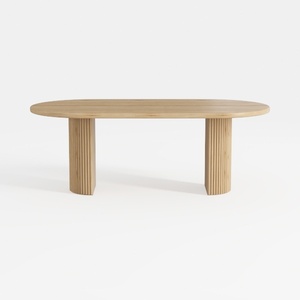

Minimalist Solid Wood Fluted Oval Dining Table 3D Model
Homestyler is an easy-to-use online home design platform offering powerful 3D rendering tools, a vast collection of interior design projects, and helpful DIY video tutorials—perfect for turning your creative ideas into stunning home designs effortlessly.
Design Now for FREE