Ground-Level Outdoor Space Design
Ground-level outdoor spaces—commonly known as terraces—are open, roofless platforms situated at grade level, distinct from elevated balconies or rooftop decks. They serve as vital transitional zones between interior living and the natural environment, supporting diverse functions including relaxation, social gatherings, dining, gardening, and wellness activities. Unlike constrained urban balconies, terraces offer generous square footage, direct soil access, and greater design flexibility—making them ideal for holistic indoor space planning and biophilic integration. Successful terrace design balances aesthetics with resilience, prioritizing comfort, year-round usability, and personal expression while leveraging tools like Homestyler design techniques for real-time 3D visualization, sunlight simulation, and material testing.
Design Challenges & Common Pitfalls
Terrace design faces unique challenges: exposure to weather extremes (UV degradation, rain pooling, freeze-thaw cycles), inconsistent sunlight patterns affecting plant health and seating comfort, privacy limitations in dense urban settings, drainage complications on non-porous surfaces, and zoning-related restrictions on built elements (e.g., pergolas, fire features). Many designers also underestimate spatial hierarchy—crowding functional zones (dining, lounging, greenery) without clear circulation paths—or neglect microclimate considerations like wind tunnels or heat island effects. These issues directly impact long-term usability and user satisfaction, demanding thoughtful indoor space planning that extends seamlessly outdoors.
✅ Prioritize Zoning & Functional Flow
A well-designed terrace avoids visual and functional clutter by intentionally dividing space into complementary activity zones—such as lounge, dining, green retreat, and wellness corners—connected via intuitive pathways. This zoning supports multitasking without compromising intimacy or flow, especially critical in multi-generational or entertaining-focused households. Clear transitions (e.g., change in paving material, elevation step, or overhead canopy) help define areas while maintaining visual continuity.

Hilola Mamadhanova’s 'Терраса' demonstrates masterful zoning: a defined lounge zone with sectional seating anchors the foreground, while a sunken dining area near the pool creates spatial hierarchy and visual rhythm. Using Homestyler design techniques, she simulated daylight angles across seasons to position shade structures and selected water-resistant materials with accurate texture mapping—proving how digital prototyping enhances real-world functionality in ground-level outdoor space design.
Start Free Design🌿 Integrate Nature Authentically & Strategically
Beyond decorative potted plants, authentic integration means selecting climate-appropriate species with layered heights (groundcover, shrubs, small trees), using soil beds instead of only containers for root health, and incorporating edible or sensory plants (lavender, mint, citrus) to activate multiple senses. Vertical gardens, trellises, and native grasses support biodiversity, reduce heat gain, and soften hardscape edges—turning ecological function into aesthetic strength.

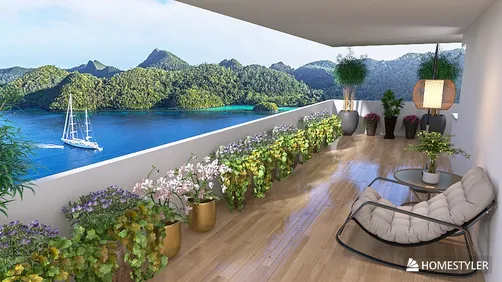
Vendetta V’s 'terrace space web' uses layered planting—low boxwood hedges framing a central dining zone, climbing roses on a timber pergola, and drought-tolerant ornamental grasses along perimeter walls—to create enclosure, seasonal interest, and habitat value. Leveraging Homestyler’s plant library and shadow analysis tool, she optimized planting locations for sun/shade balance and ensured mature growth wouldn’t obstruct views or airflow—showcasing how AI-powered indoor space planning elevates ecological intentionality.
Begin Your Free Design☀️ Optimize Light, Shade & Microclimate Control
Natural light dictates usability: morning sun suits breakfast nooks; afternoon shade is essential for lounging. Effective microclimate control combines passive strategies—pergolas with deciduous vines (summer shade, winter sun), reflective hardscape materials, permeable pavers for cooling, and strategic windbreaks (solid screens, dense evergreens)—with active elements like misting systems or radiant heating. HDR lighting presets in Homestyler enable precise evaluation of glare, shadow depth, and ambient warmth across times of day.

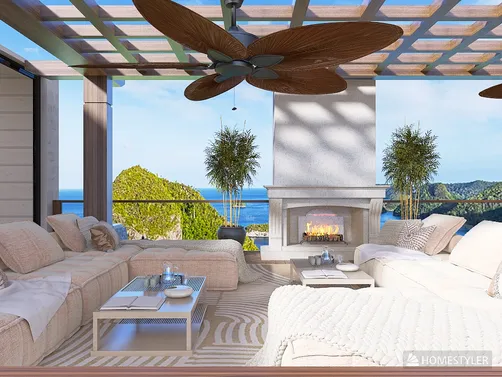
Rebecca Laghi’s 'terrazza' employs a bold orange-toned pergola canopy paired with deep overhangs and ambient LED uplighting beneath planter ledges—creating a warm, sheltered twilight zone. Using Homestyler’s ‘moonlit_golf’ HDR preset and real-time sun-path slider, she validated lighting uniformity and minimized harsh shadows during evening use. Her approach exemplifies how Homestyler design techniques transform light management from guesswork to precision planning in ground-level outdoor space design.
Launch Free DesignFAQ
Q: What’s the key difference between a terrace and a balcony in terms of interior space planning?
Unlike balconies—which extend cantilevered from upper floors and impose strict weight and access constraints—a terrace sits at ground level, enabling full soil integration, heavier material use (stone, timber decking), and seamless flow from interior rooms. This makes it a cornerstone of holistic indoor space planning, where thresholds blur and functionality expands outward.
Q: Can Homestyler AI really simulate realistic outdoor conditions like sun movement or rain runoff?
Yes. Homestyler’s advanced rendering engine includes geolocated sun-path modeling, dynamic HDR environments (e.g., ‘qwantani’, ‘g_sea_sky’), and real-time shadow casting. While it doesn’t model hydrology, its terrain elevation tools and slope visualization help identify potential drainage paths—supporting smarter decisions before construction.
Q: How many functional zones should a terrace ideally include?
Most award-winning entries—including Elena Gryg’s ‘Sunny terrace’ (Top 2)—use three core zones: lounge, dining, and green/wellness. This tripartite structure ensures versatility without fragmentation. Smaller terraces (under 100 sq ft) can merge two functions (e.g., lounge+dining), but always preserve one dedicated nature-integrated zone for biophilic balance.
Q: Do I need professional landscape knowledge to use Homestyler for terrace design?
No. Homestyler’s curated plant library, pre-scaled furniture kits, and one-click material swatches lower the barrier to entry. However, pairing its AI tools with foundational principles—like sun orientation, plant hardiness zones, and permeable surface ratios—maximizes realism and buildability. Think of it as intelligent indoor space planning extended outdoors.


Homestyler offers an easy-to-use online design tool with stunning 3D renderings, inspiring interior projects, and helpful DIY video tutorials. It’s ideal for anyone looking to create beautiful home designs effortlessly. Give your space a fresh look with Homestyler today!
Diseño ahora GRATIS