Doll-Integrated Children's Room Design
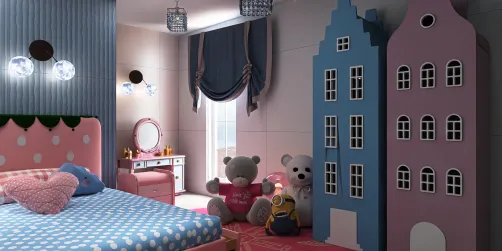
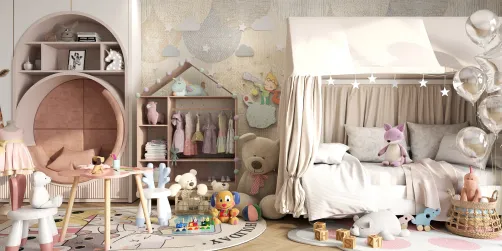
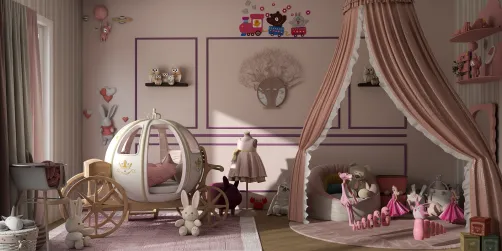
The 'Doll-Integrated Children's Room Design' is a specialized interior design scenario that transcends traditional children’s bedroom or playroom concepts. It centers on thoughtfully embedding dolls—not merely as decorative objects, but as emotional anchors and narrative protagonists—into the architectural and functional fabric of a child-friendly space. This scene merges psychological comfort with spatial storytelling: furniture layout, color psychology, lighting zones, and display systems are all calibrated to honor both the child’s imaginative agency and the doll’s symbolic presence. As highlighted in the contest brief, dolls serve as 'emotional regulators' for both children *and* adults—making this design context uniquely hybrid: part developmental environment, part sentimental sanctuary, and part creative studio. Homestyler AI design tools empower designers to rapidly prototype doll-scale spatial relationships (e.g., dollhouse corners, miniature seating nooks, integrated shelving with character-specific niches) using real-time 3D rendering and smart furniture arrangement—turning abstract emotional intent into tangible indoor space planning.
Design Challenges & Common Pitfalls
Designing a doll-integrated children’s room presents distinct challenges beyond standard residential interior design. First, scale ambiguity arises when balancing human-sized furniture with doll-centric elements—poorly resolved transitions can make the space feel disjointed or infantilized. Second, thematic coherence is easily compromised: overloading with licensed characters or clashing doll collections (e.g., Marine Adventure alongside Polar Regions) risks visual chaos without intentional color zoning or material continuity. Third, safety and functionality often compete—open doll displays may conflict with toddler-proofing needs, while interactive features (e.g., pull-down doll stages) must comply with structural and regulatory standards. Finally, many designers underestimate the role of light and texture in emotional resonance: flat lighting flattens narrative depth, and uniform hard surfaces undermine the 'calmness + energy' duality mandated by the contest brief—requiring deliberate layering of diffused ambient light, tactile textiles (rugs, drapery), and acoustic softening.
✅ Prioritize Emotional Zoning Over Thematic Decoration
Rather than organizing the room around doll franchises (e.g., 'Lulu Boo corner'), successful designs establish emotionally defined zones: a 'Calm Nook' (low-light, plush textures, enclosed seating) for quiet companionship; an 'Energy Hub' (bright lighting, movable furniture, open floor space) for active play; and a 'Story Shelf' (curated, rotating displays at child-eye level) for narrative engagement. This approach supports cognitive development and emotional regulation—aligning with the contest’s dual mandate of promoting both calmness *and* energy. Homestyler’s real-time 3D rendering allows instant A/B testing of zone boundaries, lighting intensity maps, and sightline analysis to ensure each area feels psychologically distinct yet spatially connected.

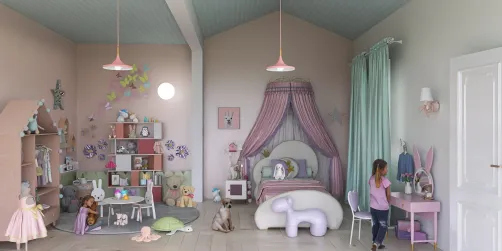
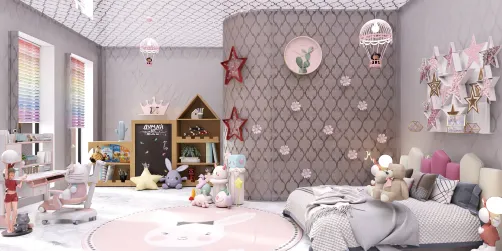
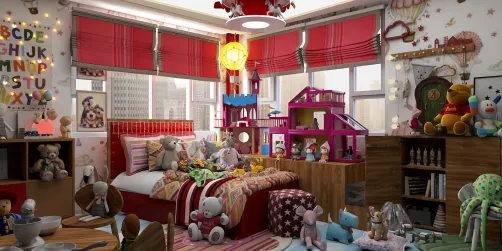
Thai designer 'ไทยนี้ รักสงบ' (authorName) applies Emotional Zoning masterfully in their 'children's bedroom with a desk and stuffed animals arranged peacefully'. Rather than clustering dolls decoratively, they anchor them within functional emotional zones: plush toys nest beside a study desk (Calm + Focus), while soft rugs and draped lighting define a separate floor-play area (Energy + Safety). Using Homestyler AI design tools, they precisely calibrated lighting falloff and furniture proportions to maintain visual harmony between child-scale and doll-scale elements—demonstrating how interior space planning serves emotional architecture, not just aesthetics.
Design Your Cozy Space🎨 Use Color & Texture as Narrative Bridges
Color and texture should unify diverse doll themes—not by enforcing monochrome palettes, but by deploying harmonizing 'bridge elements': a shared neutral base (e.g., warm oat walls), consistent textile language (e.g., linen duvets + cotton doll blankets), and recurring accent tones (e.g., coral used in wall art, rug fringe, *and* doll accessories). This strategy prevents visual fragmentation while honoring each doll’s individuality. Homestyler’s material-swapping feature enables rapid iteration of texture combinations (e.g., testing bouclé vs. velvet for a reading nook), while its real-time 3D rendering reveals how light interacts with layered surfaces—critical for achieving the 'vibrant yet calming' atmosphere described across top contest entries.

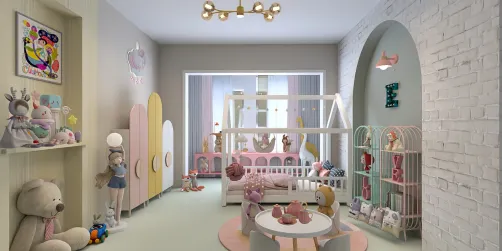
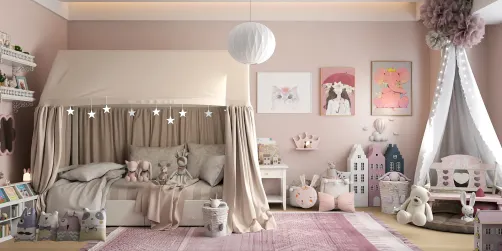
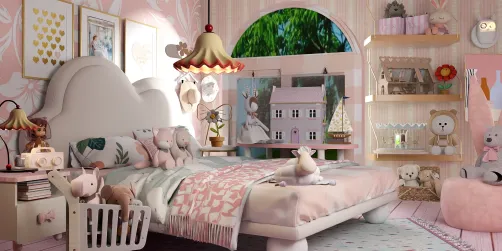
Italian designer 'giadafraiegari' (authorName) exemplifies Color & Texture as Narrative Bridges in their 'Girl’s room'. They unify pastel-themed dolls (Garden Paradise, Lulu Boo) through a cohesive textile palette—linen bedding, woven jute rug, and matte-finish ceramic lamps—all sharing a soft, tactile warmth. Notice how the coral throw pillow echoes the blush tone in the doll’s dress *and* the wall-mounted shelf edge: a subtle bridge, not a match. Leveraging Homestyler’s AI-powered material library and real-time 3D rendering, they validated how natural light would enhance this harmony across morning/evening conditions—proving that effective indoor space planning integrates sensory science with stylistic intention.
Start Playful Design🧩 Integrate Dolls as Functional Spatial Anchors
Dolls should inform, not follow, spatial decisions. Instead of placing dolls *after* furniture layout, treat them as functional anchors: a dollhouse becomes a room divider; a seated doll on a windowsill defines a reading zone; a hanging doll mobile establishes a ceiling focal point that guides lighting placement. This flips conventional hierarchy—dolls drive circulation, scale, and rhythm. Homestyler’s smart furniture arrangement tool excels here: users can pin doll models as fixed reference points, then auto-generate child-safe furniture layouts that orbit those anchors—ensuring every element supports both play utility and emotional resonance. This aligns directly with the contest’s call to 'integrate dolls beautifully with furniture', transforming them from ornaments into spatial collaborators.

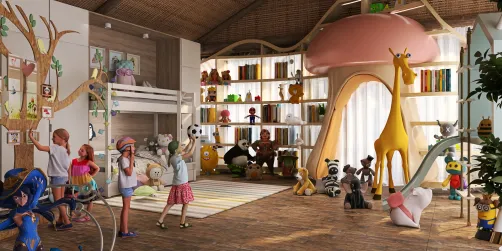
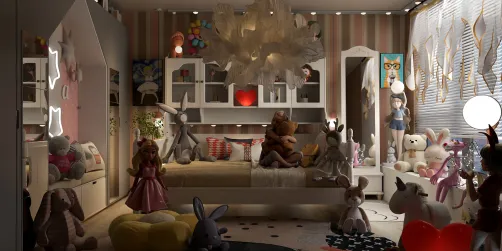
Thai designer 'ไทย รักสงบ' (authorName) implements dolls as Functional Spatial Anchors in their 'children's playroom'. A large-scale dollhouse isn’t placed *in* the room—it *is* the room’s spine, structurally dividing play and study zones while housing storage and display. Smaller dolls occupy built-in ledges aligned with child-height sightlines, turning shelves into interactive pathways. Using Homestyler’s AR virtual furniture placement and smart arrangement, they verified clear circulation paths around these anchors—ensuring the doll-centric layout remained fully functional for daily use. This demonstrates advanced interior space planning where emotional objects become ergonomic organizers.
Create Whimsical RoomFAQ
Q: How can I balance doll display with child safety in small rooms?
Use wall-mounted, recessed doll shelves (mounted >90cm high) paired with floor-level 'touch zones' featuring soft, weighted dolls. Homestyler’s collision-detection feature helps visualize safe clearance around furniture and anchored displays.
Q: Which Homestyler AI design tools best support doll-integrated spatial storytelling?
Real-time 3D rendering (for lighting/emotion simulation), Smart Furniture Arrangement (to orbit dolls as anchors), and the AR Virtual Placement tool (to test scale relationships in context) are essential. Prioritize models from the official 'Doll Room' collection (Marine Adventure, Ne Zha, etc.) for seamless scaling.
Q: Can doll-integrated design principles apply to adult spaces like home offices or reading nooks?
Absolutely. The contest brief explicitly states dolls serve as 'emotional regulators in a space for grown-ups.' Apply Emotional Zoning—e.g., a 'Calm Nook' with vintage dolls and warm lighting—using the same Homestyler design techniques for professional interior space planning.

Modern Oak Top White Metal Electric Standing Desk 3D Model


Modern Solid Wood Kids House Bed with Play Area 3D Model

Minimalist Oak Metal Dining Table Modern Simple 3D Model
Homestyler offers an easy-to-use online design tool paired with stunning 3D renderings, vast interior design projects, and helpful DIY video tutorials—making it simple and fun to create your perfect home interior.
지금 무료로 디자인하세요