


Eclectic Living Space Design
The 'Eclectic Living Space' is a dynamic, personality-driven interior design scenario where diverse stylistic languages—such as mid-century modern, Andalusian tilework, maximalist ornamentation, and rustic European textures—coexist within a single, unified environment. Unlike rigid design systems, this scene prioritizes narrative cohesion over stylistic uniformity: it’s not about mixing *randomly*, but curating *intentionally*. Key characteristics include layered materiality (velvet + polished wood + hand-painted ceramics), temporal juxtaposition (vintage lighting with minimalist furniture), cultural hybridity (Moroccan rugs beneath Scandinavian sofas), and spatial rhythm achieved through scale contrast and color dialogue. This scene reflects real-world urban living—where personal history, travel memories, and evolving taste converge—and demands thoughtful indoor space planning to prevent visual chaos while preserving expressive richness.
Design Challenges & Common Pitfalls
Eclectic spaces face three core challenges: (1) Visual overload — when too many patterns, eras, or finishes compete for attention without hierarchy; (2) Spatial dissonance — mismatched proportions (e.g., an oversized chandelier in a compact lounge) undermining harmony; and (3) Narrative fragmentation — stylistic elements feeling like isolated 'props' rather than parts of a coherent story. Many designers mistakenly equate eclecticism with accumulation, neglecting the foundational role of spatial intention, tonal anchoring (e.g., a unifying neutral base), and rhythmic repetition (e.g., echoing brass accents across lighting, hardware, and frames). Without disciplined indoor space planning and strategic use of Homestyler design tools—like real-time material swaps, HDR lighting simulation, and AI-powered layout iteration—eclectic visions often default to clutter instead of character.
✅ Principle 1: Anchor with a Unified Spatial Rhythm
Establish consistent visual cadence through recurring proportions, alignments, and intervals—not matching styles, but harmonizing their presence. Use repeated intervals (e.g., 60cm spacing between art frames), aligned base heights (all seating at 42–45cm), or mirrored symmetries in focal zones (fireplace flanking, window treatments) to create subconscious order. This rhythm becomes the 'invisible grammar' that allows wildly different pieces—a baroque mirror, a concrete coffee table, a woven rattan chair—to coexist intelligibly.

Designer Юлия Исаева’s work “«Жёлтая искра в городском стиле»” masterfully applies this principle: she anchors a vibrant yellow accent wall and bold floral rug with strict horizontal alignment—dining chairs, tabletop edge, and picture frame bottoms all sit on the same implied datum line. Using Homestyler’s snap-to-grid and dimension overlay tools, she ensured rhythmic spacing between pendant lights above the table (evenly distributed, 75cm apart), transforming potential visual noise into a confident, choreographed composition.
Start Free Design Now🎨 Principle 2: Curate Contrast Through Material Dialogue
Introduce stylistic diversity via tactile and textural counterpoints—not clashing colors or eras alone, but intentional material conversations: matte ceramic against high-gloss lacquer, raw linen beside burnished brass, rough-hewn timber next to smooth marble. Each pairing should serve a functional or emotional purpose (e.g., velvet’s warmth softens angular steel; aged brass adds patina depth to crisp white walls). Let materials ‘speak’ to one another—this dialogue replaces stylistic uniformity as the glue holding eclectic spaces together.

Designer Елена Манойлова’s “Эклектичный стиль” exemplifies material dialogue: she pairs exposed brick (rustic, porous) with a glossy emerald-green lacquered island (modern, reflective), then bridges them with brass cabinet pulls and a nubby wool rug. In Homestyler, she leveraged the AI material swap tool to test dozens of surface combinations instantly—confirming that the warm metallic sheen of brass visually ‘mediated’ between rough and sleek, fulfilling her vision without physical prototyping.
Begin Free Kitchen Design💡 Principle 3: Build Narrative Cohesion Through Color Storytelling
Go beyond a palette—craft a color *narrative* where hues carry meaning and progression. Assign dominant, supporting, and accent tones roles akin to characters in a story: e.g., a deep indigo wall acts as the ‘anchor character’, burnt sienna upholstery as the ‘supporting voice’, and citrine-yellow throw pillows as the ‘punctuating spark’. Repeat key tones across disparate objects (a vintage vase, a contemporary lamp shade, a botanical print) to weave continuity. This storytelling approach transforms color from decoration into connective tissue.

Designer Deema Ahmad’s “Yellow eclectic living room idea 💡” builds a vivid narrative around golden-yellow: it appears in the sunlit wall panel (dominant), the velvet sofa piping (supporting), and ceramic vases + abstract art strokes (accent). Using Homestyler’s AI color picker and palette generator, she extracted complementary earth tones from her selected rug image and applied them consistently across furniture and accessories—ensuring the yellow never felt arbitrary, but like a deliberate, joyful thread running through her indoor space planning.
Launch Your Living Room DesignFAQ
Q: Do I need professional design experience to enter the Eclectic Living challenge?
Not at all. The challenge celebrates personal expression— Homestyler’s intuitive drag-and-drop interface and AI design suggestions make it accessible for beginners. Focus on storytelling, not technical perfection.
Q: Can I combine more than two design styles in one space?
Absolutely—eclecticism thrives on multi-era, multi-cultural layering. The key is using proportion, rhythm, and a unifying color or material thread (e.g., consistent brass accents) to maintain coherence. Avoid adding styles without intentional dialogue.
Q: How does Homestyler AI help refine eclectic designs specifically?
Homestyler AI accelerates eclectic experimentation: instantly swap materials (e.g., try velvet → bouclé → leather on the same sofa), simulate natural light at different times (critical for balancing warm/cool tones), generate mood-matched model collections (like the Maximalist or Andalusian Libraries), and auto-align objects for spatial rhythm—all without manual rendering.
Q: What’s the most common mistake in eclectic living space design?
Overlooking spatial hierarchy. Eclectic spaces need a clear visual anchor (e.g., a statement fireplace, a bold rug, or a curated gallery wall) and subordinate elements that recede—otherwise, everything competes. Use Homestyler’s layer visibility toggle and zoom-based focus tools to test ‘what draws the eye first’.
Q: Are small apartments suitable for eclectic design?
Yes—often ideal. Small-scale eclectic spaces benefit from intentional curation (fewer, higher-impact pieces) and strong rhythm. Prioritize multifunctional items (a storage ottoman doubling as sculpture) and use mirrors + light simulation in Homestyler to enhance perceived volume and harmony.

Modern Olive Green Velvet Loveseat Sofa with Metal Legs 3D Model

Minimalist Glass Top Solid Wood Base Irregular Coffee Table 3D Model
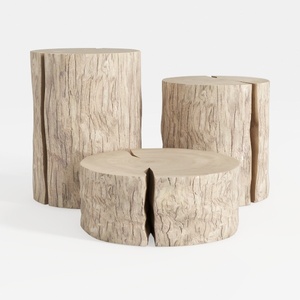

Rustic Solid Wood Stump Side Tables Set 3D Model
Homestyler offers an easy-to-use online home design tool with stunning 3D renderings, inspiring design projects, and helpful DIY video tutorials. It’s perfect for anyone looking to create beautiful interior spaces with professional-quality results. Give your home a fresh look today!
Design Now for FREE





