


The Art of Duplication: A Deep Dive into Homestyler's Creative Design Philosophy
In the world of interior design, 'duplication' is not about repetition—it's about intelligent variation. The 'Art of Duplicate for Web' contest, launched by Homestyler, celebrates this nuanced principle: identical architectural shells transformed through expressive, intentional design choices. Rather than copying aesthetics, top designers used Homestyler’s new 'Copy Room' and 'Copy Floor Plan' features to generate structural twins—then diverged boldly in materiality, color psychology, spatial rhythm, lighting mood, and cultural storytelling. This style transcends mere visual contrast; it’s a narrative technique where duplication becomes a canvas for comparison, evolution, and curated identity—showcasing how one floor plan can birth multiple atmospheres, functions, and emotional experiences—all rendered in real time with Homestyler’s industry-leading 3D engine.

Viktoriia V’s 'Three small cottages*RELAX * outside the city' demonstrates this philosophy masterfully: three identical cottage footprints—same walls, same windows, same door placements—yet each room breathes a distinct personality: one embraces botanical warmth with wood and greenery; another leans into minimalist Nordic calm; the third pulses with earthy Mediterranean texture. In Homestyler, this was achieved instantly via 'Copy Room', then refined using drag-and-drop material swaps, HDR environment toggles (g_city_park), and real-time lighting adjustments—proving that duplication isn’t a shortcut, but a strategic accelerator for creative iteration.
Start Free DesignCore Element 1: Intentional Material Duality 🎨
Material duality refers to the deliberate pairing of contrasting yet harmonious textures within identical spatial frameworks—e.g., raw concrete beside tactile linen, glossy lacquer against rough-hewn timber, or cool marble next to warm rattan. This contrast creates visual tension and tactile curiosity without compromising unity, since the underlying geometry remains unchanged. It emphasizes how surface language alone can redefine function and feeling: the same bedroom shell reads as serene spa, rustic retreat, or urban loft depending on its finish story.
Viktoriia V’s trio uses material duality to perfection: one cottage pairs whitewashed oak floors with matte ceramic wall tiles and woven jute rugs—evoking Scandinavian serenity; another contrasts dark-stained timber ceilings with smooth plaster walls and velvet-upholstered seating for warmth and depth. In Homestyler, users achieve this in seconds—selecting from 10,000+ photorealistic materials, applying them per surface with one click, and previewing under dynamic daylight (g_city_park) or dusk lighting—no rendering wait, no guesswork.
Start Free DesignCore Element 2: Chromatic Identity Shift 🌈
Chromatic identity shift means assigning each duplicated space a dominant, emotionally resonant color palette that defines its character—while preserving structural fidelity. It goes beyond accent walls: it’s holistic hue orchestration across walls, furniture, textiles, lighting temperature, and even ambient sky tone (HDR). A single dining layout may become a moody indigo lounge (cool + deep), a sun-drenched terracotta kitchen (warm + earthy), or a crisp monochrome studio (neutral + high-contrast)—all rooted in the same blueprint.

Ирина Беляева’s 'Green Room 2' exemplifies chromatic identity shift: a compact studio layout saturated in layered greens—from deep forest cabinetry and sage upholstery to mint curtains and emerald pendant lighting—creating a cohesive, nature-immersive sanctuary. In Homestyler, she used the Color Picker tool to extract and apply precise HEX values across surfaces, synced lighting (g_ljz_day) to enhance green’s vibrancy, and previewed in real time—making palette experimentation frictionless and precise.
Start Free DesignCore Element 3: Functional Narrative Layering 🧩
Functional narrative layering transforms identical rooms into distinct experiential zones by redefining purpose through furniture composition, circulation flow, and contextual cues—not structural change. A duplicated living room might become a quiet reading nook (low-profile sofa + floor lamp + bookshelf wall), a vibrant social hub (modular L-sofa + bar cart + statement rug), or a hybrid workspace (ergonomic desk + acoustic panels + task lighting)—all while retaining identical dimensions and openings.

Kholod T’s 'A Haven of Elegance 🤎💙✨' applies functional narrative layering to a mirrored dining–living pair: the dining zone centers around a sculptural round table and velvet chairs for intimate gatherings, while the adjacent living zone flows seamlessly with a low-slung white sofa, curved blue armchairs, and a dramatic chandelier—transforming symmetry into dialogue. In Homestyler, this was built using Smart Layout tools, drag-to-resize furniture, and instant shadow simulation—enabling designers to test spatial narratives before committing to a single arrangement.
Start Free DesignFAQ
Q: What does 'The Art of Duplicate' mean in practice?
It means using Homestyler’s Copy Room or Copy Floor Plan feature to create identical structural bases—and then intentionally differentiating them through design decisions: color, material, furniture layout, lighting, and decorative storytelling. It’s about showing contrast within consistency.
Q: Do I need advanced skills to participate?
No. The Copy Room feature is intuitive—one click duplicates geometry, materials, and furniture. Then use Homestyler’s drag-and-drop interface, real-time 3D preview, and AI-powered suggestions to explore variations instantly—even as a beginner.
Q: Can I duplicate across different room types (e.g., copy a bedroom to a bathroom)?
Yes. Homestyler allows cross-type duplication. You can copy any room’s structure and adapt its finishes, fixtures, and furnishings to suit a new function—ideal for exploring how design logic transfers between spaces.
Q: How does Homestyler ensure photorealistic results when duplicating?
Homestyler renders every duplicated scene with real-time global illumination, dynamic HDR environments (like g_peoples_square or g_ljz_day), and physically based materials—so light interacts authentically with surfaces, shadows fall naturally, and textures retain depth and realism—no post-processing needed.

Minimalist Linen Upholstered Platform Bed With Nailhead Trim 3D Model
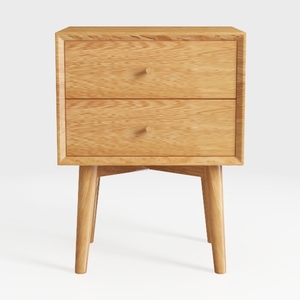
Mid Century Modern Solid Oak Nightstand 3D Model


Minimalist Corduroy Upholstered King Size Platform Bed 3D Model
Homestyler offers an easy-to-use online design tool with stunning 3D renderings, inspiring interior projects, and helpful DIY video tutorials. It’s perfect for turning your home design ideas into reality, whether you’re a beginner or a seasoned decorator.
Design Now for FREE





