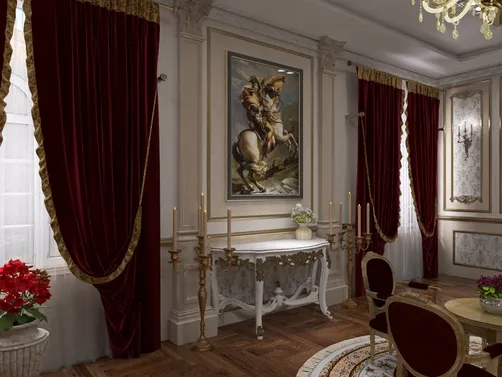
Baroque-Style Living Room Design
The Baroque-style living room is a grand, dramatic, and opulent interior space rooted in 17th–18th century European aristocratic aesthetics. It transcends mere decoration—it’s a holistic spatial experience defined by theatrical lighting, symmetrical grandeur, rich materiality (velvet, gilded wood, marble), and layered ornamentation (scrollwork, cherubs, cartouches, and bold moldings). Unlike minimalist or contemporary styles, the Baroque living room embraces visual intensity: deep jewel tones (crimson, royal blue, emerald), abundant gold leafing, oversized mirrors with ornate frames, crystal chandeliers as focal points, and sculptural furniture with cabriole legs and carved details. In modern applications—especially in web-based interior visualization—the Baroque living room serves as a benchmark for mastering indoor spatial planning: balancing historical authenticity with functional layout, managing scale across diverse room sizes (from compact apartments to palatial residences), and leveraging digital tools like Homestyler AI design tools to simulate light, texture, and perspective realism before execution.
Design Challenges
Designing a Baroque-style living room presents unique challenges: achieving historical fidelity without veering into kitsch; integrating lavish ornamentation while maintaining spatial clarity and circulation flow; harmonizing rich, saturated colors and metallic accents without overwhelming the senses; and adapting Baroque’s traditionally large-scale motifs to smaller or irregularly shaped rooms. Additionally, many designers struggle with proportion—e.g., selecting appropriately scaled chandeliers, mirrors, or mantelpieces that command attention yet avoid visual congestion. Poor indoor spatial planning often results in cluttered sightlines, awkward furniture groupings, or mismatched ceiling-to-floor hierarchy—undermining the Baroque ideal of controlled drama and compositional harmony.
✅ Principle 1: Embrace Symmetry & Axial Grandeur
Baroque interiors rely on strong central axes and mirrored balance to evoke power, order, and theatrical presence. A symmetrical layout—centered around a fireplace, grand mirror, or chandelier—anchors the space and guides the eye. Furniture should be arranged in paired formations (e.g., matching armchairs flanking a sofa, identical side tables, dual sconces), reinforcing rhythm and dignity. Avoid asymmetrical layouts unless intentionally used for dynamic contrast—and only after establishing a dominant axis. This principle is foundational to effective indoor spatial planning in high-decor styles.

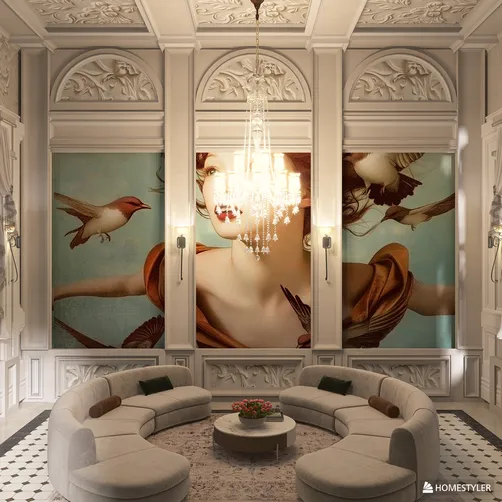
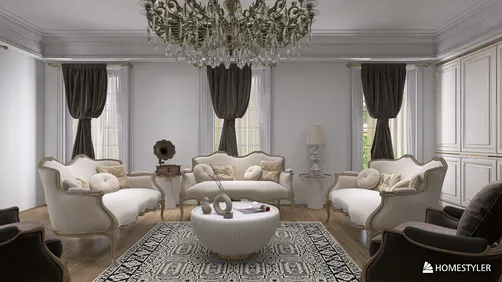
Designer Vendetta V (authorName) masterfully applies symmetry in her 'Baroque living room web' — positioning a monumental chandelier directly above a centered seating arrangement, flanked by identical gilded mirrors and matching velvet armchairs. Using Homestyler design techniques, she precisely aligned architectural elements (columns, cornice lines, and drapery headers) along a strict vertical axis, demonstrating how Homestyler AI design tools enable rapid iteration of balanced floorplans and real-time validation of axial harmony — a critical advantage for indoor spatial planning in historically inspired projects.
Start Your Design✨ Principle 2: Layer Texture, Material & Light
Baroque design thrives on sensory richness: contrasting textures (silk damask vs. rough-hewn stone), reflective surfaces (gilt frames, polished marble, crystal), and strategic light interplay (candle glow, chandelier sparkle, gilded highlights). Prioritize tactile depth over flat color. Use layered lighting—ambient (chandelier), accent (sconces, cove), and task (reading lamps)—to animate surfaces and reveal detail. This layering strategy transforms static rooms into immersive environments and is essential for translating Baroque drama into photorealistic web renderings.

Nadya P (authorName) exemplifies textural layering in her 'Untitled' Baroque-inspired living room: she juxtaposes plush velvet upholstery, hammered brass table legs, hand-painted floral wallpaper, and cascading silk drapes—all rendered with nuanced material response in Homestyler. By adjusting HDR lighting presets (g_rural_spring_scene) and sunlight intensity in Homestyler design tools, she simulated how morning light catches gold leaf edges and softens shadows beneath draped fabric—showcasing how Homestyler AI design tools empower designers to test and refine multi-sensory layering without physical prototyping.
Begin Free Design🎨 Principle 3: Curate Ornament with Intentional Restraint
True Baroque elegance lies not in excess—but in *curated* abundance. Every decorative element must serve composition, narrative, or function: a scroll motif echoes the curve of a chair leg; a porcelain vase complements the palette of a tapestry; a carved console supports both object and architecture. Avoid decorative ‘noise’—omit motifs that compete visually or lack thematic cohesion. Use negative space strategically: let a gilded mirror breathe against a neutral wall, or allow a single statement chandelier to dominate an otherwise simplified ceiling. This restraint ensures ornament enhances rather than obscures indoor spatial planning.

Parker Pringle (authorName) demonstrates intentional ornamentation in 'Cozy Urban House', where Baroque cues appear selectively: a single ornate mirror above a clean-lined console, delicate acanthus-leaf motifs on drawer pulls, and a subtly patterned rug echoing 18th-century damask—never overwhelming the space. Leveraging Homestyler AI design tools, he tested multiple ornamental densities via quick scene swaps (e.g., toggling between plain vs. carved moldings), validating that restrained application preserves openness and supports intuitive indoor spatial planning—even in compact urban settings.
Create Your SpaceFAQ
Q: How can I apply Baroque style to a small living room without making it feel cramped?
Use vertical emphasis (tall mirrors, floor-to-ceiling drapes), limit major ornament to one focal wall or ceiling medallion, choose scaled-down but stylistically faithful furniture (e.g., petite cabriole-leg chairs), and leverage Homestyler design techniques to simulate spatial volume through lighting and reflective surfaces.
Q: Is it possible to mix Baroque elements with modern furniture?
Yes—this ‘Baroque Revival’ approach is celebrated in top entries (e.g., T Yener’s 'A Palace-Inspired Baroque Dream'). Anchor the space with Baroque lighting and moldings, then introduce streamlined sofas or glass-top tables. Homestyler AI design tools help preview contrast ratios and material harmony before committing.
Q: What Homestyler features are most helpful for Baroque interior visualization?
Key features include HDR environment presets (e.g., g_venice_dawn, peoples_square_night) for authentic lighting moods; real-time material swatches for gold leaf, velvet, and marble; and precise symmetry alignment tools—essential for executing flawless indoor spatial planning in ornate styles.
Q: How do judges evaluate Baroque living room designs in contests like this?
Judges assess historical authenticity of motifs and proportions, coherence of color/material palette, effectiveness of dramatic focal points (e.g., chandelier placement), and technical execution—including how well the design leverages Homestyler design tools for realism, lighting accuracy, and spatial logic. Top winners consistently demonstrate mastery of indoor spatial planning within stylistic constraints.

Modern Red Fabric Asymmetrical Loveseat Sofa 3D Model
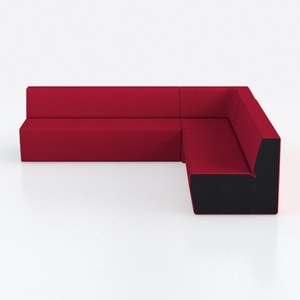
Minimalist Red Fabric L Shape Sectional Sofa 3D Model

Modern Burgundy Leather Right Arm 2 Seat Sofa 3D Model
Homestyler offers an easy-to-use online design tool with stunning 3D renderings, a vast collection of interior design projects, and helpful DIY video tutorials—perfect for bringing your home decoration ideas to life quickly and creatively.
立即免费设计