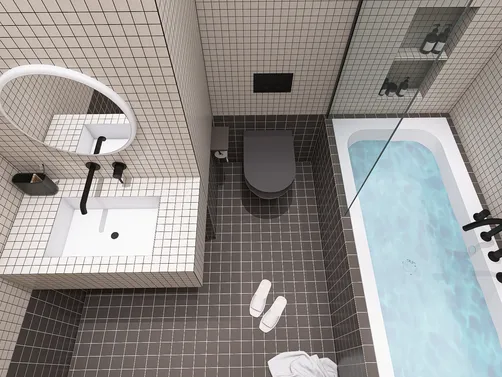
Grid-Patterned Living Space Design
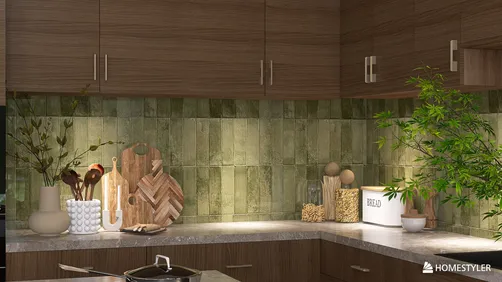
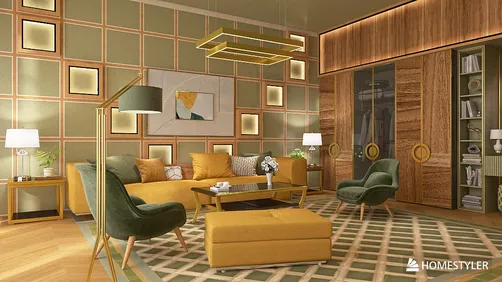
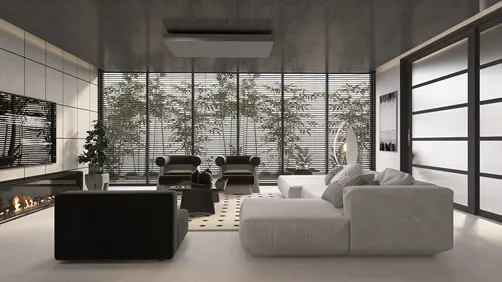
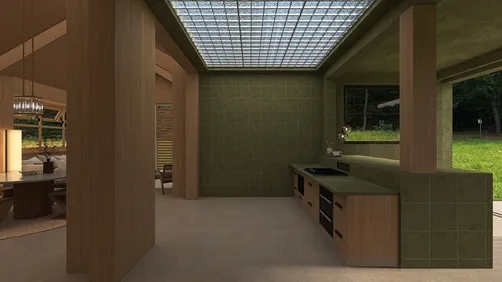
The 'Grid-Patterned Living Space' refers to a modern interior design approach that uses deliberate, structured grid layouts — in flooring, wall paneling, ceiling grids, furniture alignment, or modular storage — to establish visual rhythm, spatial clarity, and architectural harmony. Unlike arbitrary geometric decoration, this scene emphasizes intentional repetition, proportional balance, and functional zoning through orthogonal lines and modular units. It transcends mere aesthetics: the grid becomes an organizational logic for indoor space planning — guiding circulation, defining activity areas, and unifying material transitions. As showcased in the Homestyler 'Grid-Patterned Space for Web' contest, top entries transformed living rooms, kitchens, bathrooms, and open-plan apartments using grids not as ornament, but as foundational spatial intelligence.
Design Challenges & Common Pitfalls
Designers often struggle with grid overuse — turning spaces into rigid, monotonous labyrinths that sacrifice warmth and human scale. Other frequent issues include misaligned grid modules across surfaces (e.g., floor tiles not syncing with ceiling beams or cabinet fronts), poor contrast management (blending grids into background instead of highlighting them), and neglecting ergonomic flow — where strict grid alignment compromises walkways or furniture usability. In small or irregularly shaped rooms, forcing a uniform grid without adaptive scaling can amplify spatial constraints rather than resolve them. Effective indoor space planning must therefore balance grid discipline with contextual flexibility.
✅ Principle 1: Anchor the Grid with Structural Elements
Let architectural bones — such as ceiling joists, window mullions, floor tile joints, or built-in cabinetry frames — define your primary grid axis. This grounds the pattern in reality, ensuring visual cohesion and reducing perceived artificiality. Avoid floating grids; instead, extend or echo existing alignments to reinforce spatial logic and support intuitive wayfinding.

Emma LA’s 'Omnia' leverages structural alignment masterfully: the ceiling grid precisely mirrors the modular yoga mat layout and window frame spacing, while recessed lighting tracks follow the same module. Using Homestyler Design Tools, she snapped furniture edges and wall panels to the underlying grid system — demonstrating how AI-assisted indoor space planning ensures pixel-perfect structural continuity across 2D plans and 3D renders.
Start Designing Free📐 Principle 2: Vary Grid Scale by Function & Zone
Apply denser, finer grids (e.g., 10 cm × 10 cm) in detail-rich zones like backsplashes or vanity walls to evoke precision and craft. Use broader, bolder grids (e.g., 60 cm × 60 cm) in open areas like living floors or ceilings to imply spaciousness and calm. This hierarchy prevents visual fatigue and subtly directs attention — making grid patterning an active tool for spatial storytelling, not passive decoration.

Susan Pimentel’s 'Diseño Japandi con Tonos de Madera Fría' exemplifies scale hierarchy: a tight 15 cm wood-grain grid on the accent wall contrasts with wide 80 cm ceiling beam intervals and expansive floor-plank modules. Within Homestyler, she used the 'Smart Grid Toggle' and layer-based scaling presets to assign distinct grid densities per surface — a core Homestyler design技巧 enabling rapid iteration without manual measurement recalibration.
Begin Free Design Now🎨 Principle 3: Soften Grid Rigidity with Material & Light
Counteract potential sterility by introducing tonal gradation (e.g., subtle washes across grid lines), textural variation (matte vs. glossy grid segments), or dynamic light play (angled uplights grazing vertical grid reveals). Integrate organic accents — curved furniture, free-form rugs, or asymmetric greenery — that intersect (but don’t disrupt) the grid, creating elegant tension between order and life.

Rebecca Laghi’s 'Through the grid' applies this principle with poetic restraint: warm-toned timber slats form a rhythmic wall grid, while soft daylight from aligned windows casts evolving shadows — blurring linearity throughout the day. She used Homestyler’s real-time HDR sunlight simulator and material reflectivity sliders to preview how light would interact with each grid plane, proving how AI tools elevate intuitive Homestyler design技巧 into evidence-based decision-making.
Create Your Space FreeFAQ
Q: What does 'grid-patterned space' mean in the context of the Homestyler contest?
It refers to interior designs where geometric grid logic — in layout, tiling, cladding, or furniture arrangement — serves as the unifying compositional framework. It’s not just about checkerboard floors; it’s about disciplined spatial organization that balances modern minimalism with human-centered functionality.
Q: Do I need professional drafting skills to participate in the Grid-Patterned Space challenge?
No. Homestyler’s AI-powered tools — including Smart Grid Snap, Auto-Align Walls, and Real-Time 3D Grid Overlay — enable beginners to implement precise grid-based indoor space planning intuitively. Top winners used these features extensively to maintain consistency across views.
Q: Can grid patterns work in small apartments or irregular rooms?
Absolutely — and often more effectively. Strategic grid use (e.g., vertical wall grids to heighten ceilings, or directional floor grids to elongate narrow corridors) is a proven Homestyler design技巧 for optimizing perception and function in constrained spaces.
Q: Are there specific Homestyler tools recommended for grid-focused design?
Yes: Enable 'Grid Mode' in Floor Plan view (set custom spacing), use 'Align to Grid' for objects, apply 'Material Tiling Sync' for seamless surface repeats, and leverage 'Sunlight + HDR Preview' to test how grid shadows evolve — all key to mastering grid-based indoor space planning.


Minimalist Walnut Round Coffee Table 3D Model


Minimalist Cream Solid Wood Irregular Coffee Table 3D Model
Homestyler offers an easy-to-use online home design tool packed with beautiful 3D renderings, inspiring design projects, and helpful DIY video tutorials—perfect for turning your decorating ideas into reality quickly and creatively.
Design Now for FREE