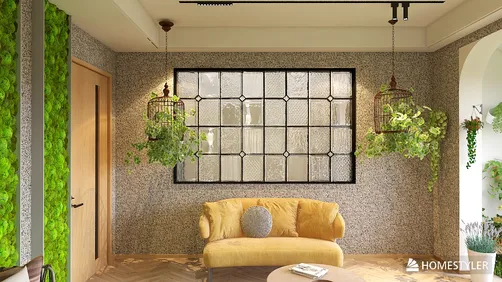
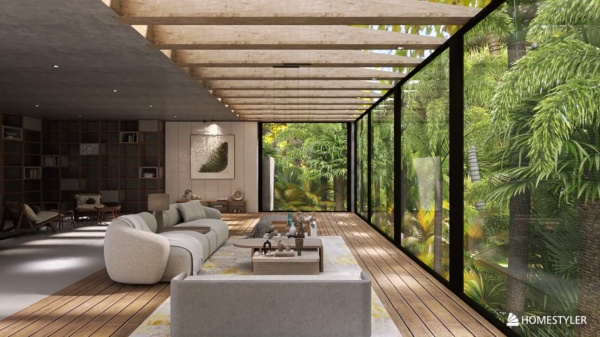
Balcony Floor-to-Ceiling Window Design
The balcony with floor-to-ceiling windows is a pivotal transitional space bridging indoor living and outdoor scenery. It transcends mere functionality — serving as a sun-drenched lounge, a green sanctuary, an art display zone, or even a compact home studio — while demanding careful indoor space planning to harmonize light, view, privacy, thermal comfort, and structural safety. This design scenario emphasizes visual continuity, spatial layering, and human-centered ergonomics, making it ideal for urban apartments, penthouses, and modern villas where connection with nature and panoramic views are highly valued.
Design Challenges & Common Pitfalls
Key challenges include managing excessive solar heat gain and glare without compromising natural light; ensuring privacy while preserving transparency and openness; integrating seamless transitions between interior and exterior flooring, ceiling lines, and material palettes; selecting window systems that meet wind-load and thermal insulation standards; and avoiding visual clutter that disrupts the 'frameless' aesthetic of floor-to-ceiling glazing. Poor indoor space planning often leads to awkward furniture layouts, insufficient circulation zones near large glass walls, and mismatched lighting strategies that undermine both ambiance and usability.
✅ Prioritize Visual Continuity & Spatial Flow
Floor-to-ceiling windows dissolve physical boundaries — so interior layout must reinforce this illusion of extension. Avoid tall furniture or wall-mounted elements directly in front of the glass; instead, use low-profile seating, floating consoles, and recessed storage to maintain sightlines. Align ceiling heights, floor materials (e.g., continuous porcelain tile from living room to balcony), and color tones across both zones to enhance perceptual spaciousness. Homestyler AI design tools enable real-time volumetric previews under different HDR lighting conditions (e.g., 'sunny_vondelpark' or 'g_portland'), helping designers validate sightline integrity and material continuity before finalizing plans.

SOFIA SP’s 'Home with close balcony' exemplifies visual continuity: low-slung modular sofas and matching indoor-outdoor rugs create uninterrupted horizontal lines, while potted olive trees placed symmetrically on the balcony floor echo interior greenery. Using Homestyler AI, she simulated daylight progression ('g_portland' HDR) to verify that morning sun illuminates the seating area without glare — demonstrating how smart indoor space planning and Homestyler design techniques jointly optimize experiential flow.
Start Free Design Now🌿 Integrate Nature & Functional Flexibility
A successful balcony design leverages biophilic principles — incorporating live plants, natural textures (wood, stone, linen), and adaptable furnishings that support multiple uses: lounging, dining, working, or exhibiting art. Retractable shading (motorized blinds or pergola canopies), weather-resistant yet residential-grade materials, and multi-zone lighting (ambient + task + accent) ensure year-round functionality. Homestyler AI design tools allow rapid iteration of plant placement, furniture scaling, and dynamic lighting setups — enabling precise evaluation of microclimate response and spatial versatility.

HDK Architecture’s 'TC18' integrates nature and flexibility masterfully: a compact extendable teak table doubles as workspace or dining surface; vertical planter walls flank the glazing to soften reflections and add seasonal texture; and pendant lights above the table switch seamlessly between warm white (relaxation) and cool white (task mode). By leveraging Homestyler AI’s parametric furniture library and real-time sunlight simulation ('g_ljz_day'), the team validated optimal plant density and shade coverage — showcasing advanced Homestyler design techniques for responsive indoor space planning.
Begin Your Free Design🛡️ Optimize Thermal Performance & User Comfort
Large glazing introduces significant thermal load — requiring high-performance double or triple glazing with low-E coatings, thermally broken frames, and strategic shading integration. Interior thermal mass (e.g., stone-clad columns or concrete floors) helps stabilize temperatures, while zoned HVAC or radiant floor heating/cooling ensures comfort near glass surfaces. Acoustic insulation and condensation control are equally critical. Homestyler AI supports performance-aware design by linking material properties (U-value, SHGC) to environmental presets — allowing designers to compare energy impact across configurations before committing to construction.

Mzk Hsynv’s 'apartment1' demonstrates thermal intelligence: ceiling-mounted ductless AC units are positioned to avoid direct airflow onto glazed surfaces, minimizing condensation risk; insulated roller blinds are modeled in Homestyler AI with accurate opacity and reflectivity settings to simulate summer heat rejection; and light-colored travertine flooring provides thermal inertia while reflecting daylight. This project reflects how thoughtful indoor space planning — supported by Homestyler design techniques — balances aesthetics, climate responsiveness, and daily livability.
Launch Free DesignFAQ
Q: Can I submit multiple design variations (e.g., day/night views or different aspect ratios) for the Balcony Windows for Web contest?
A: Yes — the contest explicitly encourages multi-ratio submissions (e.g., 1K, 2K, 4K, and 1080P video) to showcase how lighting, composition, and spatial perception evolve across formats. Homestyler AI simplifies this via batch rendering with customizable HDR environments and sunlight angles.
Q: Is prior experience with Homestyler required to join the contest?
A: No — the contest is open to all skill levels. Homestyler design techniques like AI-powered furniture suggestion, automatic dimensioning, and one-click material swaps make professional-grade balcony visualization accessible without CAD expertise.
Q: How do judges evaluate entries focused on floor-to-ceiling balcony designs?
A: Entries are assessed holistically on indoor space planning logic (e.g., circulation, scale, zoning), integration of natural light and views, functional adaptability, material authenticity, and creative use of Homestyler AI tools — not just visual polish. Top winners like Rutchevelle Den Ouden’s 'Living with Nature' exemplify layered spatial storytelling and technical coherence.
Q: Are there restrictions on balcony size or structural modifications in Homestyler renders?
A: While Homestyler allows conceptual freedom (e.g., removing load-bearing walls for dramatic openness), realistic submissions should respect standard building codes — especially regarding railing height, glazing safety standards, and thermal envelope integrity. Contest guidelines emphasize 'beautiful and functional spaces', anchoring creativity in practical indoor space planning principles.
What began as an Autodesk innovation has evolved into a design platform used by more than 18 million people around the globe. Homestyler combines powerful rendering, an intuitive editor, and a vast furniture library to help you turn inspiration into photorealistic designs — whether you're redesigning a single room or planning an entire home.
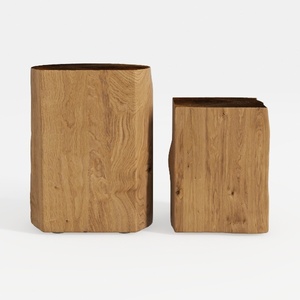
Minimalist Solid Oak Nesting Side Tables Natural Live Edge 3D Model

Minimalist Solid Oak Round Coffee Table 3D Model

Bohemian Rattan Coffee Table With Open Lower Shelf 3D Model
Homestyler is an easy-to-use online home design platform offering powerful 3D rendering tools, a vast collection of design projects, and helpful DIY video tutorials. It’s perfect for creating and visualizing your dream space effortlessly.
Design Now for FREE