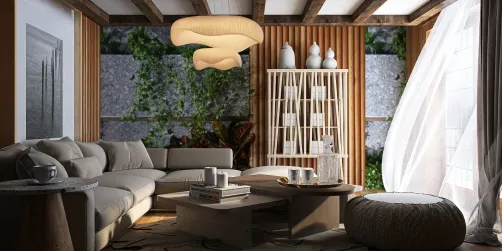
Balcony Floor-to-Ceiling Window Design
This design scenario centers on transforming balconies into luminous, immersive extensions of indoor living spaces using floor-to-ceiling windows. Unlike standard window installations, this approach eliminates visual barriers between interior and exterior—maximizing natural light ingress, expanding perceived spatial volume, and framing outdoor views as dynamic 'living artwork.' It demands careful integration of structural integrity, thermal performance, privacy strategies, and interior spatial planning to ensure functionality without compromising aesthetics or comfort. The balcony becomes a hybrid zone: part lounge, part greenhouse, part observatory—requiring thoughtful indoor space planning that harmonizes furniture layout, material selection, and biophilic elements with the architectural transparency enabled by Homestyler’s real-time 3D rendering.
Design Challenges & Common Pitfalls
Key challenges include glare and overheating from unfiltered solar gain; loss of privacy in urban settings; difficulty anchoring furniture meaningfully in narrow or irregular balcony footprints; and balancing openness with weather resilience (wind, rain, dust). Many designers overlook thermal bridging at window frames or misjudge sightlines—resulting in views that cut off at knee-height or expose unsightly building infrastructure. Additionally, integrating storage, seating, and greenery within tight dimensions often leads to cluttered layouts that undermine the very sense of airiness the design intends to create.
✅ Prioritize View Framing & Visual Continuity
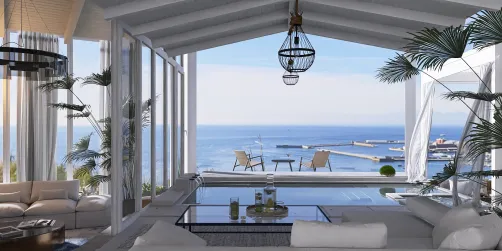
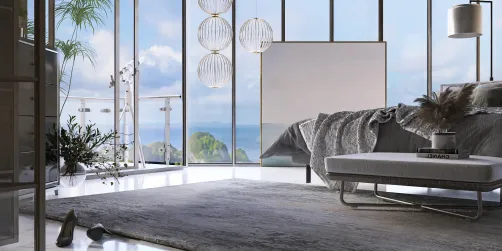
Floor-to-ceiling windows should act as curated lenses—not just glass walls. Align key interior focal points (e.g., sofa seating, reading nook) with optimal vantage angles. Use minimal mullions and low-iron glass to preserve clarity. In Homestyler, leverage the 'View Analysis' mode (under Scene Tools) to simulate sightlines at seated and standing heights—ensuring framed views highlight landscape features, not utility poles or neighboring rooftops. Maintain consistent floor and ceiling planes across interior and balcony to reinforce spatial flow.

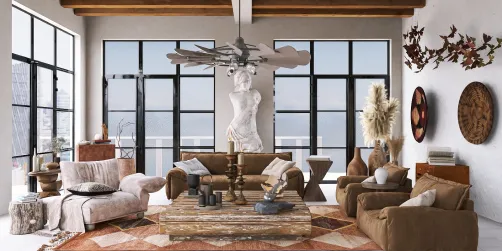
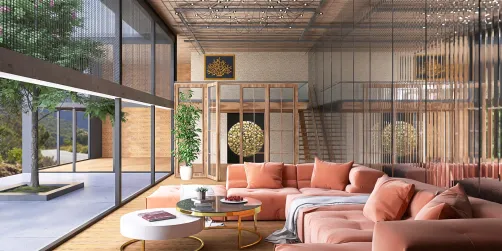
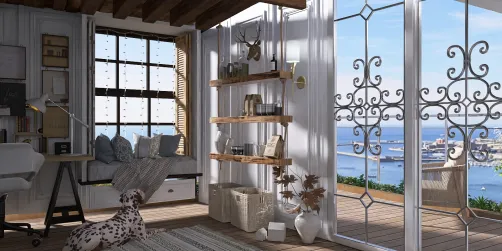
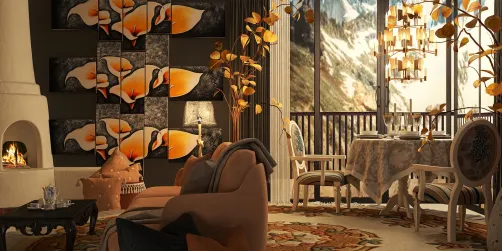
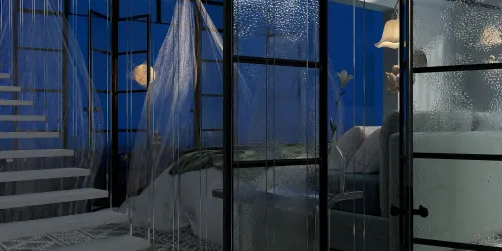
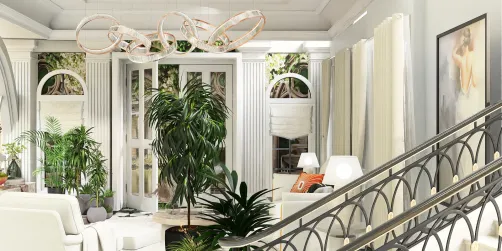
Arwen Arianus🎨🎸🏰’s 'Cave Woman ☺️' design demonstrates masterful view framing: the mural behind the sofa visually extends the wall plane upward, while the rustic furniture grouping is precisely oriented toward the balcony’s central window axis—creating a seamless indoor-outdoor narrative. Using Homestyler AI design tools, she adjusted curtain placement and sill height in real time to eliminate visual obstructions, proving how digital prototyping accelerates spatial intuition for indoor space planning.
Design Your Space Now🌿 Integrate Biophilic Layers Thoughtfully
Go beyond potted plants. Layer biophilia vertically (wall-mounted planters), texturally (woven rugs, rattan chairs), and sensorially (water features, wind chimes). Choose drought-tolerant, low-maintenance species suited to microclimates (e.g., balcony sun exposure, wind patterns). In Homestyler, use the 'Material Swap' tool to test how different wood tones, stone claddings, or textile patterns interact with daylight at various times—ensuring greenery enhances rather than competes with natural light dynamics.

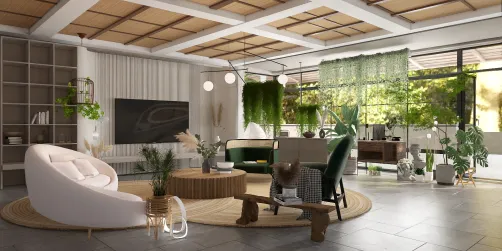
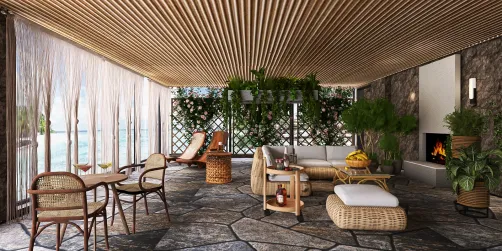
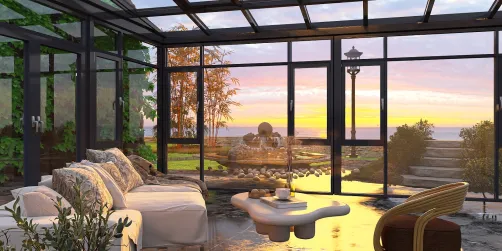
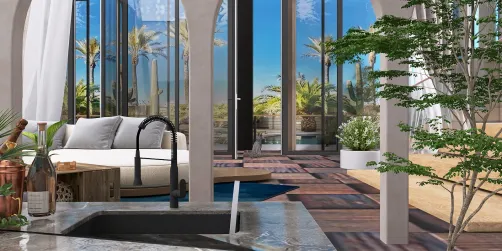
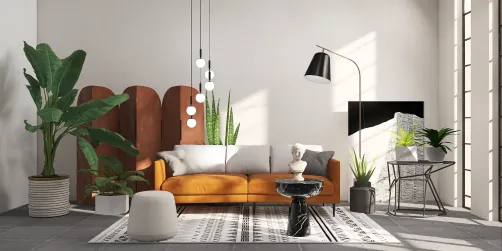
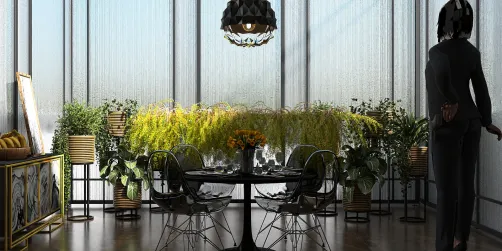
Lolo Watson’s 'Summer Breeze ' uses layered biophilia to soften architectural rigidity: trailing pothos cascade from elevated planters beside floor-to-ceiling glazing, while a textured jute rug and linen-upholstered sofa echo organic warmth. Her Homestyler AI design process included simulating seasonal light shifts—confirming that greenery density remained balanced year-round, avoiding winter shadowing or summer glare amplification—a critical insight for effective indoor space planning.
Start Your Free Design🛡️ Anchor Functionality Without Compromising Transparency
Furniture must serve purpose *and* recede visually. Opt for low-profile, slender-leg pieces in light or reflective finishes (e.g., white oak, brushed aluminum). Foldable or modular systems maximize flexibility. Integrate concealed storage under benches or within planter boxes. Use smart shading—motorized sheer roller blinds or external louvers—that deploy only when needed, preserving glass integrity. Homestyler’s 'Furniture Physics' simulation helps test real-world usability: e.g., verifying chair clearance around sliding doors or assessing wind resistance of freestanding screens.

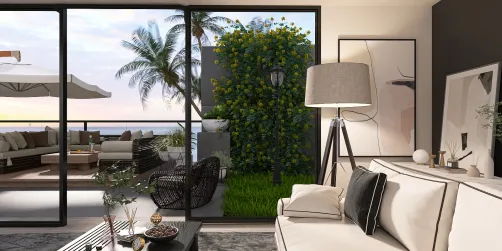
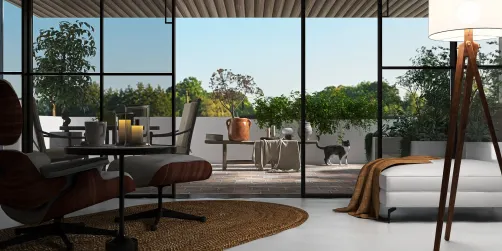
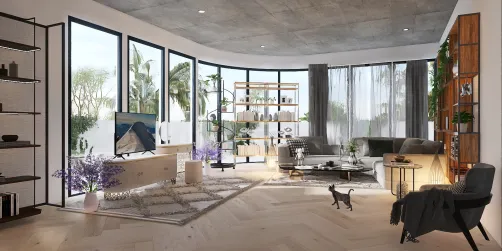
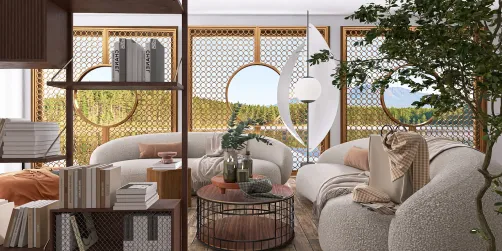
LaDana Bates 🌺’s design employs a white sectional sofa with slim metal legs—visually lightweight yet highly functional—positioned parallel to the glazing to define the lounge zone without blocking light. Her use of Homestyler’s smart furniture arrangement feature allowed rapid iteration of seating depth and orientation, ensuring clear pathways to the balcony while maintaining an open sightline to the garden. This exemplifies how Homestyler design techniques streamline decision-making in complex indoor space planning.
Create Your Balcony PlanFAQ
Q: How can I prevent excessive heat gain with floor-to-ceiling balcony windows?
Use double- or triple-glazed units with low-emissivity (low-E) coatings and argon gas fills. Pair them with external shading (e.g., motorized awnings) modeled in Homestyler’s Sun Study tool to verify solar angle coverage throughout the year.
Q: What’s the best way to maintain privacy without sacrificing light?
Layer solutions: install switchable smart glass for instant opacity control, combine with sheer interior curtains and strategically placed vertical gardens. Homestyler’s real-time 3D rendering lets you preview how each layer affects light diffusion and silhouette visibility.
Q: Can I use Homestyler AI to test furniture durability for balcony conditions?
While Homestyler doesn’t simulate material weathering, its physics engine validates spatial fit, weight distribution, and wind interference (e.g., testing if a tall bookshelf destabilizes near open glazing). Pair outputs with manufacturer specs for UV resistance and corrosion ratings.
Q: How do top contest winners approach indoor space planning for balconies?
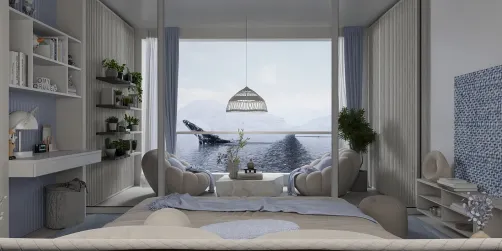
Winners like Irene DariaF. 🎨 (Top 1) and Monique Maas (Top 5) treat the balcony as a 'fifth facade'—designing ceiling treatments (e.g., recessed lighting, wood slats), flooring transitions (e.g., same material indoors/outdoors), and acoustic buffers (textile panels) to unify experience. Their Homestyler designs emphasize continuity over contrast.
What began as an Autodesk innovation has evolved into a design platform used by more than 18 million people around the globe. Homestyler combines powerful rendering, an intuitive editor, and a vast furniture library to help you turn inspiration into photorealistic designs — whether you're redesigning a single room or planning an entire home.

Modern Solid Wood Metal Two Tier Round Coffee Table 3D Model
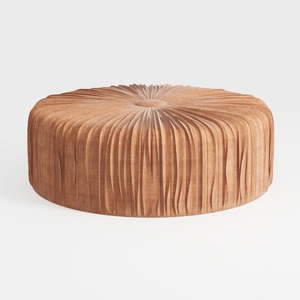
Minimalist Round Tufted Fabric Ottoman 3D Model

Minimalist Solid Oak Round Side Table 3D Model
Homestyler is an easy-to-use online home design platform offering powerful 3D rendering, vast interior decoration projects, and helpful DIY video tutorials. It’s perfect for bringing your design ideas to life and exploring creative layouts effortlessly.
Design Now for FREE