Fitness-Embedded Home Style Decoded: Where Wellness Meets Everyday Living
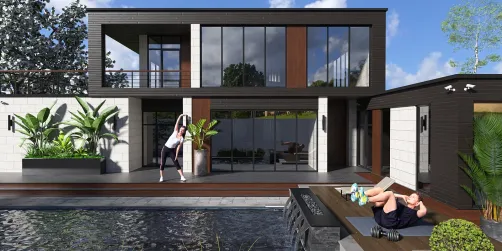
The 'Fitness-Embedded Home' style is not a conventional interior design aesthetic like Scandinavian or Industrial — it’s a functional philosophy made visual. Born from the contest theme 'Who says fitness equipment has to dominate the balcony? The true aesthetics of home workouts lie in turning gear into furniture and making exercise an extension of daily life', this style redefines domestic space by seamlessly integrating movement, wellness, and design intelligence. It prioritizes spatial harmony over dedicated gym zones — transforming bedrooms into yoga studios, balconies into resistance-training nooks, and living rooms into multi-modal movement hubs. Key hallmarks include intelligent furniture dual-functionality (e.g., ottomans with resistance bands, beds with under-mattress pull-up bars), minimalist yet purposeful equipment curation, and biophilic or calming backdrops that reduce visual clutter while elevating serenity. Crucially, it rejects the 'gym-in-a-box' look — instead, fitness tools are concealed, scaled, or stylized to read as intentional design elements, not afterthoughts.

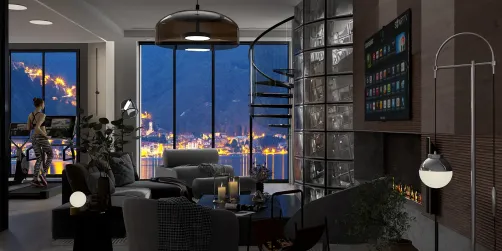
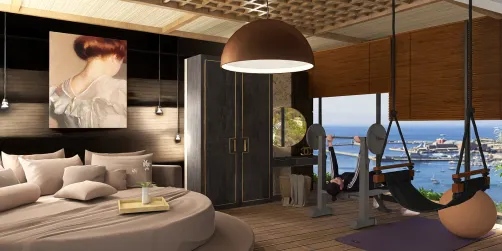
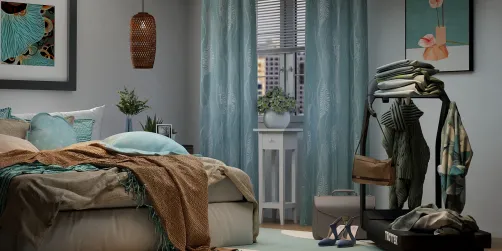
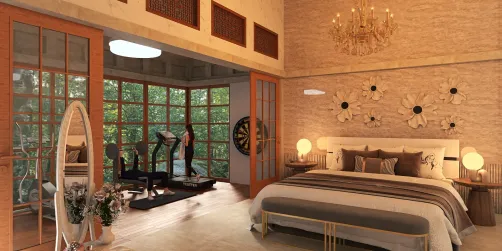
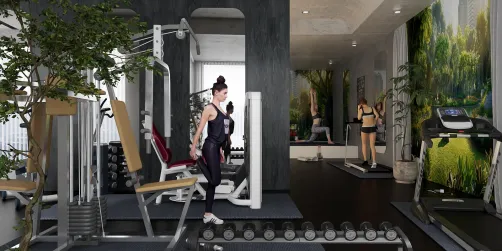
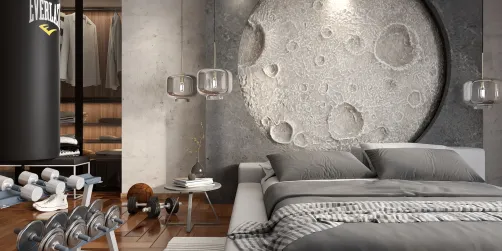
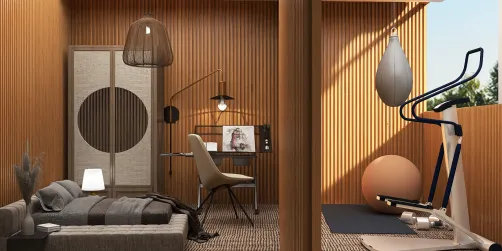
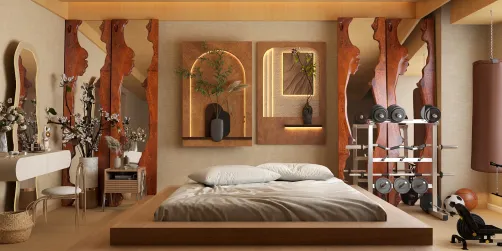
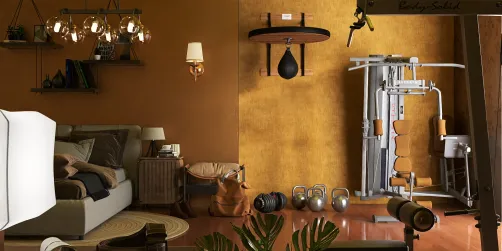
Featured work: Kimberly Lockaby's 'Design Ideas' — a modern bedroom where a compact treadmill, wall-mounted resistance system, and foldable mat zone coexist with a cozy bed, greenery, and soft lighting. This exemplifies how Homestyler’s real-time 3D rendering enables rapid prototyping of embedded fitness layouts: users can drag-and-drop scaled equipment models, test sightlines from bed to mirror, simulate natural light on workout surfaces, and instantly toggle between 'day mode' and 'night recovery mode' — all within one intuitive interface. Homestyler transforms spatial constraints into creative opportunities, making fitness-embedded design accessible, precise, and deeply personal.
Start Free DesignCore Element 1: Dual-Function Furniture Integration 🪑
This element treats every piece of furniture as a potential movement enabler. A bed isn’t just for sleeping — its frame may host suspension straps; a coffee table may conceal dumbbell storage or double as a plyometric platform; a bookshelf may integrate pull-up bars or yoga strap hooks. The goal is zero visual hierarchy between 'furniture' and 'fitness' — no standalone racks or bulky machines. Instead, function is distributed, subtle, and activated only when needed. This demands precision in scale, ergonomics, and material durability — all validated through Homestyler’s physics-aware 3D simulation before physical build.
Kimberly Lockaby’s design masterfully embeds fitness into residential rhythm: a low-profile yoga mat tucks beneath a daybed; mirrored closet doors serve dual roles for form-checking and room expansion; and a compact, wall-hung elliptical folds flush against the wall when inactive. In Homestyler, designers use the 'Smart Anchor' tool to lock equipment to architectural elements (e.g., attaching resistance bands to door frames or ceiling joists), ensuring structural safety and spatial fidelity — proving that true integration begins with intelligent digital modeling.
Begin Your Free PlanCore Element 2: Biophilic & Calming Spatial Backdrops 🌿
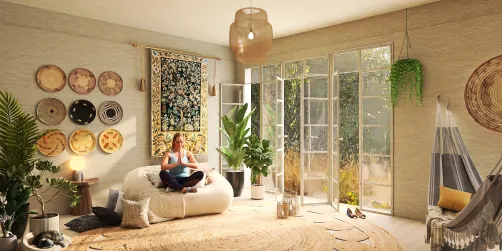
Unlike traditional gyms with aggressive branding and high-contrast colors, Fitness-Embedded Homes rely on soothing, nature-connected environments to lower psychological barriers to movement. Think warm neutral palettes (oat, clay, sage), organic textures (rattan, linen, raw wood), large windows framing greenery, and acoustic-absorbing surfaces that mute clatter. These elements don’t just 'look nice' — they physiologically signal safety and invitation, encouraging spontaneous stretching, breathwork, or mobility flows. Light quality, airflow simulation, and material reflectivity are critical — all modeled in real time using Homestyler’s environmental rendering engine.

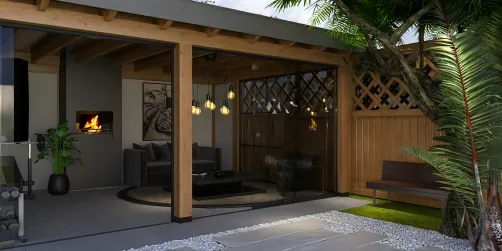
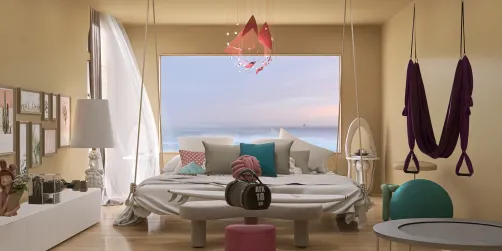
Afrah Alwy’s 'Design Ideas' blends Scandinavian calm with functional vitality: a sun-drenched balcony-turned-stretch-zone features a woven yoga mat, potted monstera, and a minimalist wall-mounted TRX system — all unified by soft white oak flooring and diffused daylight. Using Homestyler, she adjusted window glazing parameters to optimize UV exposure for morning routines while minimizing glare on screens — demonstrating how the platform supports holistic wellness planning, not just aesthetic layout.
Try Free Design NowCore Element 3: Modular & Scalable Equipment Zoning 🧩
Rather than fixed 'gym corners', this style deploys modular activity zones — small, adaptable clusters of equipment tailored to specific movement types (e.g., 'Pilates Pod': reformer + foam roller + wall mirror; 'Strength Nook': kettlebell rack + foldable bench + grip trainer). Zones are defined by flooring transitions, lighting layers, or acoustic panels — never by permanent walls. Scalability means starting with one zone (e.g., a 1m² stretch corner) and expanding digitally first, testing adjacency, circulation, and visual weight before committing to purchase or renovation.

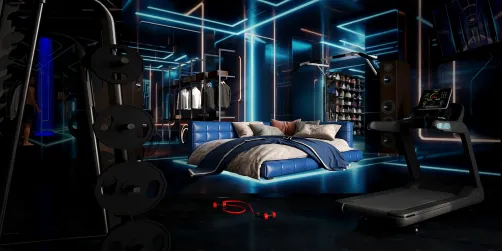
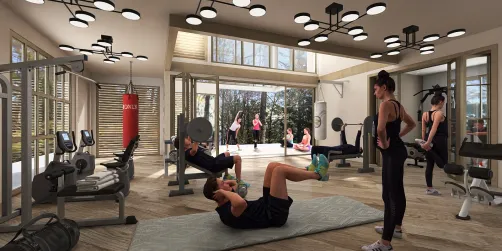
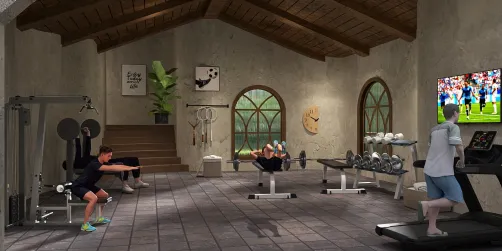
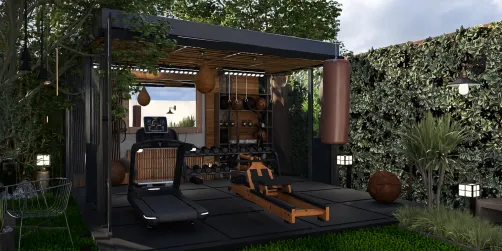
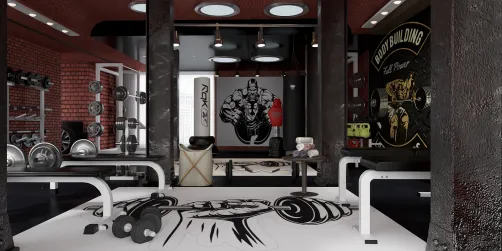
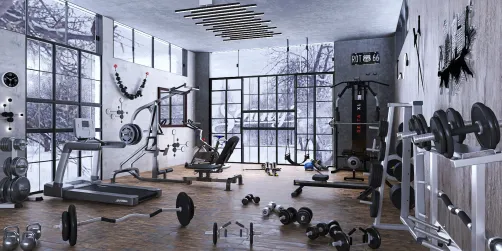
Tora Luke’s 'Pump some Iron' showcases high-fidelity modular zoning: a compact free-weight station (barbell + bumper plates + foldable squat rack) occupies a 2.5m × 2m footprint beside floor-to-ceiling mirrors and sound-dampening wall panels. In Homestyler, Luke used the 'Zone Clone' feature to duplicate and rotate this setup across three apartment layouts — instantly evaluating load-bearing feasibility, sightline privacy, and equipment clearance — proving how the tool accelerates scalable, repeatable wellness design.
Visit Design ChallengesFAQ
Q: Can I embed fitness equipment into a rental apartment without permanent modifications?
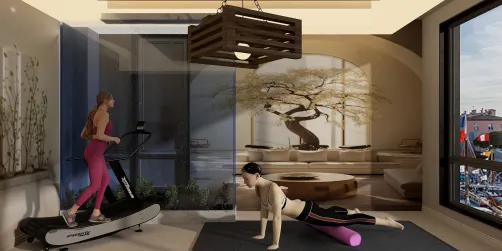
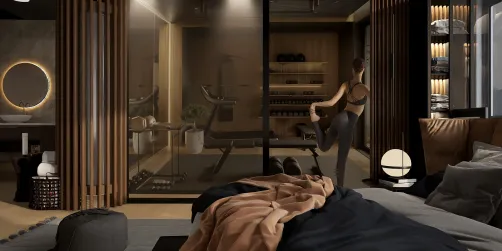
A: Absolutely — Homestyler’s 'Non-Invasive Mode' helps visualize freestanding, wall-mounted (no drilling), and furniture-integrated solutions like tension-mounted pull-up bars, suction-cup mirrors, collapsible benches, and rubberized flooring mats. Top contest entries like Beth M’s glass-partitioned bedroom gym prove that elegance and compliance coexist.
Q: How does Homestyler ensure equipment fits ergonomically in tight spaces?
A: Homestyler’s library includes manufacturer-verified 3D models with accurate dimensions, weight distribution, and motion arcs (e.g., full range-of-motion for rowers or cable machines). Its collision detection and 'Clearance Heatmap' overlay warn about swing radius, door interference, or headroom violations before finalizing a layout.
Q: Is this style only for serious athletes?
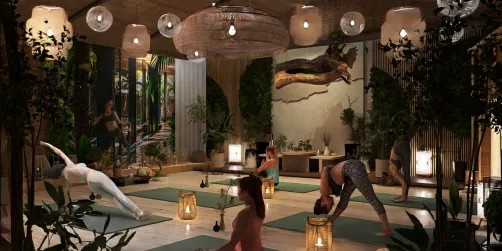
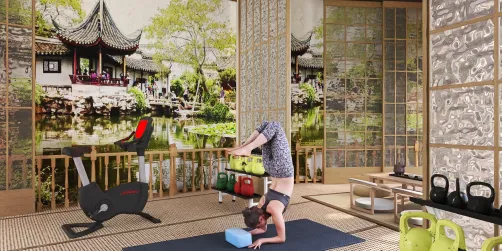
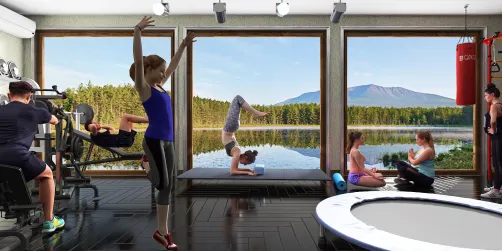
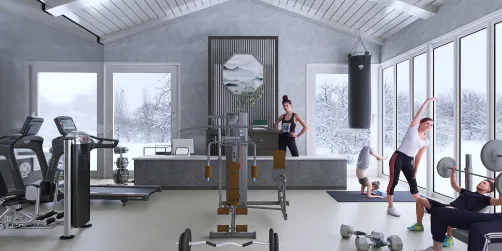
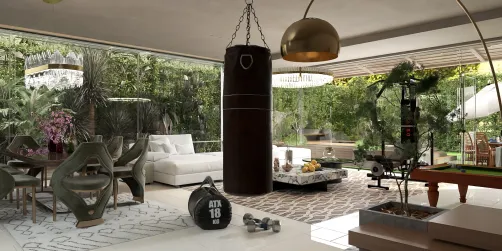
A: No — it’s intentionally inclusive. Winning designs like Sui San Xie’s serene Asian-style headstand space or Shalima Mohammed Thomas’s 'Transforming Fitness into Dining' concept show how gentle movement, mindfulness, and lifestyle integration take center stage — not muscle mass or intensity.
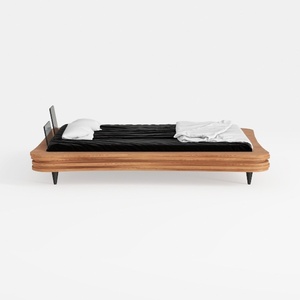

Modern Solid Wood Low Profile Platform Bed With Black Upholstered Top 3D Model
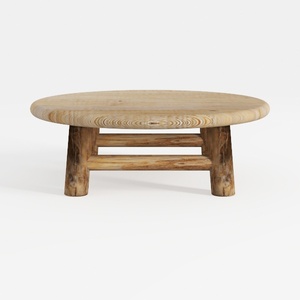
Rustic Solid Wood Round Coffee Table 3D Model

Modern Leather Upholstered King Size Bed With Metal Frame 3D Model
Homestyler is a user-friendly online platform offering powerful home design tools, stunning 3D renderings, inspiring design projects, and helpful DIY video tutorials—perfect for anyone looking to easily create and visualize their dream home.
Design Now for FREE