


Snowflake-Inspired Floor Plan Design
Snowflake-inspired floor plan design is a conceptual and functional spatial approach rooted in radial symmetry, geometric precision, and organic modularity — directly translating the six-fold symmetry, branching arms, and self-similar patterns of natural snowflakes into architectural layout logic. Unlike conventional rectangular or linear zoning, this scene emphasizes a central core (often hexagonal or star-shaped) from which functional zones radiate like crystalline arms — enabling dynamic circulation, visual hierarchy, and balanced spatial proportion. It bridges artistic abstraction with real-world usability, supporting both residential planning (e.g., guest houses, compact retreats) and experiential spaces (e.g., orangeries, courtyard pavilions). This design paradigm elevates indoor spatial planning by treating the floor plan itself—not just furniture or finishes—as the primary design expression.
Design Challenges & Common Pitfalls
Designing snowflake-inspired layouts introduces unique challenges: First, maintaining functional clarity amid complex geometry — radial arms can compromise room rectangularity, hindering standard furniture placement and code-compliant egress. Second, balancing aesthetic symmetry with practical circulation — overlapping sightlines or inefficient pathways often emerge when prioritizing form over flow. Third, scaling geometric rigor to real-world constraints (e.g., plumbing stacks, structural columns, HVAC routing) without diluting the snowflake motif. Many designers default to superficial decorative motifs (e.g., snowflake-shaped tiles) rather than embedding the logic into spatial structure — missing the core intent of reimagining interior spatial planning through generative geometry.
✅ Centralized Symmetry Principle
Every snowflake-inspired floor plan must originate from a strong central node — typically a hexagonal, circular, or star-shaped core — that anchors all circulation and defines axial relationships. This center acts as both visual and functional heart: housing key multi-use zones (e.g., atrium, kitchen-diner, or meditation nook), while enabling equal access to six radial wings. Homestyler’s web-based radial layout tools and snap-to-grid symmetry modes make it easy to construct precise 60°-divided axes and mirror branches — ensuring proportional integrity across scales.

ROBERTA GIULIETTI’s 'Fiocco di neve' exemplifies centralized symmetry: her outdoor snowflake courtyard uses a central circular fountain as the gravitational core, with six identical arched alcoves radiating outward — each hosting distinct functions (seating, greenery, lighting). Using Homestyler AI design tools, she leveraged the web platform’s precise angle snapping and modular copy-paste to replicate and rotate segments flawlessly — turning abstract geometry into an intuitive, navigable space. This reinforces how interior spatial planning benefits from algorithmic symmetry support, not just artistic intuition.
Start Free Design Now🌀 Modular Branching Logic
Rather than fixed rooms, snowflake layouts treat space as adaptable modules — each arm functioning as a semi-autonomous unit (e.g., bedroom wing, studio pod, garden extension) with standardized depth/width ratios. These modules interlock via shared corridors or glazed connectors, allowing scalability and programmatic flexibility. Homestyler’s drag-and-drop modular model library — especially the 'Snowy Scene Model Collections' — provides pre-scaled, stylistically cohesive assets (e.g., hexagonal planters, radial seating clusters) that align with 60° angular logic, accelerating prototyping without sacrificing coherence.

graca doutel’s 'Hexa Home: The geometry of nature' applies modular branching logic masterfully: six identical residential pods extend from a central hexagonal hub — each containing a bedroom, private terrace, and utility zone. She used Homestyler’s AI-driven wall alignment and auto-zoning features to maintain consistent module proportions while varying interior finishes per arm — proving how Homestyler design techniques streamline complex repetition without compromising individuality. This approach transforms interior spatial planning from static compartmentalization into responsive, growth-ready composition.
Begin Your Hexa Design🌿 Functional-Zone Harmonization
True snowflake design avoids visual fragmentation by harmonizing function, material, and light across arms. For example, using consistent flooring materials across all branches, aligning window heights for unified daylight penetration, or applying gradient color palettes that evolve radially (e.g., cool tones at perimeter → warm tones near center). This ensures perceptual unity despite geometric complexity — critical for user comfort and wayfinding. Homestyler’s real-time HDR rendering and sunlight simulation (e.g., 'morning', 'northern_snow') allow instant validation of cross-zone lighting balance before finalizing interior spatial planning.

Vanessa Ribeiro’s 'Espaços em Flocos de Neve' demonstrates functional-zone harmonization: all six living zones share identical ceiling heights, white oak flooring, and coordinated daylighting via uniformly angled clerestory windows — yet differentiate function through curated furnishings (living lounge vs. reading nook vs. sleeping pod). Leveraging Homestyler AI design tools, she applied global material presets and synchronized lighting settings across arms in one click — showcasing how intelligent software accelerates holistic interior spatial planning while preserving human-centered nuance.
Create Your Cozy SnowflakeFAQ
Q: Do I need architectural training to participate in the Snowflake-Inspired Floor Plan Design challenge?
Not at all. Homestyler’s intuitive web interface, AI-assisted layout suggestions, and pre-built 'Snowy Scene Model Collections' empower beginners to explore advanced geometric concepts — focus on spatial storytelling, not drafting precision.
Q: Can snowflake floor plans work for real homes — or are they purely conceptual?
Absolutely real-world applicable. Top entries like 'Challenge Guest House Snowflake' (Irina Romanova) and 'Snowflake-Inspired Home' (graca doutel) demonstrate full habitability — optimized for plumbing, accessibility, and daily flow while retaining crystalline logic.
Q: Why is the Snowflake layout only supported on the web version?
The web platform offers advanced computational geometry tools — including radial duplication, angle-constrained drawing, and real-time symmetry mirroring — essential for accurate snowflake generation. Mobile apps lack the processing power and UI fidelity for such precise interior spatial planning.
Q: How does snowflake geometry improve interior spatial planning beyond aesthetics?
It inherently optimizes circulation efficiency (shortest paths to central hub), enhances natural light distribution (radial window alignment), and supports flexible zoning (modular arms adapt to changing needs) — making it a functional innovation, not just decorative flair.
Q: What Homestyler design techniques help beginners start strong?
Start with the central hexagon template; use 'Copy-Rotate 60°' to generate arms; apply global material/lighting presets for harmony; and leverage contest-specific model collections to maintain thematic consistency — all part of proven Homestyler design techniques for expressive, buildable outcomes.
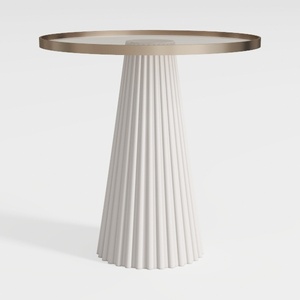
Modern Minimalist Fluted Base Glass Top Side Table 3D Model


Modern Black Marble Top Metal Base Nesting Coffee Table 3D Model
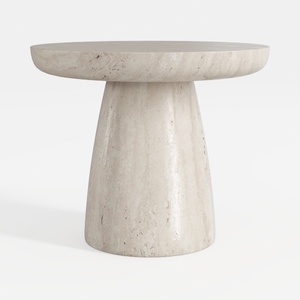
Minimalist Travertine Round Side Table 3D Model
Homestyler offers an easy-to-use online design tool, stunning 3D renderings, and plenty of interior design projects. Plus, its DIY video tutorials make it simple to create and visualize your perfect home space, whether you’re a beginner or a design enthusiast.
Design Now for FREE





