Chinese Wabi-Sabi Style Decoded: Simplicity, Nature, and Timeless Serenity
The Chinese wabi-sabi style is a poetic fusion of two profound aesthetic traditions: the ancient philosophical elegance of Chinese classical living — rooted in harmony with nature, reverence for craftsmanship, and quiet contemplation — and the Japanese wabi-sabi ethos of imperfection, transience, and humble beauty. Unlike minimalism that seeks sterility, or rustic styles that lean into ruggedness, Chinese wabi-sabi embraces *refined restraint*: think hand-thrown celadon ceramics beside ink-wash scroll art; aged pine beams paired with unbleached linen; asymmetrical compositions grounded by centuries-old feng shui principles. It’s not about emptiness — it’s about intentionality. Every object carries resonance; every texture tells a story of time, use, and quiet dignity. This style invites slowness — a sanctuary where bamboo shadows dance on rammed-earth walls, where the warmth of reclaimed wood meets the cool stillness of stone, and where silence becomes the most luxurious design element.

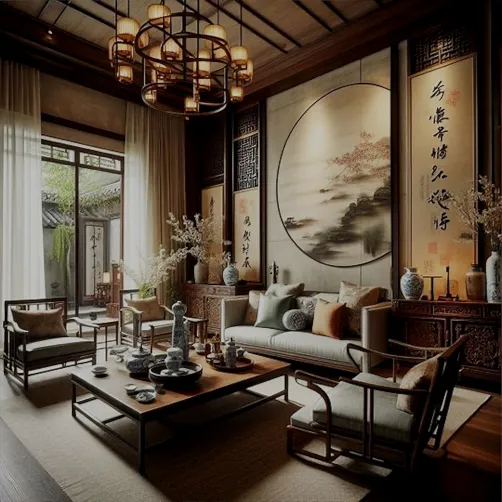
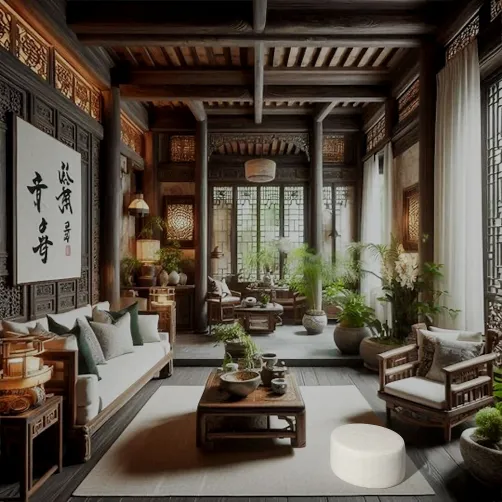
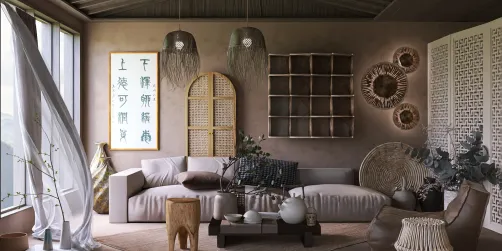
This work by Patricia Rego, titled Design Ideas, exemplifies how effortlessly Chinese wabi-sabi translates into contemporary residential spaces. Its open layout balances spaciousness with intimacy — low-profile seating, a raw-edged wooden coffee table, and abundant natural light filtered through sheer linen curtains evoke effortless calm. Crucially, Homestyler’s real-time 3D rendering allows designers to instantly test material pairings (e.g., matte plaster walls against warm oak flooring) and lighting scenarios (soft ambient vs. focused task light), ensuring every tonal nuance aligns with the wabi-sabi principle of ‘quiet harmony’. With Homestyler’s intuitive drag-and-drop library of authentic Asian-inspired textures and artisanal furniture models, achieving this depth of serenity takes minutes — not months.
Start Free Design Now🌿 Earthy Palette & Natural Materiality
Color and material are inseparable in Chinese wabi-sabi. The palette avoids bold primaries or synthetic saturation, favoring organic, mineral-derived hues: misty greys (like weathered temple tiles), soft celadon greens, warm taupes (evoking sun-baked clay), and deep indigos reminiscent of hand-dyed shibori. Materials must feel *alive* and honest — visible grain in walnut or paulownia, rough-hewn stone, hand-thrown stoneware, undyed hemp or ramie textiles, and unfinished bamboo. Imperfections — knots in wood, subtle glaze variations, uneven plaster texture — aren’t flaws; they’re signatures of authenticity and time.

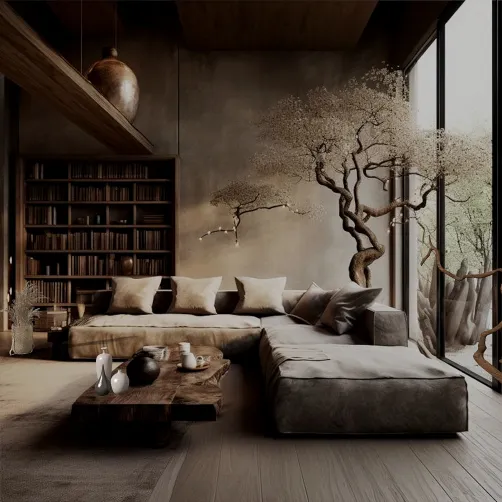
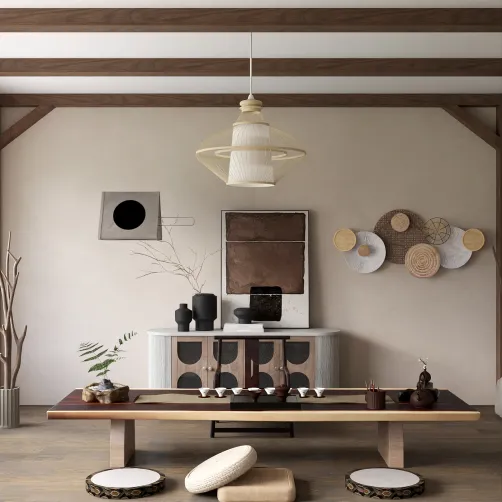
Shalima Mohammed Thomas’s Design Harmony is a masterclass in material storytelling. Her traditional tea room centers on a substantial, live-edge wooden table — its grain and subtle irregularities celebrated, not concealed. Seating uses thick, hand-stitched cotton cushions in muted indigo and oat tones, while wall panels echo the texture of handmade paper. In Homestyler, designers can precisely adjust material shaders to replicate the tactile softness of aged cotton or the cool density of river stone — no guesswork. The platform’s photorealistic lighting engine renders how morning light catches dust motes above the table, reinforcing the wabi-sabi reverence for the fleeting and ephemeral.
Create Your Free Design📐 Asymmetrical Balance & Intentional Void
Chinese wabi-sabi rejects rigid symmetry in favor of *shibui* — understated, subtle balance. Layouts follow gentle diagonals or organic flow, guided by feng shui’s qi (energy) pathways but interpreted with poetic flexibility. Negative space — or 'ma' — is treated as an active design element: a wide expanse of tatami floor, a blank wall segment beside a single scroll, or the air around a freestanding ceramic vase. This void isn’t emptiness; it’s breathing room for the eye, mind, and spirit — a canvas upon which light, shadow, and seasonal change become part of the composition.

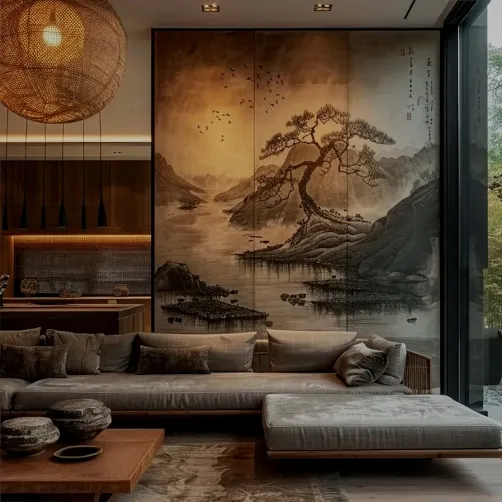
Slman Al-Arifi’s bedroom design demonstrates this principle with quiet authority. Instead of centering the bed, it’s placed slightly off-axis, allowing a generous stretch of floor to frame a view of nature beyond the window — turning the outdoors into living art. A single, low-profile nightstand holds only a ceramic lamp and a small branch; the wall opposite remains deliberately bare save for soft, diffused light. Using Homestyler’s precise measurement tools and spatial analysis, designers can simulate sightlines and circulation paths to ensure every void feels intentional and restorative — not accidental or barren.
Begin Free Design Here🎐 Thoughtful, Handcrafted Detailing
Detailing in Chinese wabi-sabi is never ornamental for its own sake. It’s functional poetry: joinery exposed with reverence (like traditional dougong brackets reimagined in modern cabinetry), hand-forged iron hardware with visible hammer marks, ceramic vessels shaped by the potter’s thumb, or calligraphy brushed with deliberate, imperfect strokes. Lighting is equally considered — paper lanterns casting soft, diffused glow; low-hanging pendant lights with woven rattan shades; or hidden LED strips illuminating textured walls from below. Each detail whispers care, craft, and human presence.

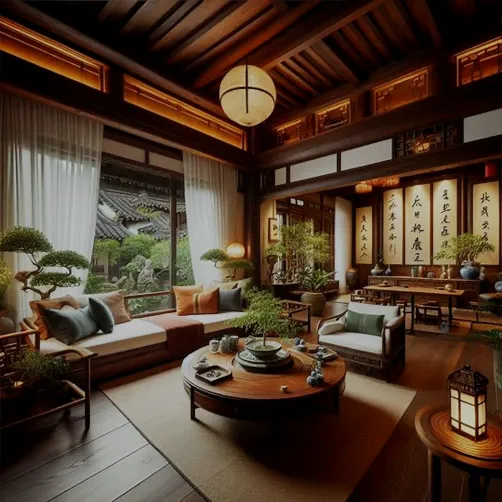
Anna Tallian’s Chinese Bedroom embodies this ethos. The focal point is a substantial, solid-wood bed with visible, elegant mortise-and-tenon joinery — a celebration of structure and skill. Bedding features hand-loomed, subtly variegated linens, and bedside lighting comes from a simple, hand-thrown ceramic lamp with a rice-paper shade. In Homestyler, users can browse curated collections tagged ‘artisanal’, ‘hand-forged’, or ‘natural fiber’ — instantly applying realistic textures and accurate scale to these elements. The platform’s real-time shadow simulation shows exactly how the lamp’s warm glow pools on the textured wall, proving that even the smallest detail contributes profoundly to the overall sense of peace.
Launch Free Design SessionFAQ
Q: Is Chinese wabi-sabi just 'minimalist Japanese style with Chinese decor added on top?'
Chinese wabi-sabi is a distinct synthesis, not a hybrid. While it shares wabi-sabi’s love of imperfection and nature, its foundation is deeply Chinese: feng shui spatial philosophy, reverence for scholarly tradition (ink painting, calligraphy, scholar’s rocks), and materials like lacquer, bamboo, and celadon that carry millennia of cultural meaning. It prioritizes layered tranquility over stark simplicity.
Q: Can I achieve authentic Chinese wabi-sabi using only digital tools like Homestyler?
Absolutely — and it’s uniquely powerful. Homestyler’s photorealistic rendering lets you test how natural light interacts with hand-textured plaster or aged wood finishes before committing. Its vast library includes culturally accurate assets (e.g., Ming-style low cabinets, Song dynasty-inspired ceramics) and intelligent placement tools that help achieve asymmetrical balance. Digital prototyping ensures the *feeling* of serenity is engineered, not accidental.
Q: How do I avoid making my Chinese wabi-sabi space look 'too sparse' or 'cold'?
Warmth comes from layered texture and organic variation — not clutter. Use rich, tactile materials (a nubby wool rug under smooth teak), varied natural tones (warm wood + cool stone + soft linen), and strategic, meaningful objects (one exceptional ceramic piece, not ten). Homestyler’s material editor lets you adjust warmth, sheen, and micro-texture in real time, helping you find that perfect balance between grounded and airy.
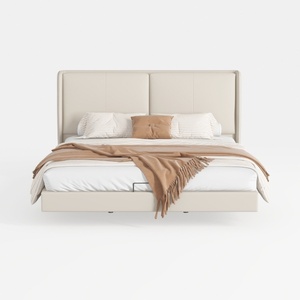

Minimalist Beige Leather Upholstered King Bed with Decorative Bedding 3D Model
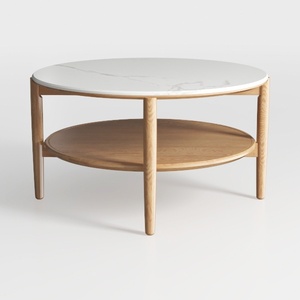
Minimalist Marble Top Solid Oak Round Two Tier Coffee Table 3D Model
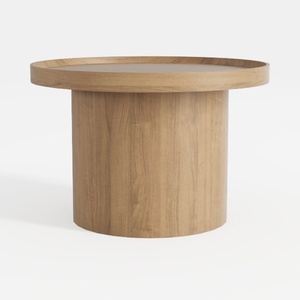
Minimalist Solid Oak Round Coffee Table 3D Model
Homestyler is an easy-to-use online home design platform that lets you create stunning 3D renderings, explore inspiring design projects, and learn through helpful DIY video tutorials. It’s perfect for bringing your interior decoration ideas to life effortlessly.
Projete agora para LIVRE