Turkish-Inspired Interior Design Decoded
Turkish-inspired interior design is a captivating fusion of centuries-old Anatolian craftsmanship, Ottoman grandeur, and Mediterranean warmth—reimagined for contemporary living. Rooted in the crossroads of Europe and Asia, Turkish design embodies layered history: Byzantine mosaics meet Islamic geometry; Persian motifs intertwine with Seljuk tilework; nomadic kilim traditions inform modern textile palettes. Far from mere ornamentation, it’s a holistic language of hospitality—where rich textures invite touch, deep hues evoke spice markets and twilight mosques, and handcrafted details whisper stories of artisanal legacy. In today’s global design landscape, Turkish style resonates not as exotic pastiche, but as a soulful, sensory-rich approach to creating spaces that feel both timeless and intimately human.

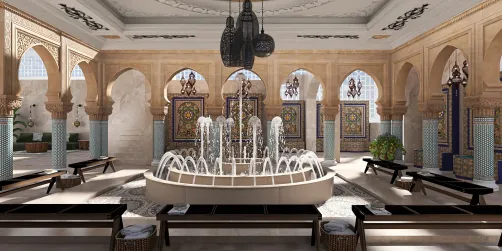
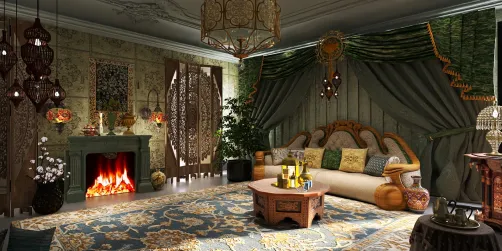
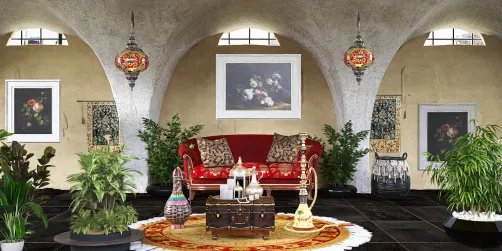
A work by Наталья titled "" — this warm, inviting living room exemplifies accessible Turkish-inspired styling in Homestyler. Notice how layered rugs anchor the seating zone, arched wall niches (simulated via Homestyler’s custom wall cutouts) echo Ottoman architecture, and brass-toned lighting fixtures add ceremonial warmth. In Homestyler 3D, users can achieve this instantly using the 'Turkish Decor' model pack—searching for 'Iznik tile', 'Ottoman arch', or 'hand-knotted rug' delivers photorealistic, drag-and-drop assets optimized for real-time rendering and AI-powered material swaps.
Start Free Design Now🎨 Signature Color Palette
Turkish interiors rely on a deeply intentional, emotionally resonant palette grounded in natural pigments and regional geography. Dominant hues include burnt sienna and terracotta (evoking Cappadocian earth), deep cobalt and emerald (inspired by Iznik ceramics), saffron gold and pomegranate red (symbolizing abundance and vitality), and creamy off-whites and warm greiges (mirroring historic stonework and plaster). Unlike monochromatic minimalism, Turkish color theory embraces controlled contrast—e.g., a cobalt-tiled backsplash against ivory walls, or ruby-red velvet cushions on ochre linen sofas—creating visual rhythm without chaos.

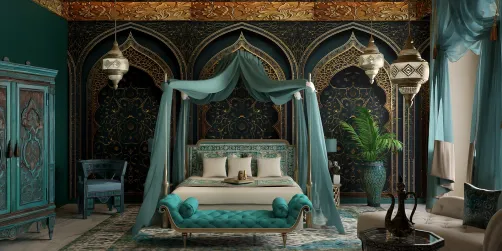
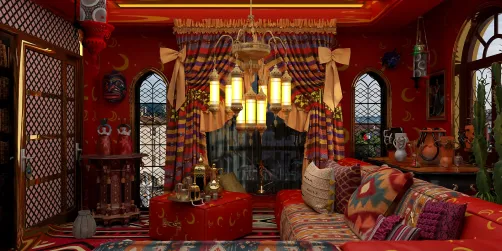
Daniela Schanglies’ luxurious bedroom demonstrates masterful Turkish color storytelling: a deep sapphire headboard wall contrasts elegantly with warm sand-colored linens and antique-gold metallic accents—echoing the classic Iznik combination of cobalt and white. In Homestyler, users replicate this effortlessly using the ‘Color Sync’ tool: upload a reference photo of Turkish tile or carpet, and the AI suggests matching wall, fabric, and trim palettes—then applies them across all surfaces with one click.
Begin Your Cozy Bedroom🪵 Textural Craftsmanship & Material Language
Texture is the soul of Turkish design—tactile, layered, and unapologetically handmade. Key materials include handwoven wool kilims and silk prayer rugs, hammered copper and brass (for lamps, trays, and faucets), carved walnut and olive wood (in doors, cabinets, and bed frames), and intricately glazed ceramic tiles (especially the iconic blue-and-white Iznik and vibrant Çini patterns). Surfaces are rarely uniform: plaster walls show subtle trowel marks; stone floors retain natural veining; textiles mix flat weaves with raised brocades. This deliberate ‘imperfection’ communicates authenticity, warmth, and human presence.

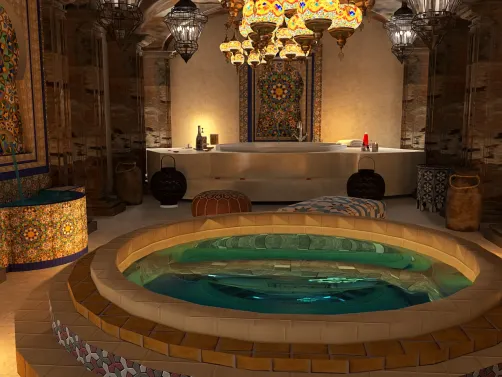
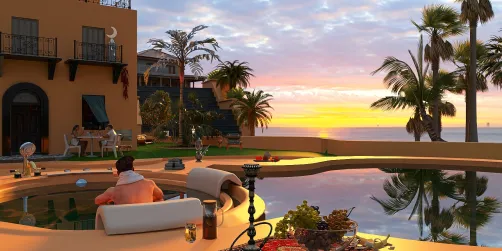
Jennifer Cole’s whimsical bathroom merges Turkish materiality with modern function: a hand-painted ceramic tile shower niche (using Homestyler’s editable ‘Çini Pattern’ texture library), a plush vintage-style bath mat layered over herringbone stone tile, and hammered-brass fixtures that catch daylight like sunlit Bosphorus waters. With Homestyler’s real-time material editor, designers apply authentic Turkish tile patterns—including customizable scale, grout color, and relief depth—to any surface in under 10 seconds.
Create Your Whimsical Bath🪞 Ornamental Geometry & Spatial Rhythm
Geometry is the architectural heartbeat of Turkish design—expressed through star-and-polygon tilework (girih), interlacing arabesques, and rhythmic arches. These aren’t just decorative flourishes; they reflect Islamic principles of infinite unity and divine order. Common motifs include the eight-pointed star (symbolizing balance), the stylized tulip (a national emblem of paradise), and the ‘double-headed eagle’ or ‘ram’s horn’ (ancient Anatolian symbols of protection). Spatially, Turkish interiors favor intimate, zoned arrangements—low-slung seating nooks, recessed wall shelves (niş), and layered thresholds—creating a sense of discovery and curated intimacy rather than open-plan uniformity.

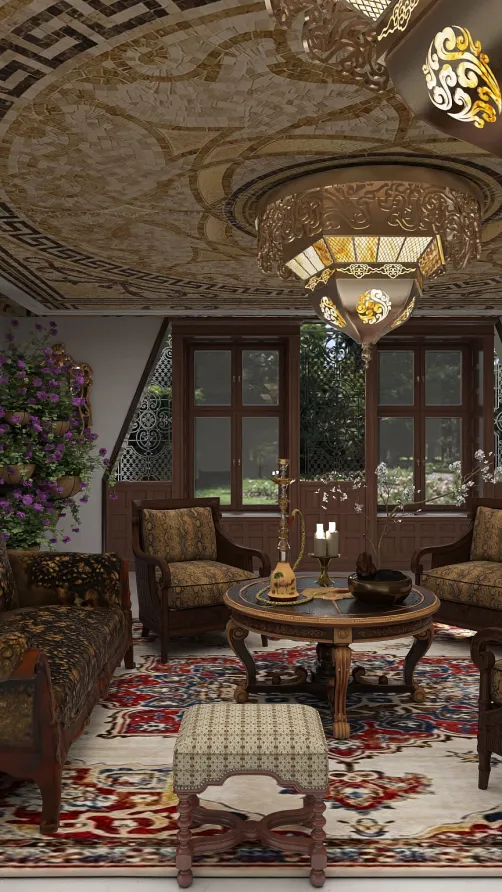
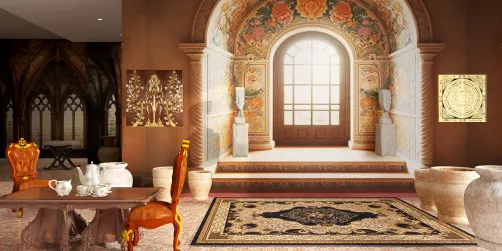
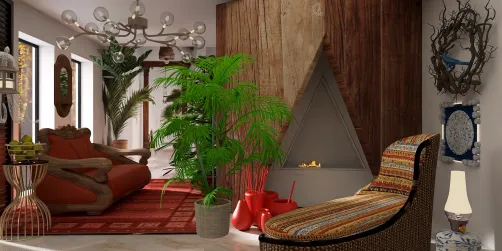
Eden R’s ‘my Turkish inspired living’ space showcases intelligent geometric layering: a low-profile ottoman with an embroidered star motif anchors the rug, while wall-mounted shelves follow soft, staggered arch profiles—and the pendant light casts a delicate radial shadow pattern onto the ceiling. In Homestyler, users generate such precision motifs using the ‘Pattern Generator’ tool: select ‘Ottoman Star’, adjust symmetry and line weight, then project it onto walls, ceilings, or furniture surfaces—all fully editable in 3D context.
Design Your Turkish LivingFAQ
Q: What makes Turkish-inspired design different from generic 'Middle Eastern' or 'Moroccan' styles?
A: Turkish design is uniquely defined by its Anatolian-Ottoman lineage—not North African or Persian. It emphasizes Iznik tilework (not zellige), Ottoman arches (not horseshoe arches), kilim weaving (not Beni Ourain rugs), and a distinct palette centered on cobalt, terracotta, and saffron—rather than the indigo-heavy or mint-green schemes common elsewhere.
Q: Can I apply Turkish elements to a small apartment or rental space without renovation?
A: Absolutely. Turkish style thrives on layering: swap curtains for silk-trimmed sheer panels, layer rugs (a kilim over jute), add brass tray tables and ceramic vases, and use removable wall decals of classic girih patterns—all easily sourced and placed in Homestyler before purchasing.
Q: Does Homestyler offer authentic Turkish furniture and tile models?
A: Yes. The Homestyler Model Library includes over 1,200 vetted Turkish assets—from hand-carved walnut Ottoman daybeds and copper samovars to scalable Iznik tile swatches and Çini-patterned backsplashes—all tagged, searchable, and rendered in photorealistic PBR materials for accurate lighting simulation.

Modern Orange Fabric Upholstered Armchair With Gold Metal Legs 3D Model
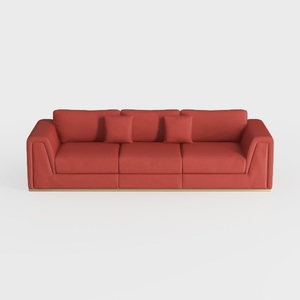

Modern Red Fabric Three Seater Sofa With Gold Base 3D Model

Minimalist Orange Metal Mesh Trash Can 3D Model
Homestyler is an easy-to-use online home design platform offering powerful 3D rendering, a vast collection of interior projects, and helpful DIY video tutorials. It’s perfect for turning your design ideas into stunning, realistic visuals quickly and effortlessly.
Design Now for FREE