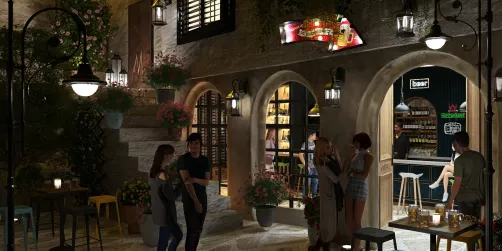
Beer Bar Interior Design
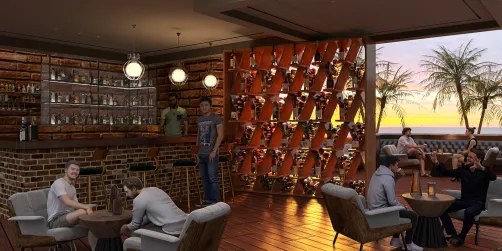
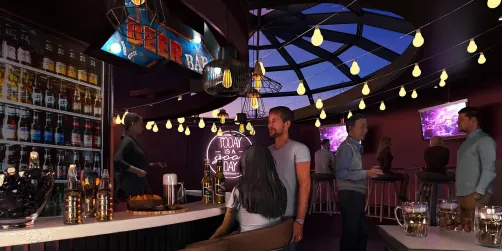
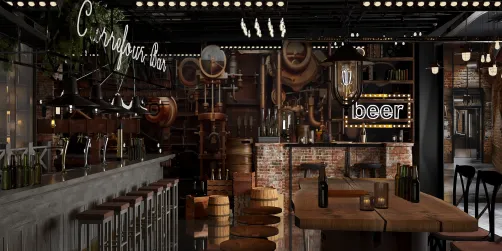
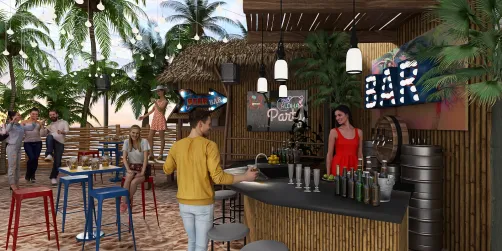
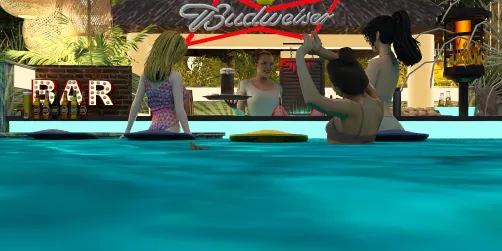
A beer bar interior is a specialized public hospitality space designed to foster social interaction, relaxation, and cultural expression through curated ambiance, functional layout, and thematic storytelling. Unlike generic bars or restaurants, it emphasizes personality-driven design—blending regional influences (e.g., rustic European, tropical resort, urban jazz), craft-oriented elements (exposed beer taps, custom shelving), and human-centered spatial planning. As showcased in the 'Ideal Beer Bar for APP' competition, top entries consistently prioritize atmosphere over ornamentation: integrating natural light or dynamic lighting schemes, leveraging biophilic touches like live greenery, and optimizing circulation for both patrons and staff—all while maintaining visual cohesion across zones (serving counter, lounge, dining, entertainment). This scene sits at the intersection of commercial functionality and experiential interior space planning, making it an ideal case study for advanced Homestyler design techniques.
Design Challenges & Common Pitfalls
Designing a compelling beer bar interior presents unique spatial and experiential challenges. First, balancing acoustic comfort with energetic vibrancy is difficult—open layouts encourage sociability but risk noise buildup without strategic sound-absorbing materials or zoning. Second, integrating service infrastructure (draft systems, refrigeration, ventilation) into aesthetically cohesive architecture often leads to compromised aesthetics or inefficient workflows. Third, scaling intimacy in larger spaces—or maximizing capacity in compact footprints—requires precise interior space planning; many amateur designs either overcrowd seating or leave awkward dead zones. Additionally, lighting missteps (e.g., uniform overheads instead of layered ambient/task/feature lighting) and inconsistent material palettes undermine the intended mood. These issues are amplified when designers overlook real-time 3D validation—making Homestyler design tools essential for iterative testing before implementation.
✅ Prioritize Human-Centered Zoning & Flow
Successful beer bars organize space around user behavior—not just furniture placement. Divide the interior into intuitive zones: a welcoming entry threshold, a highly visible service core (bar counter + tap wall), relaxed social lounges, semi-private booths or high-top clusters, and optional activity anchors (e.g., billiards, live music corner). Maintain clear, unobstructed circulation paths (min. 90 cm width) between zones, and ensure sightlines connect key areas to reinforce openness and safety. Avoid rigid symmetry; instead, use organic grouping and varied ceiling heights or floor treatments to subtly define zones without walls.

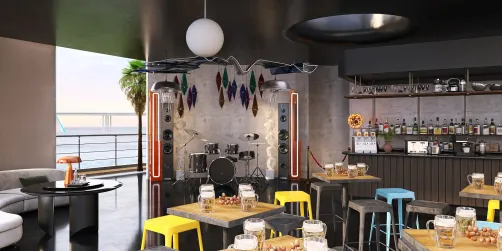
Baleria Munoz’s 'Urban Jazz Haven' exemplifies human-centered zoning: she dedicates a distinct, acoustically softened corner to a drum set and performance-ready stools—transforming a potential noise source into a magnetic focal point. Using Homestyler’s real-time 3D rendering, she tested multiple placements to ensure sightlines from the bar counter and lounge seats remained unobstructed, proving how AI-powered interior space planning enables rapid iteration of functional adjacencies.
Start Free Design Music✨ Curate Multi-Layered Lighting for Mood & Function
Lighting is the silent architect of atmosphere in beer bars. Rely on three complementary layers: ambient (e.g., recessed LEDs or pendant clusters for overall illumination), task (focused downlights over bar counters and tabletops), and feature (accent lights on artwork, bottle displays, or textured walls). Use warm CCT (2700K–3000K) throughout to enhance wood tones and skin warmth, and incorporate dimmable controls per zone. Avoid glare—position fixtures to prevent direct line-of-sight to bulbs—and leverage indirect lighting (e.g., cove or shelf lighting) to soften edges and amplify perceived spaciousness.

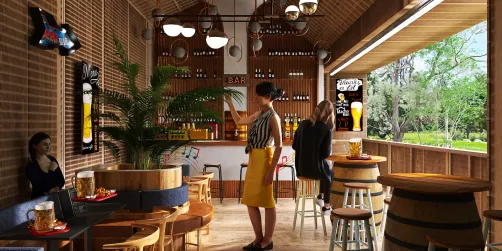
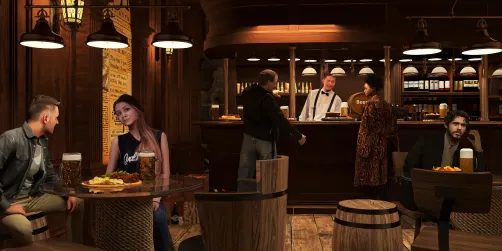
Shona - Eve’s '✨️ Ollie’s Pub ✨️' demonstrates masterful lighting layering: vintage-style pendants provide ambient glow above communal tables, focused wall sconces highlight retro posters (task + feature roles), and under-bar LED strips add subtle accent light—visible only when the bar is active. She leveraged Homestyler design tricks like real-time shadow simulation and color temperature sliders to preview how each fixture contributed to the cozy yet energetic mood—showcasing how digital prototyping prevents costly physical lighting errors.
Begin Free Design Social🌿 Embed Biophilic & Textural Authenticity
Authenticity in beer bars stems from tactile richness and organic connection—not trend-chasing. Introduce natural materials deliberately: reclaimed wood for bar fronts and tabletops, stone or brick veneers for feature walls, woven textiles for upholstery, and living greenery (hanging planters, vertical gardens, or potted specimens) to improve air quality and visual softness. Texture contrast is key—pair rough-hewn beams with smooth concrete floors, or matte ceramics with polished brass accents. Avoid plastic or overly uniform surfaces; variation signals craftsmanship and invites touch, deepening guest engagement.

Teresa Martin’s 'The Ideal Bar with Friends' grounds its vintage aesthetic in textural authenticity: exposed wooden ceiling beams contrast with whitewashed brick walls, leather-upholstered stools sit atop herringbone-patterned tile, and cascading pothos plants soften hard edges. Using Homestyler’s material library and real-time texture mapping, she compared dozens of wood grain options and brick mortar profiles side-by-side—proving how accessible AI tools empower designers to refine biophilic detail without physical samples.
Launch Free Design VintageFAQ
Q: How can I optimize a small-space beer bar for both capacity and comfort using Homestyler?
A: Start with a scaled floor plan in Homestyler and use its smart furniture arrangement tool to test compact, multi-functional pieces—like banquettes with built-in storage or fold-down cocktail tables. Apply the ‘Zoning’ principle: designate one primary circulation path (min. 90 cm), cluster seating in L- or U-shaped configurations to reduce footprint, and elevate visual spaciousness with mirrors, vertical greenery, and consistent warm lighting. Homestyler’s real-time 3D walkthrough helps validate headroom, sightlines, and walkability before finalizing.
Q: What’s the most effective way to integrate draft beer systems into the bar design without compromising aesthetics?
A: Treat the tap wall as a sculptural focal point—not hidden infrastructure. Use Homestyler’s custom modeling features to design a recessed, backlit tap panel with integrated signage and branded materials (e.g., brushed metal or stained wood). Conceal lines and chillers behind a false wall or within a dedicated utility cabinet adjacent to the bar. Top winners like Ana Victoria Moreno (Top 1) used wooden beam cladding and retro poster framing to transform technical hardware into thematic storytelling.
Q: Can Homestyler help me simulate how natural light will affect my beer bar’s ambiance throughout the day?
A: Yes— Homestyler’s sun study and time-of-day lighting simulation allow you to preview how sunlight enters your space at different hours. Adjust window size, orientation, and shading (awnings, sheer curtains, or frosted glass) directly in the model. Combine this with interior space planning logic: position lounge seating where morning light creates warmth, and locate sensitive display areas away from UV exposure. Juliana Nourieh’s Top 3 design used this feature to balance lake-view daylight with cozy evening shadows.

OEF Furnishings (2 Pack Height Adjustable Steel

Minimalist Beige Fabric Solid Wood Counter Stool 3D Model

Minimalist Solid Wood Woven Seat Dining Chair 3D Model
Homestyler offers a powerful yet easy-to-use online home design tool, featuring stunning 3D renderings, inspiring design projects, and helpful DIY video tutorials—perfect for turning your interior design ideas into reality.
Design Now for FREE