Beer Bar Design
A beer bar is a specialized commercial hospitality space designed for social interaction, relaxation, and beverage-centered experiences. Unlike conventional restaurants or cafes, it prioritizes atmosphere, communal seating, flexible zoning (e.g., bar counter, lounge, outdoor terrace, game area), and strong identity—whether rooted in regional beer culture (e.g., German biergarten, English pub, Belgian brasserie) or contemporary concepts like container pubs, rooftop brew gardens, or live-music rock bars. Successful beer bar design balances functional flow (service efficiency, acoustics, ventilation) with emotional resonance—evoking comfort, authenticity, and memorable sensory engagement through lighting, materiality, and spatial rhythm.
Design Challenges & Common Pitfalls
Beer bars face unique spatial and experiential challenges: overcrowded floor plans that hinder circulation; poor acoustic treatment leading to overwhelming noise; inconsistent lighting that fails to define zones or support both daytime casualness and nighttime vibrancy; overemphasis on aesthetics at the expense of service infrastructure (e.g., insufficient tap lines, storage, or staff workflow); and generic styling that lacks cultural authenticity or brand personality. Additionally, integrating indoor-outdoor transitions, accommodating diverse activities (e.g., watching sports, playing pool, hosting live music), and ensuring ADA-compliant accessibility while preserving character remain persistent hurdles in real-world implementation.
Core Design Principles
✅ Human-Centered Zoning & Flow
Divide the space into intuitive, activity-specific zones—bar front (order + service), communal drinking (high-top tables, banquettes), relaxed lounging (sofas, low stools), entertainment (pool, stage, karaoke booth), and optional outdoor extension—while maintaining visual and physical connectivity. Prioritize clear circulation paths (min. 90 cm width), avoid dead ends, and align furniture layout with natural movement patterns (e.g., sightlines toward focal points like the bar backlit or stage). Use level changes, ceiling treatments, or material shifts—not just walls—to subtly differentiate zones without compromising openness.

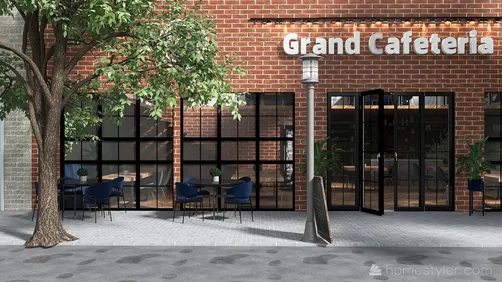
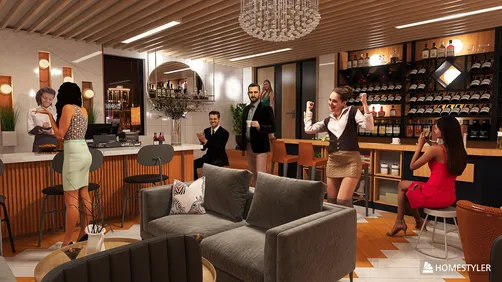
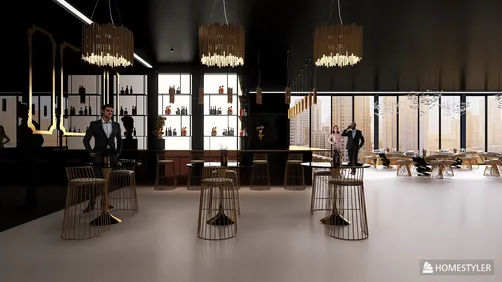
Designer anjaa mmm’s 'GRAND CAFETERIA' demonstrates human-centered zoning by organizing a large commercial space (>200 sqm) into layered yet fluid areas: a prominent central bar counter anchors the layout, flanked by varied seating—booths for privacy, high-tops for quick service, and open tables for groups. Using Homestyler’s AI design tools, she simulated real-time foot traffic and adjusted furniture density and placement to optimize flow, while leveraging HDR lighting presets (lilienstein) to test ambient brightness across zones—ensuring no area feels isolated or visually overloaded. This reflects advanced interior space planning grounded in behavioral observation.
Start Free Design✅ Authentic Material Storytelling
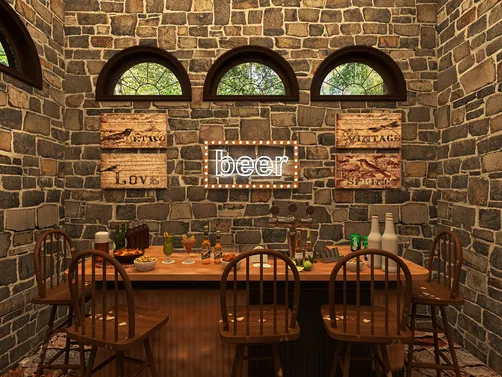
Select materials not only for durability and maintenance but as narrative carriers—exposed brick evokes industrial heritage; reclaimed wood counters and beams suggest craftsmanship and warmth; polished concrete nods to modern urbanism; vintage signage or custom tilework reinforces local or thematic identity. Layer textures intentionally: rough against smooth, matte against reflective, warm-toned woods against cool metals. Avoid surface-level ‘theme dressing’; instead, let material choices inform color palette, lighting temperature, and even fixture selection to create cohesive, sensorially rich authenticity.

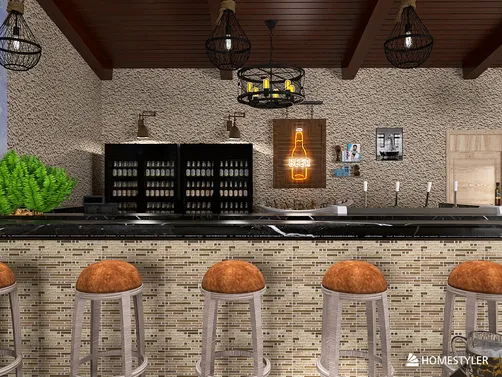
Nadya P’s 'Untitled' home bar leverages Homestyler’s AI-driven material library to experiment rapidly with tactile contrasts: floral wallpaper (soft, patterned, warm) wraps an accent wall behind white lacquered stools (smooth, reflective, cool), while an orange-accented bar front injects energy without overwhelming. She used Homestyler’s real-time 3D rendering to preview how natural daylight (g_north_euro_city HDR) interacted with these surfaces—confirming the wallpaper retained legibility and the orange pop remained vibrant. This exemplifies intentional material storytelling where every choice serves both aesthetic cohesion and psychological comfort—a core Homestyler design technique.
Start Free Design✅ Multi-Functional Lighting Strategy
Deploy layered lighting: ambient (ceiling-mounted, diffused) for overall safety and orientation; task (under-bar LED strips, pendant lights over tables) for functionality; and accent (wall washers, spotlighting art or bottle displays) for drama and brand emphasis. Use dimmers and smart controls to shift mood—from bright, airy daytime mode to intimate, moody evening ambiance. Prioritize glare-free fixtures, warm CCT (2700K–3000K) for social zones, and higher CRI (>90) to render wood grain, beer foam, and food authentically. Integrate lighting into architectural elements (e.g., illuminated shelving, lit bar fronts) rather than treating it as afterthought.

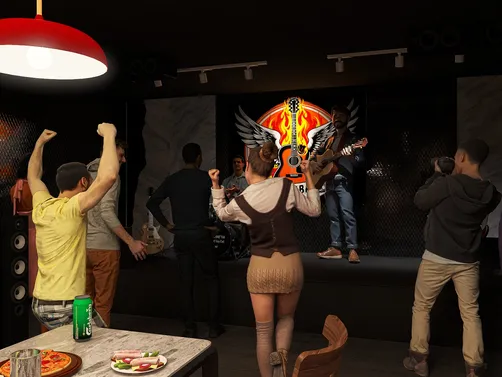
Svetlana(Lukrezia) Golubchikova’s 'Rock bar cafe' uses Homestyler’s dynamic lighting simulation (wuhan_night HDR) to engineer a responsive multi-functional lighting strategy: focused spotlights highlight the stage and band equipment (task + accent), recessed linear LEDs under shelves cast ambient glow in lounge zones, while adjustable wall sconces frame private booths. She validated light spill and shadow distribution across the 156 sqm space before finalizing—ensuring the stage remained energetic without washing out nearby conversation areas. This precision illustrates how Homestyler design techniques elevate lighting from decoration to spatial choreography.
Start Free DesignFAQ
Q: How can I balance authentic beer culture with modern design trends in my beer bar concept?
Draw inspiration from regional typologies (e.g., English pub timberwork, Bavarian vaulted ceilings, Tokyo micro-brew intimacy) but reinterpret them using contemporary materials and spatial logic—like pairing exposed brick with minimalist steel framing or integrating digital menu boards into traditional oak paneling. Homestyler’s style-matching AI tools help blend historical references with current palettes and furnishings.
Q: What are the most critical interior space planning considerations for a small-footprint beer bar (under 80 sqm)?
Prioritize verticality (wall-mounted shelving, mezzanine lounges), multifunctional furniture (stools that stack, tables with integrated tap handles), and zone-blurring design (e.g., bar counter doubling as communal table). Use mirrors and light colors to expand perception. Homestyler’s real-time 3D walkthrough lets you validate sightlines and circulation early—avoiding costly rework.
Q: Can Homestyler AI realistically simulate acoustics and crowd behavior for beer bar layouts?
While Homestyler doesn’t run physics-based acoustic modeling, its real-time rendering enables visual acoustic planning: test sound-absorbing material placements (fabric panels, cork floors, ceiling baffles) via texture and depth cues, and simulate peak-hour density using avatar overlays to assess crowding hotspots and escape route clarity—key inputs for collaborating with professional acousticians later.


Homestyler offers an easy-to-use online home design tool with stunning 3D renderings, a huge collection of design projects, and helpful DIY video tutorials—making it simple and fun to create your dream space from start to finish.
تصميم الآن مجانا