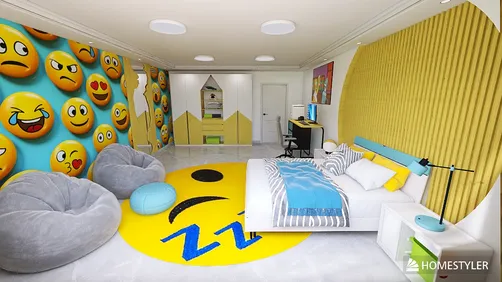
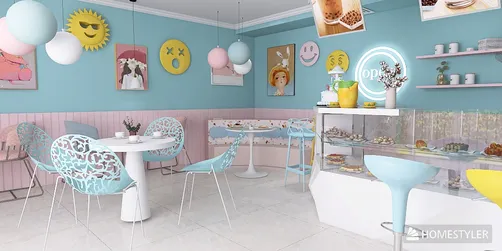
Emoji-Infused Living Space Design
The 'Emoji-Infused Living Space' is a contemporary interior design concept that transforms everyday living areas—such as living rooms, bedrooms, cafes, and children’s spaces—into emotionally expressive environments using emoji-inspired visual language. Rather than literal emoji stickers, this approach leverages color psychology, playful forms, expressive wall art, dynamic lighting, and curated object arrangements to evoke joy, calm, curiosity, or whimsy—mirroring how digital emojis communicate tone and feeling without words. Supported by Homestyler’s real-time 3D rendering and Emoji model package, designers can experiment rapidly with spatial emotion mapping, making interior space planning not just functional but deeply narrative and personality-driven.
Design Challenges & Common Pitfalls
Integrating emojis into interior design poses unique challenges: over-saturation risks turning spaces into novelty-themed rooms rather than cohesive, livable environments; poor scale or placement of emoji motifs (e.g., oversized wall decals) can disrupt visual hierarchy and spatial flow; and mismatched emotional intent—such as using energetic '🔥' or '💥' graphics in a bedroom meant for rest—undermines functional zoning. Additionally, many designers struggle with balancing digital playfulness against material authenticity and long-term aesthetic resilience—especially in residential interiors where trends fade but furniture remains.
🎯 Emotion-First Spatial Zoning
Begin every emoji-integrated design by defining the core emotional objective per zone (e.g., 'calm focus' for a reading nook, 'energetic connection' for a social lounge). Use Homestyler’s room-type presets and lighting simulation to test how emoji-colored accents, textured wall panels, or animated light patterns (via smart fixture models) influence perceived mood. Avoid decorative emojis as afterthoughts—instead, let them emerge from intentional material choices (e.g., a yellow sofa + sunbeam HDR setting = '😊' warmth), ensuring emotional resonance aligns with human-centered interior space planning.

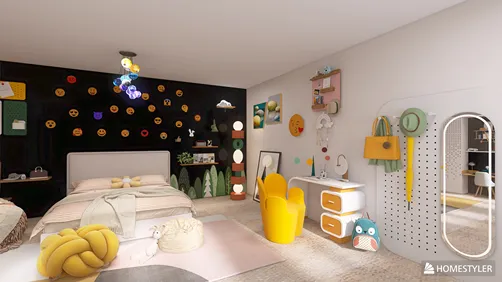
Designer nata.kmv applies 'Emotion-First Spatial Zoning' in their BEDROOM by using warm-toned ambient lighting (HDR: shenzhen_night), soft textile layering, and minimal emoji references—only subtle smile-shaped pillow contours and gentle curve motifs in shelving. Through Homestyler’s real-time 3D rendering, they validated how low-contrast emoji-inspired forms support restful psychology without visual noise—proving that emotional clarity begins with restraint, not abundance.
Start Free Bedroom Design🎨 Contextual Emoji Integration
Treat emojis not as standalone objects but as contextual design motifs derived from architecture, furniture silhouettes, lighting patterns, or surface textures. For example, a circular pendant light becomes a '⭕' when framed against a gradient wall; a row of recessed LED strips mimics a '〰️' wave; or a terrazzo floor pattern subtly echoes '✨'. This principle ensures emoji expression feels organic—not pasted on—and strengthens interior space planning through layered meaning and material intelligence.

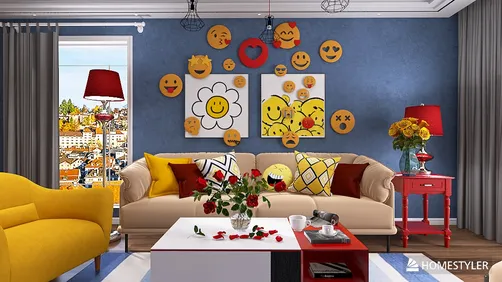
Designer Cecilia Botha demonstrates 'Contextual Emoji Integration' in Emoji Modernity Space by translating emoji energy into architectural rhythm: red polka-dot wall sections echo '❤️' pulses; the white sofa’s curved silhouette suggests '🙂'; and floral centerpiece geometry mirrors '🌼'. Using Homestyler’s AI design tools, she iterated 12 layout variants to ensure each emoji-derived motif enhanced—not interrupted—traffic flow and sightlines—showcasing advanced Homestyler design techniques rooted in behavioral spatial logic.
Start Free Living Room Design⚖️ Balanced Visual Hierarchy
Prioritize one dominant emoji-inspired element per zone (e.g., wall mural, ceiling pattern, or custom rug), then suppress competing graphic elements elsewhere. Support it with neutral backdrops, monochromatic furniture, or natural materials to prevent sensory overload. Use Homestyler’s layer visibility toggle and color palette analyzer to audit contrast ratios and focal dominance—ensuring the emoji motif reads clearly at human scale (2–3 meters), not just in render thumbnails.

Designer Toni Sandison masters 'Balanced Visual Hierarchy' in The Modular Kitchen of Tomorrow by anchoring the entire space with a single luminous '💡'-inspired ceiling fixture—its petal-like form echoed only in the subtle curvature of cabinet handles and table edges. All other surfaces remain clean and white, allowing Homestyler’s real-time rendering to highlight emotional contrast: brightness = positivity, simplicity = clarity. This reflects expert interior space planning where restraint amplifies meaning.
Start Free Kitchen DesignFAQ
Q: Do I need prior 3D modeling experience to use Homestyler’s Emoji model package?
Not at all. Homestyler’s drag-and-drop interface, AI-powered auto-layout suggestions, and pre-rigged emoji assets (e.g., scalable wall decals, animated light props, and poseable character models) are designed for beginners. You can generate photorealistic renders in under 5 minutes—even without drafting skills.
Q: Can emoji-based designs be practical for long-term living—not just contest entries?
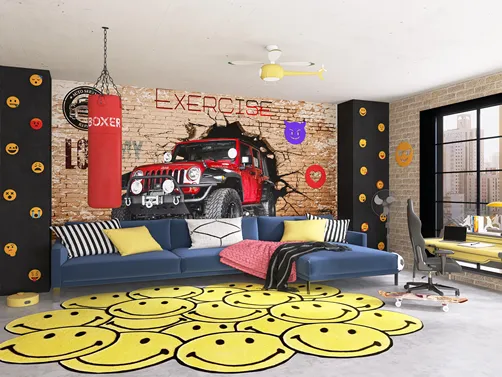
Absolutely. Top-winning entries like Vendetta V’s 'Emoji space web' use emoji language structurally: yellow upholstery = warmth, rounded edges = safety, rhythmic lighting = energy regulation. These translate directly to evidence-based biophilic and neuroaesthetic principles—making them durable, not disposable.
Q: How does Homestyler help avoid 'emoji clutter' in small spaces?
Homestyler’s Smart Space Analyzer flags visual congestion zones in real time. Its 'Focus Heatmap' highlights where the eye lingers—guiding you to place high-emotion emoji motifs only in primary sightlines (e.g., above sofa, not behind doors). Combined with its 1:1 scale measurement tool, it supports precise interior space planning even in studios under 25 m².
Q: Are there cultural considerations when choosing emoji themes for global audiences?
Yes. For example, '🙏' carries spiritual weight in Asia but may read as 'high-fiving' in the US; '🍆' is food in Japan but slang elsewhere. Homestyler’s regional rendering presets (e.g., g_euro_garden vs. g_peoples_square) include culturally vetted emoji palettes—and top designers like Юлия Исаева use abstracted forms (e.g., 'Смайл-арт') to ensure universal emotional legibility.
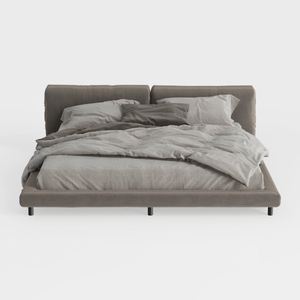
TREATLIFE HOME Modern Platform Queen Bed with Inte


Modern Metal Bunk Bed with Integrated Desk and Storage Shelves 3D Model
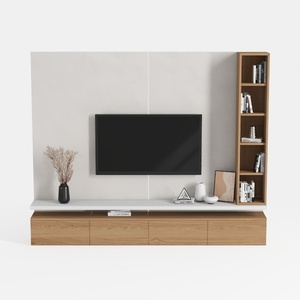
Minimalist Solid Wood White Top TV Stand With Side Bookshelf 3D Model
Homestyler offers an easy-to-use online design tool with stunning 3D renderings, a vast collection of interior projects, and helpful DIY video tutorials. It’s perfect for bringing your home design ideas to life, whether you’re a beginner or an experienced decorator.
Design Now for FREE