Contemporary Happy Kitchen Design
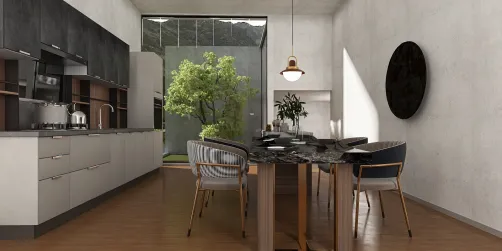
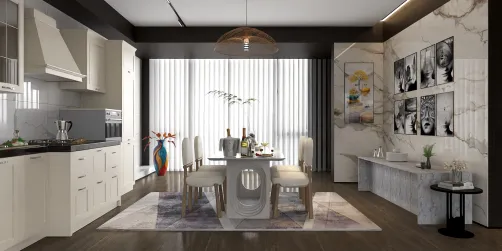
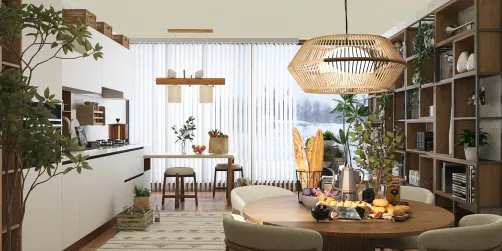
The 'Contemporary Happy Kitchen' is a multifunctional interior space that transcends traditional cooking functionality to become a hub for family interaction, social hosting, culinary joy, and everyday well-being. As reflected in the AIDA design competition entries, this scene emphasizes emotional warmth, spatial fluidity, and aesthetic harmony — blending modern minimalism, natural materials (e.g., wood, stone), green accents, and abundant daylight. It prioritizes human-centered layout logic (e.g., open-plan dining integration, ergonomic work triangle), visual comfort (soft lighting, balanced color palettes), and smart space optimization — all achievable and previewed in real time using Homestyler’s AI-powered 3D rendering tools. This design scene is especially relevant for urban apartments and mid-sized residential units where indoor space planning must balance utility, beauty, and sociability.
Design Challenges & Common Pitfalls
Designers frequently face three interrelated challenges in contemporary kitchen projects: (1) Balancing openness with functional zoning — avoiding visual clutter while maintaining clear separation between cooking, prep, dining, and social zones; (2) Integrating appliances and storage without compromising aesthetics or workflow efficiency — especially in compact layouts where cabinet depth, countertop continuity, and ventilation placement are critical; and (3) Achieving consistent ambiance across day/night conditions — many designs look vibrant in simulated daylight but fall flat under artificial lighting due to poor layering of ambient, task, and accent illumination. These issues directly impact perceived spaciousness, usability, and long-term user satisfaction — making iterative digital prototyping via Homestyler design techniques essential before physical implementation.
✅ Prioritize Human-Centered Spatial Flow
Layout should follow intuitive movement patterns: the classic 'work triangle' (sink–stove–refrigerator) must be preserved, but extended to include dining and conversational zones. Avoid dead ends or narrow circulation paths; instead, use island counters or L-shaped configurations to create natural gathering points. Ensure at least 120 cm clearance around key activity areas for accessibility and multi-user operation — vital for inclusive indoor space planning.

Designer 'k m' demonstrates this principle by anchoring the blue cabinetry layout around a central island that doubles as both prep surface and informal dining bar — enabling seamless transitions between cooking and hosting. Using Homestyler design techniques, they simulated foot traffic flow and adjusted cabinet heights and handle placements for ergonomics, proving how AI-driven interior space planning can validate spatial logic before construction.
Design Your Kitchen Now🌿 Integrate Nature & Warmth Authentically
Natural elements — wooden textures, living greenery, stone backsplashes, and large windows framing outdoor views — are not decorative add-ons but core mood regulators. They reduce visual sterility, improve biophilic connection, and soften hard surfaces. Use warm-toned lighting (2700K–3000K), textured wall finishes, and tactile materials (e.g., matte cabinetry, woven pendants) to elevate sensory comfort without sacrificing contemporary clarity.

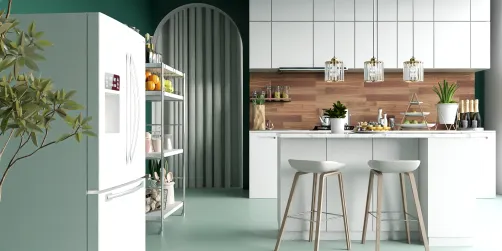
brooklynldunn03 applies this by maximizing window-to-wall ratio and pairing light oak flooring with white shaker cabinets and hanging pendant lights — creating luminous, breathable volume. Their Homestyler AI model allowed instant sunlight angle simulation across seasons, ensuring glare-free morning prep and golden-hour warmth — a powerful example of nature-integrated indoor space planning.
Start Your Free Design🎨 Optimize Visual Hierarchy & Material Harmony
Limit primary material families to three (e.g., wood + matte metal + ceramic) and restrict dominant colors to two base tones plus one accent. Use vertical rhythm — aligned cabinet lines, consistent handle styles, and recessed lighting strips — to enhance perception of height and order. Avoid visual noise: minimize mixed hardware, clashing grain directions, or excessive pattern repetition. Homestyler’s real-time material swap feature makes testing cohesion fast and reliable.

Camay 68 exemplifies visual hierarchy through monolithic island cabinetry, flush-mounted drawer fronts, and recessed LED toe-kick lighting — eliminating visual breaks and reinforcing clean lines. Leveraging Homestyler design techniques, they iterated over 12 material combinations in under 20 minutes, landing on a harmonized palette of brushed nickel hardware, quartzite countertops, and matte sage-green upper cabinets — proof that AI-accelerated decision-making elevates material coherence in contemporary kitchen design.
Create Your Dream KitchenFAQ
Q: How can I ensure my contemporary kitchen supports both cooking efficiency and social interaction?
Use Homestyler’s interactive floor planner to test multiple layouts — prioritize islands or peninsulas with seating, position the sink facing communal areas, and integrate open shelving near dining zones for casual serving. The top-winning entries (e.g., Daniela Schanglies’ sunset-view kitchen) prove that sightlines and shared surfaces are foundational to joyful indoor space planning.
Q: What’s the best way to choose colors and materials that feel modern yet warm?
Avoid cold monochromes. Instead, pair warm neutrals (oatmeal, terracotta, honey oak) with one grounded accent (deep green, navy, or burnt sienna). Use Homestyler’s real-time material library to preview textures side-by-side — many designers (like Iryna Muntyan) rely on this to avoid mismatched undertones.
Q: Can Homestyler help me optimize a small kitchen without losing storage or style?
Absolutely. Top entrants like Zafira Escamex used Homestyler’s AI-powered smart cabinet suggestions and vertical storage simulations to maximize every cubic centimeter — adding pull-out pantries, appliance garages, and ceiling-hung rails. Their minimalist white-and-beige scheme visually expands space while preserving function — a hallmark of intelligent indoor space planning.
Q: How do I make sure my kitchen looks great both during the day and at night?
Layer lighting: ambient (recessed ceiling), task (under-cabinet LEDs), and accent (pendants over islands or artwork). Maribel Fiñana Cruz’s winning design uses Homestyler’s dynamic lighting simulator to preview dusk vs. midnight scenes — ensuring warm, even illumination without shadows or glare.

Homestyler offers an easy-to-use online design tool paired with stunning 3D renderings and a rich collection of interior projects. Whether you’re a DIY fan or a design pro, its video tutorials and resources help you create beautiful, personalized home designs effortlessly.
Design Now for FREE