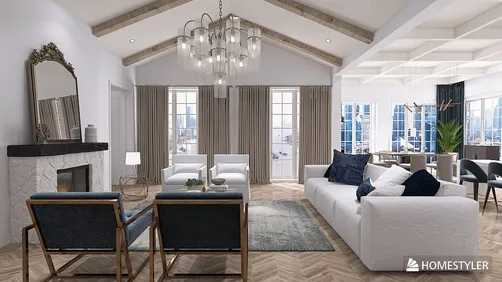
Multi-generational Living Space Design
This scene refers to the intentional, holistic interior space planning of a shared residential environment where three generations — typically grandparents, parents, and children (including infants, teens, or young adults) — cohabit under one roof. It goes beyond simple spatial efficiency: it’s about orchestrating harmony through layered functionality, empathetic zoning, and adaptive design. Key characteristics include flexible layouts that support both collective interaction and individual retreat; age-sensitive ergonomics (e.g., step-free access for elders, safe play zones for toddlers, privacy for teens); and emotionally resonant elements — like memory walls, intergenerational craft corners, or multi-height furniture — that foster belonging across life stages. As highlighted in the Homestyler ‘Multi-generational Home for Web’ contest, this design challenge sits at the intersection of demographic reality (8+ billion people, rising urban density) and human-centered design philosophy.
Design Challenges and Common Pitfalls
Designing for multi-generational living introduces unique complexities not found in single-family or age-homogeneous homes. First, conflicting functional needs often collide: a toddler’s open-play zone compromises an elder’s need for slip-resistant, clutter-free circulation; a teen’s desire for acoustic privacy clashes with grandparents’ preference for open communication. Second, spatial hierarchy is easily disrupted — without deliberate zoning, shared areas (e.g., kitchens or living rooms) become contested territories rather than connective hubs. Third, aesthetic cohesion is difficult when balancing nostalgic warmth (for elders), contemporary minimalism (for parents), and playful expressiveness (for children). Finally, many designers overlook scalability — failing to future-proof spaces for evolving mobility, caregiving needs, or family growth — resulting in costly retrofits. These challenges underscore why robust indoor space planning and intelligent use of Homestyler design tools are indispensable.
✅ Prioritize Zoned Flexibility
Rather than rigidly assigning fixed functions to rooms, adopt a ‘zone + overlay’ strategy: define primary activity zones (e.g., ‘quiet reflection’, ‘active play’, ‘communal gathering’) and layer adaptable furniture, movable partitions, or convertible surfaces (e.g., dining table doubling as homework desk or craft station). This ensures each generation retains autonomy while enabling spontaneous crossover — such as grandparents reading aloud in the ‘quiet zone’ adjacent to a softly partitioned play nook. Homestyler’s drag-and-drop smart furniture arrangement and real-time 3D rendering make it easy to test dozens of zone configurations in minutes — critical for optimizing limited square footage without sacrificing emotional comfort.

Natalia Farias’ 'Casa Club' exemplifies zoned flexibility: her open-plan layout integrates a sunlit reading alcove (for elders), a central L-shaped sofa anchoring family conversation (for all), and a tucked-away bar counter with stools — subtly accommodating teens’ social needs without isolating them. Using Homestyler AI design tools, she iterated lighting scenarios and furniture scales to ensure visual continuity across zones — proving how interior space planning can unify aesthetics while honoring functional diversity.
Start Free Design Now✅ Embed Age-Informed Ergonomics & Safety
Ergonomics must be generational, not universal. Integrate non-negotiable safety features — zero-threshold transitions, anti-slip flooring, rounded furniture edges, and lever-style hardware — alongside comfort adaptations: adjustable-height countertops (for cooking with toddlers or seated elders), glare-free layered lighting (to support aging eyes and children’s focus), and acoustically buffered zones (to dampen teen music or baby cries without full isolation). Crucially, avoid token accessibility — instead, weave these features into the design narrative (e.g., a beautiful oak ramp becomes part of the garden bridge, as seen in Andi Padmandi’s award-winning countryside home). Homestyler’s measurement precision and collision-detection tools help validate clearances and ADA-aligned pathways before construction begins.

Han95.’s 'A Luxurious Harbour-side Family Home' demonstrates embedded ergonomics: wide, unobstructed hallways accommodate walkers and strollers alike; lower cabinets with soft-close mechanisms serve both children reaching for snacks and elders avoiding bending; and strategically placed wall-mounted task lights above the island kitchen support multiple users simultaneously. Leveraging Homestyler design techniques, the designer simulated sunrise-to-sunset light paths to optimize natural illumination — reducing reliance on harsh overheads and enhancing circadian comfort for all ages.
Begin Your Free Design✅ Cultivate Emotional Connection Through Shared Ritual Spaces
Beyond utility, multi-generational homes thrive on shared meaning. Design ‘ritual anchors’ — dedicated but flexible zones tied to recurring family activities: a breakfast nook with built-in bench seating (for daily connection), a storytelling corner with integrated bookshelves and floor cushions (for intergenerational reading), or a communal kitchen island with varied-height stools (for cooking together across abilities). These spaces must feel warm, tactile, and personal — using natural materials, curated memorabilia, and biophilic touches (indoor plants, water features, daylight wells). Homestyler’s HDR rendering presets (e.g., 'g_morning', 'g_ljz_day') allow designers to visualize how light, texture, and color evoke calm or joy — turning technical drawings into emotionally resonant proposals.

Amy ✨’s 'Embracing Generations' centers emotional connection through its LDK (Living-Dining-Kitchen) concept: the breakfast nook isn’t just a meal spot — it’s framed by floor-to-ceiling windows and lined with cushioned banquettes, inviting lingering conversation; the adjacent reading room uses sliding barn doors for visual openness yet acoustic separation, allowing grandparents to read aloud while pre-teens game nearby. Using Homestyler’s real-time 3D rendering and sunlight simulation ('g_morning'), Amy tested sightlines and shadow patterns to ensure every ritual space felt sun-warmed and inclusive — a masterclass in using indoor space planning to nurture love, not just logistics.
Launch Free DesignFAQ
Q: How can I balance privacy and togetherness when designing for three generations in a compact urban apartment?
A: Start with ‘layered zoning’ — use furniture groupings, area rugs, ceiling-height shelving, or retractable curtains (not solid walls) to define semi-private pockets within open areas. For example, position a low bookshelf between a sleeping nook and living zone: it offers visual screening for rest while permitting sound and light flow for connection. Homestyler design tools let you preview spatial perception from multiple eye heights — ensuring privacy feels intentional, not accidental.
Q: What Homestyler AI features are most helpful for testing multi-generational usability before building?
A: Prioritize the Smart Furniture Arrangement engine (to auto-optimize clearances for wheelchairs, strollers, and walkers), Sunlight Simulation (to verify natural light reaches key activity zones at different times), and the Real-time 3D Walkthrough (to experience scale, circulation, and sightlines from child, adult, and senior perspectives). These features transform abstract interior space planning into tangible, empathy-driven decisions.
Q: Can multi-generational design work in rental or non-renovation scenarios?
A: Absolutely. Focus on ‘soft’ interventions: modular furniture (nesting tables, fold-down desks), removable acoustic panels, height-adjustable lighting fixtures, and thematic décor layers (e.g., memory walls with interchangeable frames). Homestyler’s AI-powered ‘Style Transfer’ tool helps visualize how portable upgrades — like swapping a rug or repositioning a sofa — instantly shift function and feeling across generations — making it ideal for renters and budget-conscious projects.
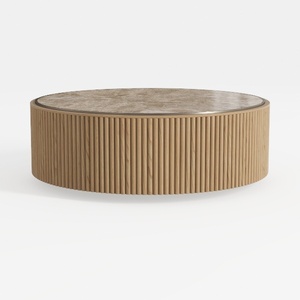
Modern Fluted Solid Wood Marble Top Round Coffee Table 3D Model
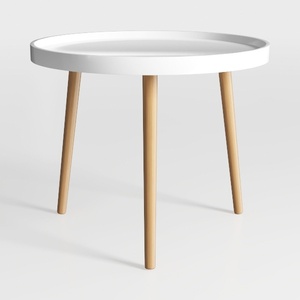
Minimalist Modern Oak White Round Side Table 3D Model

Rustic Solid Oak Round Coffee Table Unique Geometric Base 3D Model
Homestyler is a fantastic online home design platform offering easy-to-use design tools, impressive 3D renderings, inspiring project ideas, and helpful DIY video tutorials. It’s perfect for bringing your interior design visions to life quickly and effortlessly.
Design Now for FREE