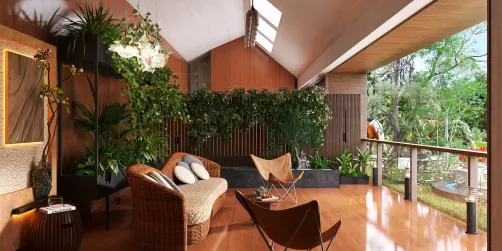
Backyard Haven Design
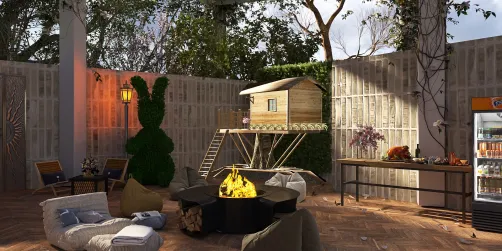
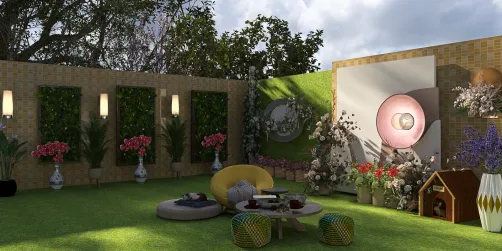
The 'Backyard Haven' design scene refers to the intentional transformation of an outdoor residential space—typically adjacent to a home—into a private, restorative retreat that harmonizes nature, comfort, and personal expression. Unlike generic landscaping or functional patios, this scene emphasizes emotional resonance: it’s a curated extension of indoor living, designed for relaxation, social connection, or quiet contemplation. Drawing inspiration from Monet’s immersive garden practice and contemporary wellness trends, Backyard Haven design prioritizes sensory richness (e.g., layered greenery, ambient lighting, tactile materials), spatial intimacy (e.g., zoning with pergolas, hedges, or level changes), and seamless integration with interior architecture—making it a vital component of holistic indoor space planning.
Design Challenges and Common Pitfalls
Backyard Haven projects frequently face three interrelated challenges: (1) Microclimate mismatch—selecting plants or materials unsuited to local sun exposure, wind patterns, or drainage leads to high maintenance or premature failure; (2) Spatial ambiguity—lacking clear functional zones (e.g., dining vs. lounging vs. contemplation), resulting in underused or disjointed areas; and (3) Tool-to-reality gap—designs conceived in 2D sketches or mood boards often fail to translate accurately into built form due to scale misjudgment, material reflectivity errors, or poor ergonomics. These issues are especially acute when balancing aesthetic vision with practical constraints like budget, HOA regulations, or accessibility needs—underscoring why robust Homestyler design techniques, including real-time 3D rendering and AI-powered material simulation, are essential for mitigating risk before construction begins.
🌱 Prioritize Sensory Layering & Biophilic Integration
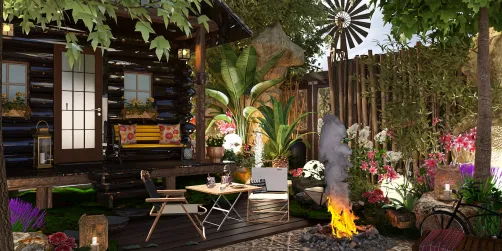
A successful Backyard Haven engages multiple senses—not just sight, but also sound (rustling foliage, water features), touch (textured stone, woven textiles), scent (lavender, jasmine), and even microclimate (dappled shade, gentle airflow). This is achieved through biophilic layering: combining canopy trees, mid-height shrubs, groundcover perennials, and vertical elements (climbing vines, trellises) to create ecological depth and year-round visual interest. Avoid monoculture planting; instead, curate plant palettes for seasonal succession and habitat support. Integrate natural materials—weathered wood, porous stone, rattan—to reinforce organic authenticity and thermal comfort.

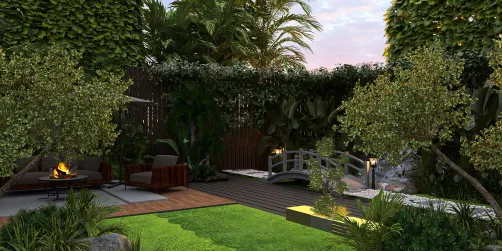
Juliana Nourieh’s design exemplifies sensory layering: she uses dense, varied flora—from tall ornamental grasses to low carpeting thyme—to create visual rhythm and soft acoustic buffering. Her placement of a meandering path invites slow movement and discovery, enhancing tactile and kinetic engagement. Using Homestyler’s real-time 3D rendering, she simulated seasonal bloom cycles and light penetration at different times of day—ensuring color transitions and shadow play remained harmonious year-round, a key Homestyler design technique for validating biophilic intent before build.
Start Free Design🛋️ Define Intimate Zones with Purposeful Boundaries
Rather than treating the backyard as one monolithic surface, divide it into distinct, human-scaled zones—such as a shaded lounge nook, an alfresco dining terrace, a firepit gathering circle, or a secluded reading alcove. Boundaries need not be walls; use subtle cues: changes in paving material or level, overhead string lights or pergola beams, strategic planting screens (e.g., bamboo or boxwood hedges), or even furniture orientation. Each zone should support a specific activity and foster psychological privacy—even in open layouts—by controlling sightlines and acoustic spill. This zoning strategy is foundational to effective indoor space planning principles applied outdoors.

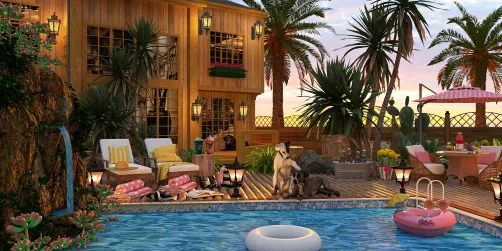
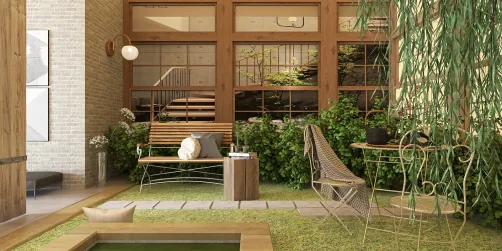
Alaa’ J.M.’s luxurious poolside composition masterfully defines zones without enclosure: a sunken lounge area is subtly demarcated by recessed decking and a curved backrest wall clad in textured tile, while a raised firepit zone uses tiered stone seating and overhead pendant lights to signal transition. Through Homestyler’s AI-powered spatial simulation, he tested sightline occlusion from neighboring properties and adjusted hedge height and pergola beam density accordingly—demonstrating how Homestyler design techniques enable precise, privacy-first zoning within compact or urban backyard contexts.
Begin Your Oasis✨ Embed Adaptive Ambiance Through Light & Material Intelligence
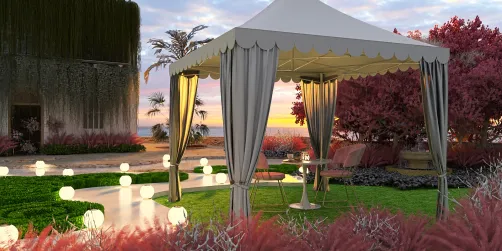
Ambiance is the soul of a Backyard Haven—and it must adapt across time and function. Integrate layered, dimmable lighting: ambient (e.g., low-voltage path lights), task (e.g., under-cabinet lighting for outdoor kitchens), and accent (e.g., uplighting for specimen trees or downlighting on dining tables). Pair lighting with intelligent material choices: heat-reflective pavers for sunny zones, slip-resistant textured concrete near water features, or thermally massed stone benches that retain warmth into evenings. Use Homestyler’s real-time 3D rendering to preview how light interacts with surfaces at dusk or how rain affects material sheen—turning ambiance from guesswork into data-informed design.

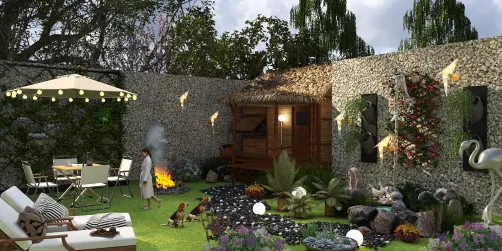
Daniela Schanglies leverages adaptive ambiance by pairing warm LED string lights draped through drought-tolerant cacti with matte-finish terracotta tiles that absorb rather than glare—ideal for Mediterranean-style twilight entertaining. In Homestyler, she toggled between ‘daylight’, ‘golden hour’, and ‘moonlight’ presets to verify lighting coverage and color temperature consistency across zones. Her use of AI-generated material previews confirmed tile porosity and UV resistance—showcasing how Homestyler design techniques empower designers to specify durable, atmosphere-enhancing finishes aligned with climate-responsive indoor space planning goals.
Launch Free DesignFAQ
Q: How can I ensure my backyard design remains low-maintenance without sacrificing beauty?
Use native or climate-adapted plants with proven resilience in your region— Homestyler’s AI plant library suggests species based on ZIP-code-level hardiness and soil data. Prioritize hardscape over turf, choose self-shading layouts to reduce irrigation, and integrate smart timers or drip systems modeled in Homestyler’s 3D environment.
Q: Can Homestyler help me visualize how my backyard will look in different seasons?
Yes— Homestyler’s seasonal rendering mode simulates foliage density, bloom timing, deciduous leaf drop, and even snow accumulation on structures, enabling accurate long-term planning and supporting sustainable indoor space planning decisions.
Q: What’s the best way to make a small backyard feel spacious and private?
Apply vertical layering (trellises, hanging planters, tall grasses), use reflective surfaces strategically (e.g., mirrored backsplashes on outdoor bars), and employ forced perspective—like narrowing pathways toward a focal point. Homestyler’s camera-angle tools let you test sightlines and scale perception before finalizing layouts.
Q: How do top contest winners use Homestyler differently than beginners?
Winners leverage Homestyler’s collaborative annotation tools to gather client feedback on specific zones, use AI-generated lighting analysis reports to optimize fixture placement, and export annotated 3D walkthroughs for contractors—transforming Homestyler from a visualization tool into a full-cycle indoor space planning and execution platform.


Homestyler offers an easy-to-use online design tool, stunning 3D renderings, and a vast collection of interior design projects. With helpful DIY video tutorials, it’s a perfect platform to effortlessly create and visualize your dream home. Give your space a fresh new look today!
Design Now for FREE