Orange-Oriented Living Space Design
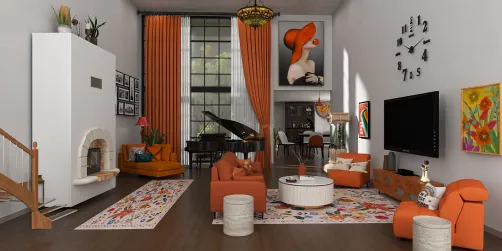
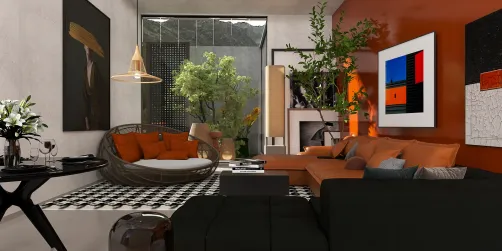
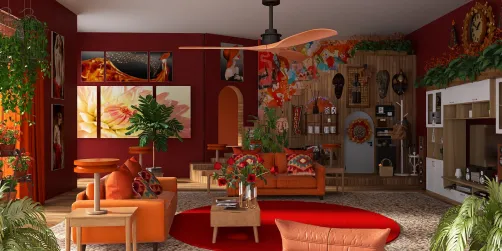
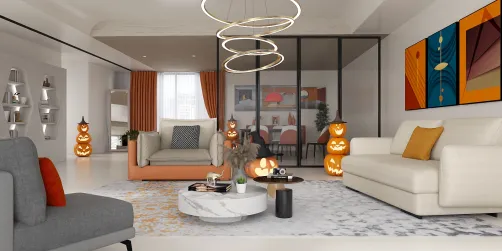
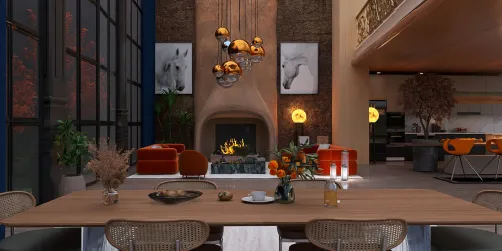
The 'Orange-Oriented Living Space' refers to a versatile, emotionally resonant interior design approach where orange serves as the dominant chromatic anchor—not merely as an accent, but as a unifying spatial language. This scene spans open-plan living-dining areas, multi-functional lounges, and transitional zones (e.g., living-to-fireplace or living-to-balcony), prioritizing warmth, sociability, and visual energy. As seen across top contest entries—from Anwar’s fireplace-enhanced dining-living fusion to LaDana’s rustic brick-accented lounge—the design transcends literal room labels and focuses instead on human-centered spatial experience: inviting conversation, supporting layered lighting, and harmonizing texture, scale, and real-time 3D-rendered realism via Homestyler AI design tools.
Design Challenges & Common Pitfalls
Balancing vibrancy with visual comfort is the core challenge. Orange—especially saturated tints like burnt sienna or coral—can overwhelm if not grounded by neutral backdrops (e.g., warm greys, oat whites, or natural wood), calibrated light ratios, and strategic saturation zoning (e.g., bold walls + muted upholstery). Other frequent issues include poor color hierarchy (orange competing with focal furniture), insufficient contrast for accessibility, overuse of analogous warm tones leading to flatness, and neglecting how Homestyler’s real-time 3D rendering reveals unintended glare or shadow pooling under specific lighting setups.
✅ Prioritize Warm Neutrals as Base Palette
Start with a foundation of warm, low-saturation neutrals—think beige-ivory walls, taupe flooring, or honey-toned oak millwork—to provide optical breathing room. This base prevents orange from feeling aggressive and allows it to function expressively in curated zones (e.g., an orange accent wall behind a sofa, or orange-upholstered dining chairs). Neutral grounding also enhances interior space planning flexibility, enabling seamless transitions between functional areas without chromatic dissonance.

Amanda Chalwade’s 'cozy living room' exemplifies this principle masterfully: she uses warm-toned plaster walls and natural wood flooring as a serene canvas, then introduces orange selectively through textured throw pillows, a sunlit rug, and ceramic accents—never overwhelming the eye. Her Homestyler AI design technique leverages real-time material swaps and lighting sliders to preview how each neutral-orange ratio performs under daytime ambient light, proving how foundational neutrality enables confident, joyful color expression.
Start Free Design Now✅ Layer Lighting for Depth & Mood
Orange thrives under layered illumination. Combine ambient (ceiling fixtures), task (floor or table lamps), and accent (wall sconces or shelf spots) lighting to sculpt dimensionality. Warm-white LEDs (2700K–3000K) reinforce orange’s inherent cheerfulness, while dimmable controls allow dynamic shifts—from energetic daytime socializing to intimate evening relaxation. Thoughtful lighting layering also mitigates glare on glossy orange surfaces and ensures visual comfort during extended indoor space planning sessions.

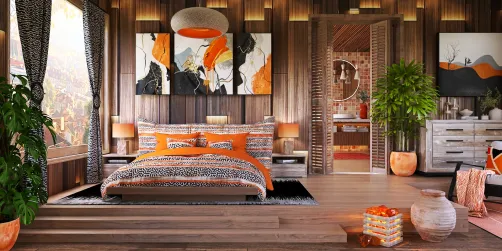
glacimussi Mussi’s 'Vibrante e acolhedor!' bedroom applies this principle with intention: warm pendant lights over the bed, recessed ceiling spots highlighting orange wall texture, and a subtle LED strip beneath floating shelves—all simulated and fine-tuned using Homestyler’s interactive lighting presets. Her design demonstrates how layered lighting transforms solid orange walls from monolithic to multidimensional, directly supporting effective indoor space planning by defining zones (sleep vs. lounge) without physical barriers.
Begin Free Bedroom Design✅ Introduce Texture & Organic Contrast
Counterbalance orange’s visual intensity with rich tactile contrasts: rough-hewn wood, nubby linen, hand-thrown ceramics, woven rattan, or matte stone. These textures add depth, prevent monotony, and ground the palette in authenticity. Organic contrast—especially via greenery (ferns, fiddle leaf figs) or botanical wallpaper—creates chromatic harmony (orange + green = complementary), improves air quality perception, and reinforces biophilic interior space planning principles.

Mayra Ortiz’s 'Detalles del diseño' living room deploys texture strategically: a chunky knit throw on the curved sofa, raw-edge walnut coffee table, terracotta planters, and vertical greenery climbing a textured stucco column. Using Homestyler’s drag-and-drop material library and real-time texture preview, she iterated dozens of surface combinations to ensure orange upholstery felt anchored—not isolated—proving how organic contrast elevates both aesthetic cohesion and functional indoor space planning.
Launch Free Living Room PlanFAQ
Q: How can I use orange without making my living space feel too loud or chaotic?
Use orange in controlled proportions—limit it to one primary zone (e.g., an accent wall or key furniture group) and pair it with warm, matte neutrals and ample natural light. Homestyler design tips recommend starting with the 'Neutral Base + Single Orange Statement' preset and adjusting saturation sliders live to test visual impact.
Q: Does orange work well in small or low-light living spaces?
Absolutely—if you choose lighter, peachier tones (e.g., apricot or cantaloupe) and amplify reflectivity with glossy white trim, mirrored surfaces, or light-reflecting tiles. Homestyler AI design tools let you simulate daylight hours and test how orange behaves at dawn vs. dusk—critical for accurate indoor space planning.
Q: What Homestyler features are most helpful for refining an orange-oriented design?
Real-time 3D rendering, the Material Swap tool (for instant fabric/wall/floor comparisons), Lighting Presets (to preview warm-white vs. cool-white effects), and the Color Harmony Analyzer—which flags potential clashes before rendering. These features streamline interior space planning by reducing guesswork and iteration time.
Q: Can orange be used in professional or minimalist living spaces?
Yes—opt for burnt orange in restrained applications (e.g., a single sculptural armchair, matte ceramic vases, or a narrow band of orange grout in a monochrome tile floor). Top designers like Anwar and Patrizia prove that orange conveys sophistication when treated as a deliberate, textural, and context-aware element—not just a color.

Modern Minimalist Orange Fabric Large Sofa 3D Model

Modern Vintage Rust Fabric Sofa With Black Metal Legs 3D Model

Modern Leather Tufted Chaise Lounge 3D Model
Homestyler is a user-friendly online home design platform that offers powerful 3D rendering, inspiring design projects, and easy-to-follow DIY video tutorials—perfect for bringing your interior design ideas to life effortlessly.
Design Now for FREE