Doll-Integrated Living Space Design
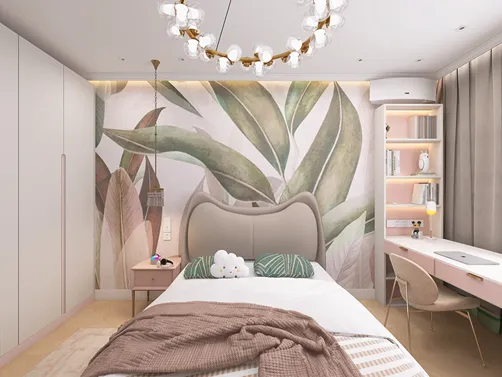
The 'Doll-Integrated Living Space' is a psychologically attuned interior environment where collectible dolls—beyond childhood nostalgia—function as intentional emotional anchors and aesthetic focal points. This scene transcends traditional toy storage or display; it merges narrative-driven decor with functional furniture to cultivate dual emotional states: vibrant energy (through color, texture, and playful composition) and deep calmness (via spatial rhythm, soft lighting, and tactile harmony). Inspired by contest themes like 'Marine Adventure', 'Garden Paradise', and 'Nestling Russia', this design typology embraces cultural storytelling, thematic cohesion, and human-scale warmth—making it equally relevant for children’s bedrooms, adult collectors’ studios, or multi-generational living rooms. Effective indoor space planning here prioritizes doll visibility, accessibility, and contextual integration—not isolation in glass cases.
Design Challenges & Common Pitfalls
Designers often struggle with balancing visual playfulness and mature sophistication—resulting in spaces that feel either overly juvenile or emotionally sterile. Key challenges include: overcrowded doll displays that disrupt spatial flow; mismatched scale between dolls and furniture (e.g., oversized shelves dwarfing delicate figures); poor lighting that flattens texture and diminishes emotional resonance; and neglecting ergonomic considerations for both child users and adult caregivers. Additionally, many overlook the psychological function of dolls as 'emotional regulators'—failing to zone areas for quiet reflection (e.g., reading nooks beside doll alcoves) versus dynamic interaction (e.g., low play tables with rotating displays). Thoughtful indoor space planning must resolve these tensions through layered functionality and sensory intentionality.
🎨 Prioritize Narrative Cohesion Over Thematic Literalism
Rather than replicating a 'Marine Adventure' room with literal seashells and blue paint, top designers use symbolic motifs—like wave-patterned upholstery, aqua-toned velvet cushions, or coral-shaped shelving—to evoke the theme while preserving elegance and versatility. Narrative cohesion means every element supports the same emotional arc: wonder, safety, and gentle discovery. Homestyler Design Tips include using the platform’s 'Theme Palette Generator' to auto-suggest harmonious color families from uploaded doll reference images—and applying 'Material Swap AI' to test how linen, wood grain, or matte ceramic affects tonal warmth before rendering.

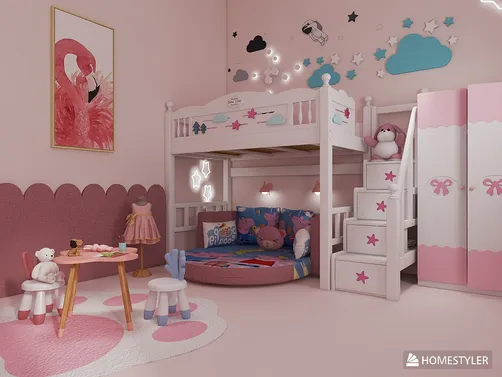
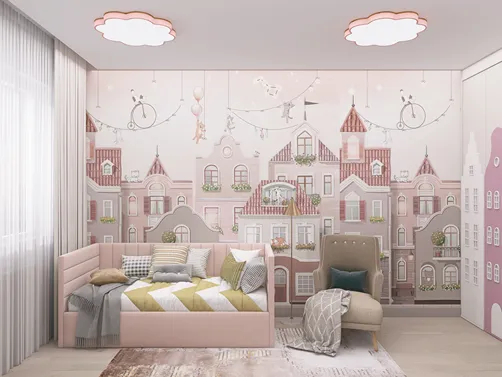
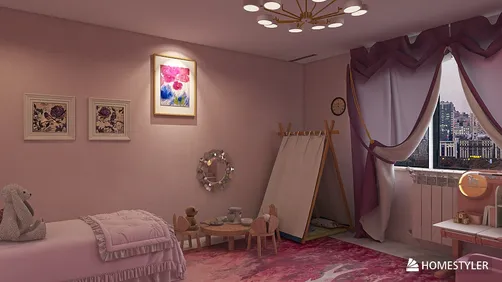
Svetlana Velichinskaya’s 'A Dreamy Dollhouse room' exemplifies narrative cohesion: she interprets 'dollhouse' not as miniature architecture, but as a full-scale environment infused with doll-like delicacy—soft pink tones, scalloped bedding edges, and petite framed portraits echoing doll-scale portraiture. Using Homestyler AI design tools, she applied consistent HDR lighting ('d_peoples_square_dawn') across all zones to unify mood, and leveraged the 'Auto-Zone Layout' feature to ensure doll display shelves align visually with bed height—creating rhythmic vertical continuity without literalism.
Start Free Design🌿 Layer Sensory Zones for Calm + Energy
A successful Doll-Integrated Living Space intentionally segments experience: 'calm zones' (e.g., a window-side reading bench with a single curated doll and weighted blanket) contrast with 'energy zones' (e.g., a low-profile rug area with modular seating and rotating doll vignettes). This zoning supports neurodiverse needs and evolving developmental stages. Homestyler Design Tips recommend using the 'Sunlight Path Simulator' to map natural light gradients across the day—and assigning doll display heights accordingly: eye-level for engagement (energy), waist-to-chest level for comfort (calm), and elevated ledges for ambient presence (atmosphere). Indoor space planning must treat light, sound absorption, and tactile variation as core structural elements—not afterthoughts.

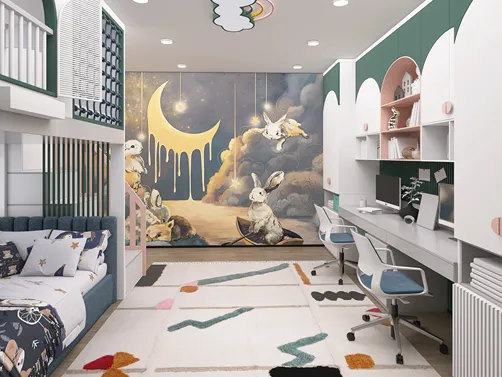
Alena Ramanouskaja’s 'Whimsical Haven' masterfully layers sensory zones: the ethereal bed drapery and starry-night canopy form a hushed 'calm zone', while the adjacent teepee—lined with removable fabric panels and accessible doll pockets—creates an interactive 'energy zone'. She used Homestyler’s 'Zone Acoustic Overlay' tool to simulate sound diffusion, selecting plush rugs and felt-lined shelves to dampen echo—proving that indoor space planning for emotional regulation requires physics-aware digital prototyping, not just aesthetics.
Begin Your Free Design🧩 Integrate Dolls as Functional Furniture Components
Move beyond static display: embed dolls into structure and utility. Examples include doll-shaped drawer pulls on side tables, shelf brackets modeled after Ne Zha’s flaming wheels, or ottomans with hidden compartments accessed via Lulu Boo–themed zippers. This principle transforms dolls from decorative objects into participatory design elements—deepening user connection and reinforcing their role as emotional regulators. Homestyler Design Tips highlight the 'Parametric Model Link' feature: upload a doll model (e.g., 'Polar Regions' penguin), then generate custom furniture parts scaled precisely to its dimensions—ensuring seamless physical and conceptual integration.

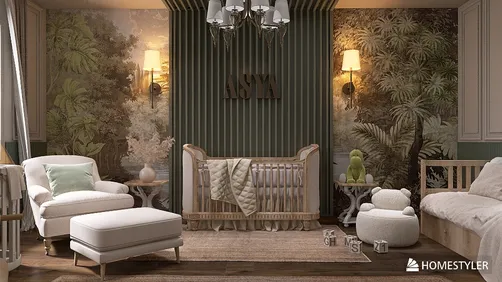
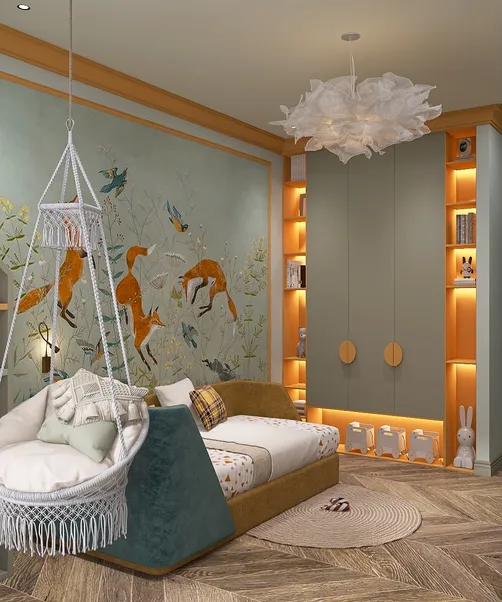
T Yener’s 'A Warm Beginning in the Heart of Nature' integrates dolls functionally: hand-carved wooden nesting dolls double as bookend sets on a live-edge shelf; a 'Garden Paradise' rabbit figure serves as the finial on a woven basket lid—its ears forming a subtle handle. Using Homestyler’s 'Furniture Morph Tool', she transformed a standard crib rail into a vine-wrapped arch that mirrors the curvature of a doll’s pose—demonstrating how advanced indoor space planning merges storytelling, ergonomics, and AI-powered customization.
Create Free DesignFAQ
Q: Do I need professional interior design experience to participate in the Doll Room for Web contest?
Not at all. Homestyler’s intuitive drag-and-drop interface and AI-assisted tools—like Auto-Floorplan Generation and Style Transfer—enable beginners to create award-winning designs. The contest celebrates creative vision, not technical pedigree.
Q: Can I use real-world doll brands (e.g., Lulu Boo, Ne Zha) in my Homestyler design?
Yes— Homestyler provides official, copyright-cleared 3D models for all contest-themed collections, including Marine Adventure, Garden Paradise, Polar Regions, Nestling Russia, Lulu Boo, and Ne Zha. These are pre-loaded in the asset library for immediate use.
Q: How does indoor space planning affect emotional regulation in doll-integrated rooms?
Strategic zoning—such as separating high-stimulation play areas from low-light reflection corners—directly supports nervous system regulation. Research shows consistent visual anchors (like recurring doll motifs) reduce anxiety, while varied textures and controlled color saturation enhance focus and calm. Homestyler Design Tips emphasize using the 'Emotion Heatmap Preview' to simulate how layout choices influence perceived serenity or vitality.
Q: What’s the best way to balance doll display with practical storage in small spaces?
Use verticality intelligently: install floating shelves with integrated LED strips (for nighttime ambiance), combine open doll displays with closed cabinetry below (for clutter-free calm), and choose multifunctional furniture—like ottomans with doll-storage compartments. Homestyler’s 'Small-Space Optimization Mode' automatically suggests space-saving configurations based on your floorplan and selected doll models.


Modern Velvet Crown Headboard Solid Wood Platform Bed 3D Model

Minimalist Solid Oak Wood Nightstand with Two Drawers Open Shelf 3D Model

Minimalist Solid Oak Glass Door Wardrobe 3D Model
Homestyler offers an easy-to-use online design tool with stunning 3D rendering, a vast collection of interior design projects, and helpful DIY video tutorials. It’s perfect for bringing your home design ideas to life, whether you’re a beginner or a pro.
Diseño ahora GRATIS