Downtown Living Room Design
The 'Downtown Living Room' is a quintessential urban interior scenario defined by compact footprints, multifunctional demands, and high expectations for aesthetic warmth and psychological comfort. Drawing from the AIDA-aligned Downtown Living Design Challenge — which attracted 261 global participants and 786 submissions — this scene represents small-to-midsize apartment living rooms in dense city centers (e.g., Budapest, New York, São Paulo, Milan). Key characteristics include abundant natural light via large windows, seamless integration of living/dining zones, intentional use of reflective and textural materials to amplify spatial perception, and layered lighting strategies that support both daytime clarity and evening ambiance. Crucially, it’s not merely about fitting furniture in tight quarters; it’s about orchestrating indoor space planning to foster calm, connection, and urban serenity — all within constrained square footage.
Design Challenges and Common Pitfalls
Designing a downtown living room faces three persistent challenges: (1) Spatial compression — limited square footage often leads to overcrowded layouts, poor circulation, or visual clutter; (2) Light management — narrow urban lots frequently suffer from one-sided or low-angle daylight, risking dim corners and uneven illumination; (3) Identity dilution — without strong curation, minimalist urban palettes (grays, beiges, blacks) can unintentionally feel sterile or impersonal, undermining the ‘serene yet vibrant’ ethos central to the contest brief. These issues are compounded when designers overlook human-centered flow — such as seating arrangements that hinder conversation, or storage solutions that sacrifice accessibility for aesthetics.
✅ Prioritize Open-Plan Flow & Flexible Zoning
In tight downtown apartments, rigid room definitions must give way to fluid, activity-based zones. Use low-profile furniture (e.g., sofas with exposed legs), transparent or reflective surfaces (glass coffee tables, mirrored sideboards), and consistent flooring to visually extend space. Avoid full-height partitions; instead, define areas through rug boundaries, ceiling-mounted lighting clusters, or strategic furniture orientation — enabling the same footprint to serve lounging, dining, and remote work seamlessly.

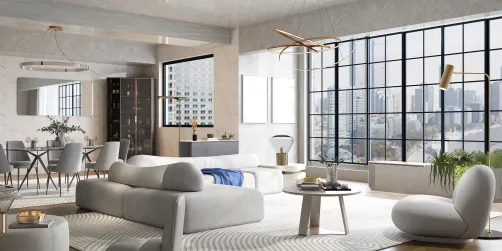
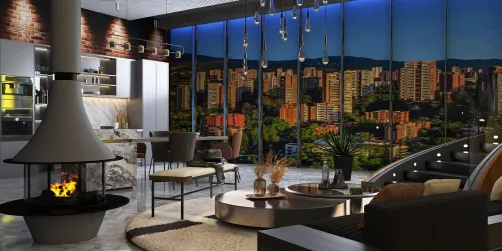
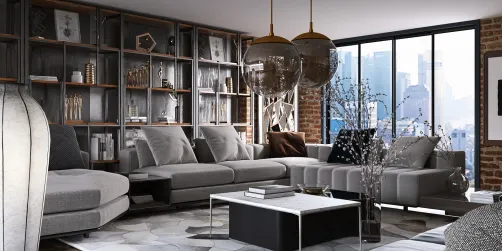
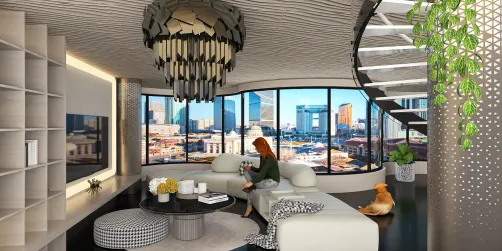
suwaibakamaldien9 kamaldien’s design exemplifies open-plan flow: the L-shaped sofa anchors the lounge zone while leaving a clear path toward the windowed dining nook; the slim sideboard doubles as display surface and subtle visual divider. Using Homestyler AI design tools, they precisely simulated sightlines and traffic paths — ensuring every model (14 total) supports unobstructed movement and maintains spatial generosity despite the compact layout.
Design Your Space Now✨ Curate Light Layers for Depth & Warmth
Natural light is non-negotiable in downtown living rooms — but it’s rarely sufficient alone. Combine ambient (ceiling pendants or recessed LEDs), task (adjustable floor or table lamps), and accent lighting (wall sconces highlighting art or greenery) to sculpt volume and mood. Use warm-white (2700K–3000K) sources to counteract urban coolness, and incorporate indirect light (e.g., LED strips behind shelves) to soften edges and lift ceilings visually. Mirrors opposite windows further amplify luminosity without glare.

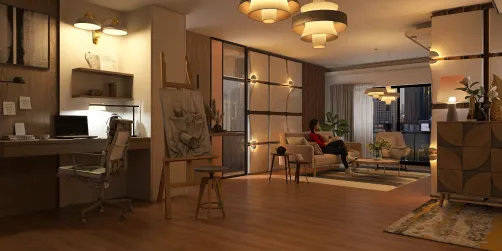
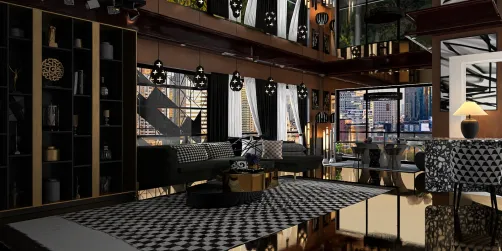
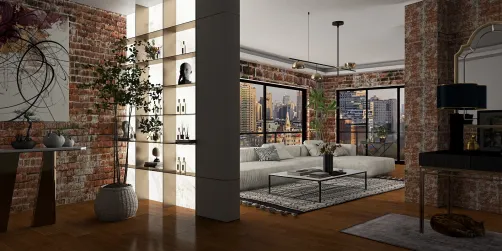
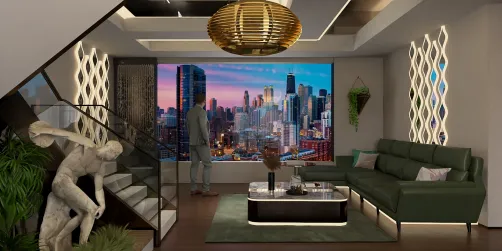
Shona - Eve’s '✨️ Mystic Penthouse ✨️' masterfully layers light: a sculptural pendant anchors the seating area, wall-mounted sconces flank the artwork above the sofa, and soft under-cabinet glow highlights the staircase transition — all rendered with precise photometric simulation in Homestyler. This multi-source strategy eliminates shadows in the corner seating zone and adds vertical dimension, transforming a potentially flat composition into a rich, atmospheric downtown living room.
Start Your Free Design🌿 Infuse Personality Through Intentional Texture & Biophilia
To prevent minimalism from feeling austere, layer tactile contrast: nubby bouclé throws against smooth leather sofas, matte ceramic vases beside polished brass lamps, rough-hewn wood coffee tables grounded by plush wool rugs. Equally vital is biophilic integration — not just one potted plant, but curated greenery at multiple heights (floor ferns, hanging pothos, shelf-top succulents) and organic shapes in artwork or textiles. These elements activate the senses, reduce stress, and root the space in life — essential for psychological comfort in fast-paced cities.

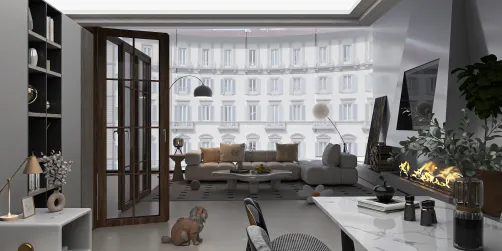
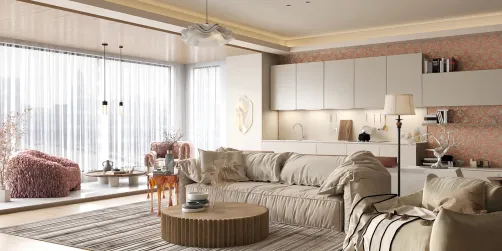
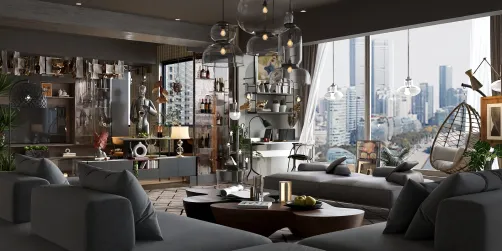
Flavia Mendes leverages texture and biophilia with remarkable nuance: a chunky knit throw contrasts the sleek velvet sofa; a tall fiddle-leaf fig stands beside a cascading string-of-pearls on a floating shelf; and the warm brass table lamp introduces metallic tactility. In Homestyler, she iterated material finishes across 16 models — testing how linen vs. cotton upholstery affected perceived softness, and how ceramic glaze variations influenced light reflection — proving how AI-powered interior space planning supports deeply human-centered detailing.
Begin Free Living RoomFAQ
Q: How does Homestyler AI help overcome spatial limitations in downtown living room design?
Homestyler AI enables real-time spatial analysis — generating accurate floorplans from sketches, simulating furniture ergonomics and walkways, and auto-adjusting scaled models to match room dimensions. Its rendering engine previews how materials, colors, and lighting interact in confined spaces — helping designers avoid costly misjudgments before execution.
Q: What are the top three Homestyler design tips for beginners tackling urban living rooms?
1) Start with a ‘zone map’ using Homestyler’s annotation tools to label functional areas before placing furniture;
2) Use the ‘Material Swap’ feature to rapidly compare how light oak vs. dark walnut flooring affects perceived spaciousness;
3) Run the ‘Daylight Simulation’ toggle at different times to optimize window treatments and artificial light placement.
Q: Can Homestyler AI support biophilic design principles effectively?
Absolutely. Homestyler’s growing library includes over 200 realistic plant models (with seasonal variants), plus customizable foliage density and growth direction. Designers like Claudia Cencic and Anna Tallian used these assets to test sightline occlusion and shadow patterns — ensuring greenery enhances rather than obstructs interior space planning.
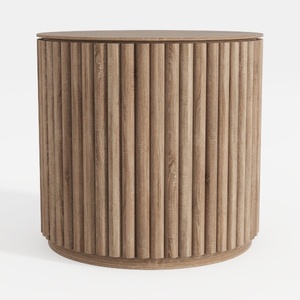
Minimalist Fluted Solid Wood Round Side Table 3D Model
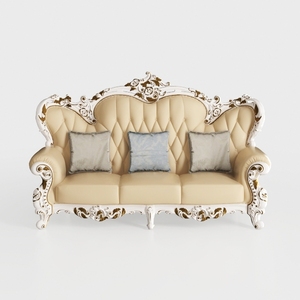
Baroque Luxury Leather Tufted Three Seat Sofa 3D Model
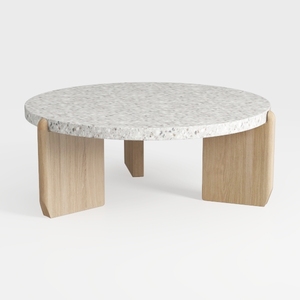
Minimalist Terrazzo Solid Oak Round Coffee Table 3D Model
Homestyler offers an easy-to-use online design tool paired with stunning 3D renderings and a vast collection of interior design projects. With helpful DIY video tutorials, it’s perfect for bringing your home design ideas to life in a fun and creative way.
Design Now for FREE