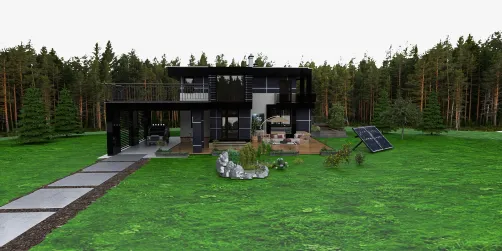
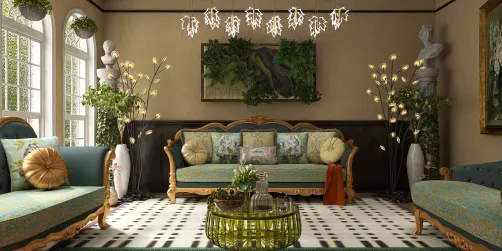
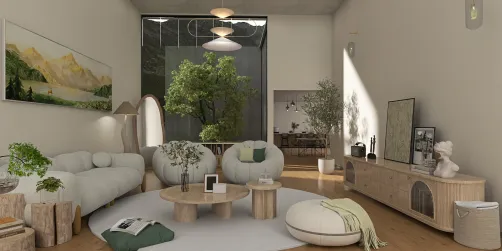
Forest Style Decoded: Nature-Inspired Interiors That Breathe
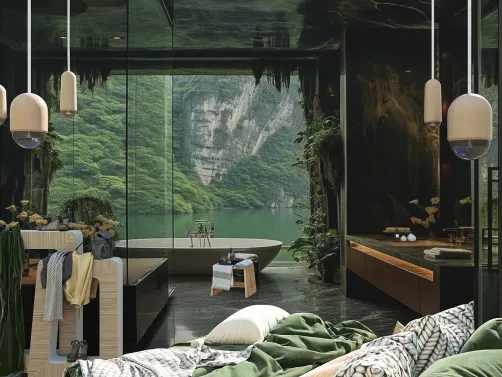
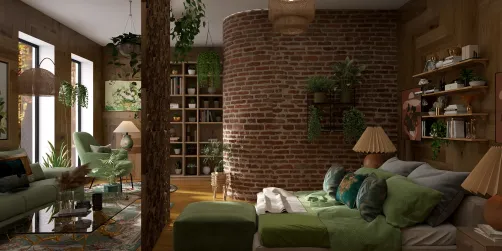
The Forest Style is more than a trend—it's a sensory return to nature. Rooted in biophilic design principles, it celebrates organic authenticity through raw textures, living greenery, and earth-rooted palettes. Unlike rustic or Scandinavian styles that borrow natural elements selectively, Forest Style immerses the space *in* the forest—evoking dappled light, mossy quiet, and woodland warmth. It harmonizes abundant indoor plants (ferns, monstera, fiddle leaf figs), reclaimed or unfinished wood (oak, walnut, bamboo), and tactile materials like jute, stone, and linen. Crucially, it avoids cliché 'lumberjack' motifs—instead prioritizing subtlety, spatial calm, and ecological intentionality. This style thrives in both compact urban apartments and airy suburban homes, proving that wilderness-inspired serenity is universally accessible—and deeply restorative.

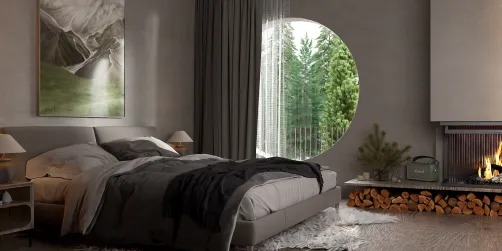
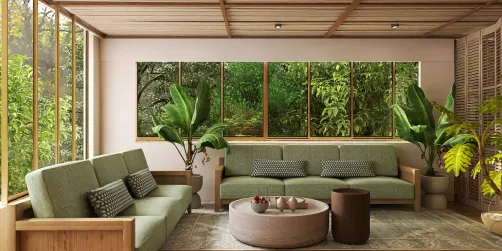
Featured work: Kimberly Lockaby's "The Green Oasis" — a masterclass in intimate forest immersion. A warm-toned wooden bed anchors the scene, surrounded by cascading pothos and sculptural snake plants; layered jute rugs and linen bedding deepen texture without clutter. What makes this especially effective in Homestyler is how seamlessly its real-time 3D rendering captures light filtering through leafy canopies—users can rotate the view to experience shifting shadows and true-to-life plant translucency. With Homestyler’s drag-and-drop plant library and wood-grain material editor, designers replicate this tranquil bedroom in under 10 minutes—no rendering delays, no guesswork.
Design Your Green Oasis🌿 Organic Materiality: Wood, Stone & Tactile Textures
Forest Style rejects synthetic smoothness in favor of honest, unrefined surfaces. Think wide-plank oak floors with visible grain and subtle knots; rough-hewn coffee tables with live edges; river-smoothed stone countertops; and handwoven seagrass pendants. Texture isn’t decorative—it’s experiential: you *feel* the ridges of bark-inspired wall panels, the soft nap of wool throws, the cool weight of basalt coasters. This layering creates visual depth and grounding energy—transforming static rooms into living ecosystems where material honesty echoes forest floor authenticity.

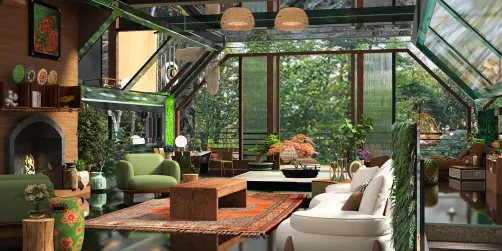
Featured work: D L's "Revitalizing the Outside Forest Café 2025" — a bold public-space interpretation. Here, reclaimed timber beams frame an open-air dining zone, paired with matte black metal chairs and terracotta tile flooring. The genius lies in how Homestyler’s AR virtual furniture placement allows instant scaling of table layouts against real-world dimensions—ensuring optimal flow while preserving sightlines to surrounding greenery. Using Homestyler’s texture-mapping tool, designers apply custom wood grain overlays to 3D models with one click—making high-fidelity, site-specific material visualization effortless.
Start Rustic Café Design🌱 Strategic Botanical Layering: Beyond Potted Plants
Forest Style treats plants as architectural elements—not accents. It deploys them vertically (living walls, hanging macramé planters), horizontally (ground-cover ivy trails, low succulent benches), and volumetrically (canopy-level fiddle leaf figs). Species are chosen for form, movement, and seasonal rhythm—not just aesthetics. Ferns add misty softness; snake plants offer sculptural verticality; trailing philodendrons create fluid transitions between zones. Lighting is calibrated to support photosynthesis and cast dappled shadows—blurring the boundary between interior and woodland.

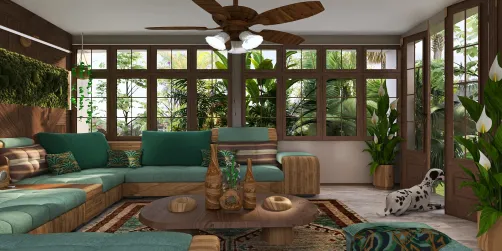
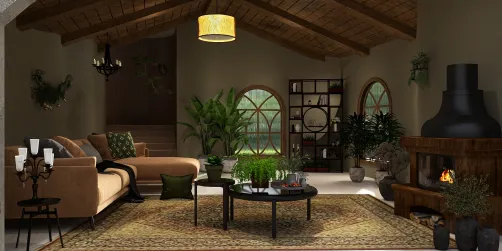
Featured work: FLOWER amri's "☀️" — a villa living room where botany becomes structure. A floor-to-ceiling living wall flanks a stone fireplace, while a suspended rattan planter cradles a bird’s nest fern above the sofa. Homestyler’s plant library includes over 120 photorealistic species with dynamic growth stages—so users preview how vines will cascade over six months. Its smart lighting simulator adjusts foliage shadow density based on time-of-day presets, letting designers validate botanical impact before installation.
Create Cozy Living Room🌲 Earth-Centered Chromatic Harmony: Greens, Browns & Atmospheric Neutrals
Forest Style’s palette is drawn directly from woodland strata: canopy greens (sage, olive, moss), underbrush browns (taupe, walnut, burnt umber), and atmospheric neutrals (mist gray, fog white, clay beige). It avoids saturated primaries—favoring desaturated, mineral-rich tones that recede and soothe. Color isn’t applied flatly; it’s layered: a sage wall behind a walnut console, a rust velvet cushion against oat linen upholstery, charcoal-stained oak shelves holding terracotta pots. This chromatic restraint ensures the space feels expansive, grounded, and quietly alive—never loud or literal.

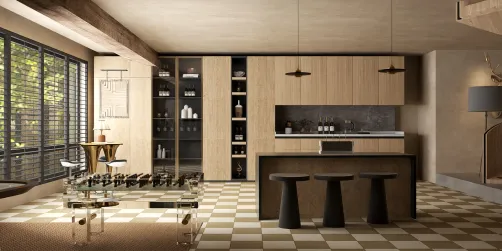
Featured work: Olga Golova's "Волшебное место🧡" — a dining space where color tells a story. A rich walnut table sits beneath olive-green upholstered chairs; walls glow in a soft clay-beige, while the fireplace surround uses textured stone in warm taupe. In Homestyler, designers leverage the color-scheme generator—inputting a single forest reference image to auto-extract and apply a harmonized palette across all surfaces and furnishings. Real-time material previews ensure tone consistency across wood, fabric, and stone—even under varying lighting conditions—eliminating costly physical samples.
Begin Elegant Dining RoomFAQ
Q: Can Forest Style work in small apartments with limited natural light?
A: Absolutely. Forest Style adapts beautifully: use reflective surfaces (matte white walls, light oak floors) to amplify ambient light; choose low-light tolerant plants like ZZ plants or snake plants; and layer in forest-inspired textures (wood-veneer panels, woven baskets, linen drapery) to evoke atmosphere even without direct sun. Homestyler’s lighting simulator helps test how different bulb temperatures and fixture placements enhance greenery visibility indoors.
Q: Is Forest Style compatible with modern or minimalist furniture?
A: Yes—this is where Forest Style shines. It pairs exceptionally well with clean-lined, low-profile furniture in natural materials (e.g., oak-legged sofas, stone-topped side tables). The key is prioritizing organic shape and texture over ornamentation. Homestyler’s model library includes thousands of minimalist pieces tagged by material and finish—making cohesive, nature-aligned curation intuitive.
Q: How do I avoid making my Forest Style space look like a theme park or garden center?
A: Restraint and rhythm. Limit plant varieties to 3–5 species for visual cohesion; vary heights and forms intentionally—not randomly; anchor with neutral backgrounds so greenery becomes the focal point, not clutter. Use Homestyler’s ‘Style Match’ AI tool to scan your uploaded floor plan and receive curated recommendations—ensuring botanical balance, material harmony, and spatial breathing room.
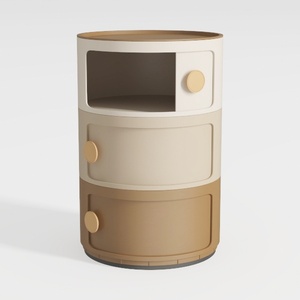
Minimalist Neutral Tone Round Nightstand 3D Model
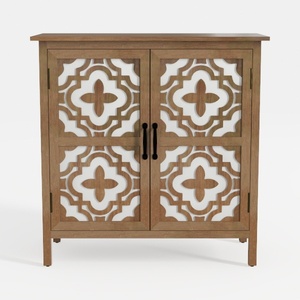
PHI VILLA Accent Cabinet with Doors - Sideboard

Modern Minimalist Solid Wood Metal Office Desk 3D Model
Homestyler is a fantastic online home design platform offering easy-to-use design tools, stunning 3D renderings, inspiring design projects, and helpful DIY video tutorials. It empowers you to create and visualize your dream space effortlessly.
Design Now for FREE