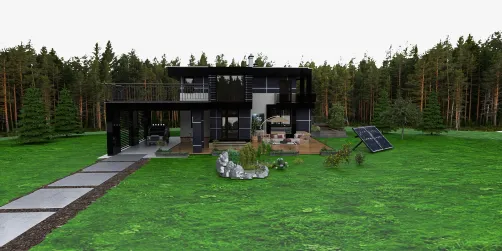
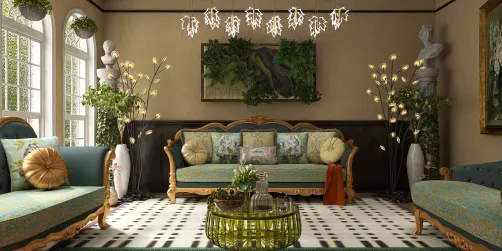
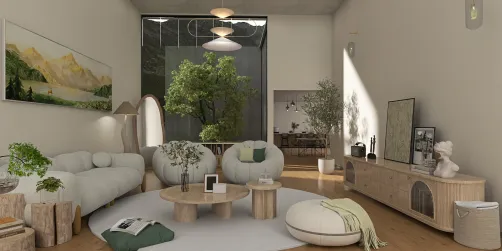
Forest-Style Living Space Design
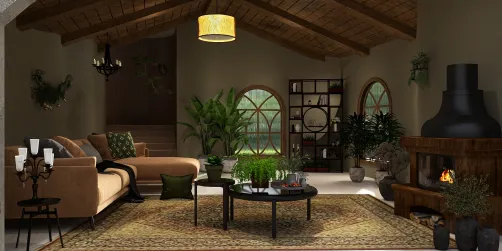
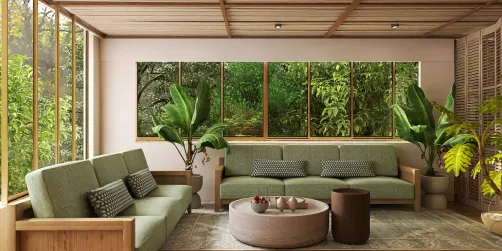
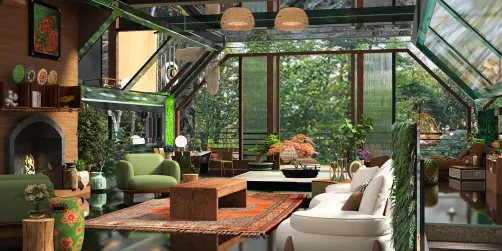
The 'Forest-Style Living Space' is a nature-infused interior design concept that transforms residential areas—especially living rooms, bedrooms, and dining spaces—into serene, biophilic environments. Rooted in the Forest Style competition theme, it emphasizes organic materials (e.g., raw wood, stone, rattan), abundant indoor greenery, layered natural textures, and soft, diffused lighting to evoke woodland tranquility. Unlike literal forest mimicry, this scene prioritizes harmony: blending ecological authenticity with modern functionality, spatial comfort, and human-centered indoor space planning. It’s adaptable across room types and scales—from compact urban apartments to spacious villas—and thrives when supported by intelligent digital tools like Homestyler’s real-time 3D rendering and AR furniture placement.
Design Challenges & Common Pitfalls
Achieving an authentic yet livable forest-style space presents several recurring challenges: overloading with plants (compromising air circulation and maintenance), mismatched material palettes (e.g., glossy finishes undermining organic warmth), poor light integration (resulting in dim or flat atmospheres), and spatial disorganization—especially in multi-functional zones where greenery, furniture, and circulation paths compete for volume. Additionally, designers often underestimate scale fidelity: lush foliage may look balanced in 2D sketches but overwhelm sightlines or obstruct windows in accurate 3D visualization—a key reason why robust Homestyler design techniques are essential for preemptive spatial validation.
🌱 Prioritize Biophilic Layering Over Decoration
True forest-style design treats nature as infrastructure—not ornament. This means integrating living plants structurally (e.g., climbing vines on trellises, suspended planters defining zones), using tactile natural materials at multiple scales (wood flooring + linen upholstery + stone side tables), and varying green tones and leaf forms to create depth. Avoid static 'plant props'; instead, plan for growth, seasonal change, and care logistics within your indoor space planning.

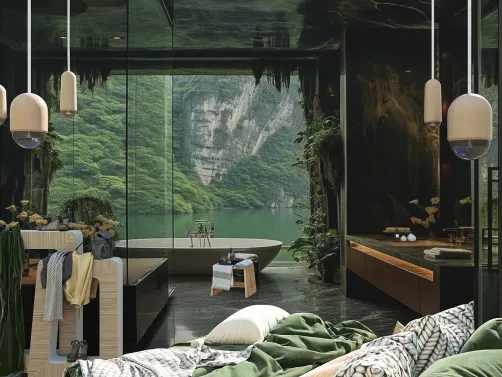
Martine Hamel’s unnamed bedroom design demonstrates biophilic layering masterfully: warm-toned wooden walls and ceiling beams establish structural texture; floor-to-ceiling windows flood the space with natural light (activating photosynthesis and circadian rhythm support); and potted ferns, hanging pothos, and a textured jute rug coexist without visual clutter. Using Homestyler’s real-time 3D rendering, she validated sightlines and light diffusion—ensuring no plant blocked morning sun from the bed—showcasing how Homestyler design techniques turn ecological intention into spatial reality.
Start Designing Now🪵 Anchor with Organic Material Hierarchy
Select one dominant natural material (e.g., oak, bamboo, or travertine) to serve as the 'ground note', then introduce two complementary organic accents (e.g., woven seagrass + matte clay tiles). Avoid equal weighting—hierarchy prevents visual noise. Always prioritize sustainably sourced, low-VOC finishes to uphold both aesthetic integrity and indoor air quality—critical for long-term wellness in forest-style interiors.

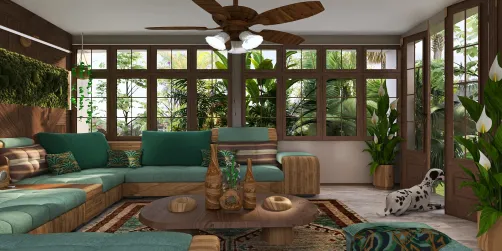
Cherry ♡’s 'quietness' living room uses natural stone cladding on a feature wall as its grounding material—textural, earthy, and immovable—while pairing it with light oak shelving and linen-upholstered seating. The stone isn’t decorative trim; it defines spatial volume and thermal mass. Cherry leveraged Homestyler’s material-swapping tool to test five stone variants in context before finalizing, proving how Homestyler design techniques enable confident, data-informed material hierarchy decisions during indoor space planning.
Free Design Awaits🌤️ Optimize Light–Plant–Furniture Triangulation
Forest-style spaces live or die by light dynamics. Map sun paths across seasons, then position tall plants near north-facing windows (for indirect light lovers like ZZ plants) and light-hungry species (e.g., monstera) near south/west glazing. Furniture must complement—not block—these pathways: choose low-profile, open-frame pieces (e.g., wooden slat sofas) that allow light penetration and greenery visibility. Use reflective surfaces (e.g., whitewashed wood, pale stone) strategically to bounce ambient light deeper into the space.

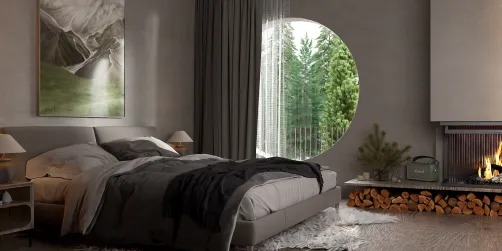
Monica A.V. Design’s 'F. S.S. III' bedroom exemplifies precise light–plant–furniture triangulation: a four-poster bed anchors the center, while floor-to-ceiling windows flank it—ensuring even, gentle illumination across the entire canopy of hanging ivy and potted fiddle-leaf figs. Her use of Homestyler’s sun-path simulation (available in v4) allowed her to rotate the bed 15° to maximize morning light exposure without glare—turning indoor space planning into a responsive, physics-aware process.
Begin Your DesignFAQ
Q: Can forest-style design work in small or low-light apartments?
Yes—focus on vertical gardens, shade-tolerant plants (e.g., snake plant, ZZ plant), and reflective natural materials (e.g., limed oak, white-washed brick). Homestyler’s real-time 3D rendering helps test scaled-down layouts and light simulations before committing.
Q: How do I avoid a 'jungle clutter' effect when adding many plants?
Apply the 'Rule of Three': group plants in odd-numbered clusters, vary heights and leaf shapes, and leave negative space around focal points. Use Homestyler’s layer visibility toggle to isolate greenery layers and assess visual weight.
Q: Which Homestyler tools are most valuable for forest-style projects?
Real-time 3D rendering (to preview material textures and plant density), AR furniture placement (to validate scale and circulation), and the sun-path simulator (to align plant needs with natural light access) are indispensable for professional indoor space planning.
Q: Are there cultural or regional adaptations of forest style I should consider?
Absolutely—Japanese 'shinrin-yoku' (forest bathing) inspires minimalist calm; Mediterranean forest styles favor terracotta and olive trees; tropical variants embrace bold leaves and breezy openness. Homestyler design techniques let you rapidly prototype these variants using localized material libraries and climate-appropriate plant models.
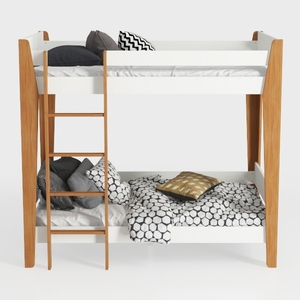
Modern Solid Wood White Bunk Bed 3D Model
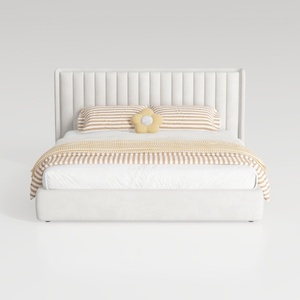
VELOCAVA King Size Lift-Up Storage Bed, Linen Ligh

Minimalist Solid Oak Platform Bed Frame 3D Model
Homestyler offers an easy-to-use online design tool with realistic 3D renderings, inspiring design projects, and helpful DIY video tutorials. It’s perfect for anyone looking to create and visualize beautiful home interiors effortlessly. Try it to bring your design ideas to life!
Дизайн сейчас бесплатно