Dimensional Living Space Design
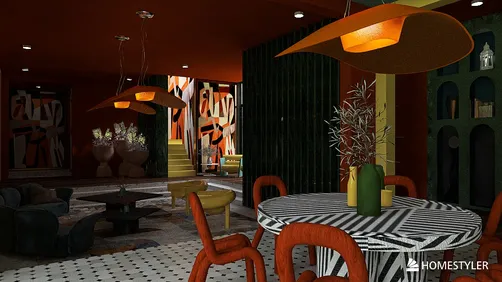
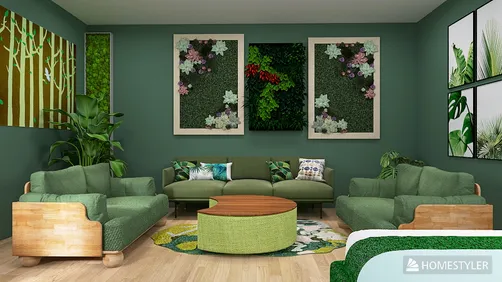
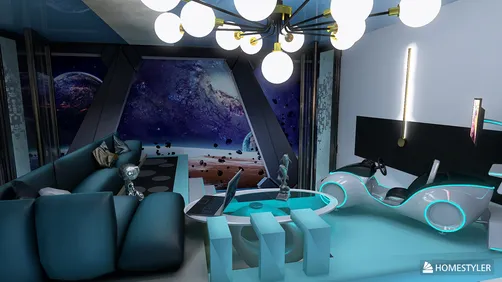
The 'Dimensional Living Space' refers to an interior design approach that transcends flat, conventional layouts by intentionally layering spatial perception—through lighting gradients, transparent or reflective materials, dynamic geometry, multi-level zoning, and immersive visual depth. Inspired by the contest theme 'Furniture can be more than just functional items, it can be your launch button into dimensional life', this scene emphasizes experiential architecture: spaces that feel expansive despite physical constraints, emotionally resonant through color and texture interplay, and narratively rich via curated visual pathways. It’s not about size—it’s about perceived volume, movement, and psychological immersion—making it highly relevant for modern indoor space planning across apartments, studios, and compact homes.
Design Challenges & Common Pitfalls
Designing dimensional living spaces often faces three recurring challenges: (1) Overloading with visual elements (e.g., excessive mirrors, clashing patterns, or unbalanced transparency) that create disorientation instead of depth; (2) Underestimating scale relationships—furniture or architectural features that disrupt sightlines or compress perceived height/width; and (3) Neglecting light as a dimensional tool—relying solely on ambient fixtures without strategic directional, layered, or time-of-day-responsive lighting to sculpt volume. These pitfalls directly hinder effective indoor space planning and reduce the emotional impact intended by Homestyler design techniques.
✅ Prioritize Visual Layering Over Literal Depth
True dimensionality arises not from physical room expansion—but from orchestrating foreground, midground, and background planes using contrast, transparency, scale variation, and compositional framing. Use glass partitions, recessed niches, floating shelves, or staggered ceiling heights—not to add square footage, but to invite the eye on a journey through the space. This principle aligns with top-winning entries like Vanessa Ribeiro’s futuristic living room, where transparent surfaces and geometric layering generate fluid, reconfigurable perception.

Deedee x’s 'Monochrome Elegance' demonstrates this principle masterfully: black-and-white tonal contrast creates strong foreground-background separation, while clean geometric lines act as visual guides. Using Homestyler’s real-time 3D rendering, she precisely calibrated furniture scale and wall panel alignment to reinforce layered sightlines—proving how AI-assisted indoor space planning enables intentional depth without structural changes.
Start Free Design✨ Harness Light as a Spatial Sculptor
Light isn’t just illumination—it’s the primary medium for defining volume, direction, and atmosphere. Strategic use of directional spotlights, cove lighting, backlit elements, and natural light modulation (via sheer curtains or angled windows) can elongate ceilings, widen corridors, or carve intimate zones within open plans. Avoid uniform overhead lighting; instead, build light hierarchies that mirror human visual priority—brighter where action occurs, softer where rest or reflection is invited.

Viktoriia V’s unnamed bedroom design leverages soft daylight simulation ('d_city_landscape' HDR) and balanced fixture placement to expand perceived height and calm spatial flow. Through Homestyler design techniques, she adjusted sunlight intensity and window reflectivity to enhance depth perception—showcasing how AI-powered indoor space planning transforms static renders into emotionally dimensional environments.
Begin Your Bedroom Plan🎨 Anchor With Cohesive Dimensional Language
A dimensional space must speak one coherent visual language—whether futuristic minimalism, organic fantasy, Memphis abstraction, or emotive storytelling (e.g., Pixar-inspired cloud rooms). Mixing incompatible dimensional vocabularies (e.g., rigid geometry + rustic textures without transitional elements) fractures immersion. Choose *one* core dimensional driver—form, material, light behavior, or narrative motif—and extend it consistently across furniture, finishes, and layout logic.

PG studio’s 'fantasy' living room anchors its dimensional identity through consistent whimsy—curved fireplace edges, asymmetrical shelving, and snowy-park lighting ('snowy_park' HDR) that softens spatial boundaries. Using Homestyler’s AI tools, they maintained stylistic continuity across all model placements and material reflections, proving how cohesive dimensional language elevates indoor space planning from functional to unforgettable.
Launch Cozy Living RoomFAQ
Q: What does 'dimensional space' mean in the context of Homestyler design competitions?
It refers to interiors that evoke spatial depth, movement, and emotional resonance—not through physical enlargement, but via intelligent use of light, geometry, transparency, scale, and narrative layering. Homestyler design techniques (like real-time 3D rendering and HDR environment control) empower designers to simulate and refine these effects before construction.
Q: Do I need advanced 3D modeling skills to create dimensional spaces in Homestyler?
No— Homestyler’s intuitive drag-and-drop interface, AI-powered auto-placement, and preset HDR lighting environments (e.g., 'g_nooutdoor', 'moonlit_golf') let beginners achieve dimensional impact quickly. Top entries like Karine Lucena’s floral refuge used only four tools (per contest limits), proving simplicity + intentionality > technical complexity.
Q: How can dimensional design improve small-space indoor space planning?
By manipulating perception: vertical lines lift ceilings, mirrored accents widen walls, strategic lighting hides boundaries, and monochromatic palettes unify zones. Amy ✨’s 'Wood in Modern House' uses layered timber tones and directional sun simulation ('rustig') to create airy flow in a compact footprint—showcasing how dimensional thinking solves real-world spatial constraints.
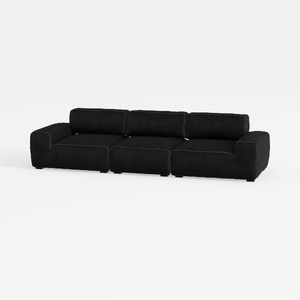

Minimalist Black Fabric Modular Sofa 3D Model
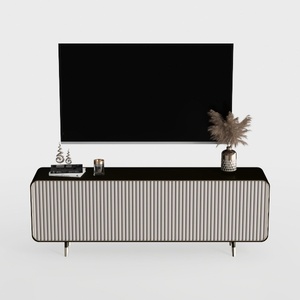
Modern Fluted Solid Wood Metal TV Stand Console Table 3D Model
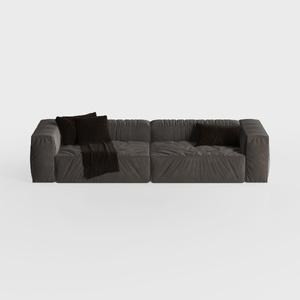
Minimalist Dark Velvet Modular Sofa With Throw Pillows 3D Model
Homestyler is an easy-to-use online home design platform offering powerful 3D rendering, inspiring design projects, and helpful DIY video tutorials. It’s perfect for bringing your decorating ideas to life with professional tools right at your fingertips.
Progetta ora GRATIS